



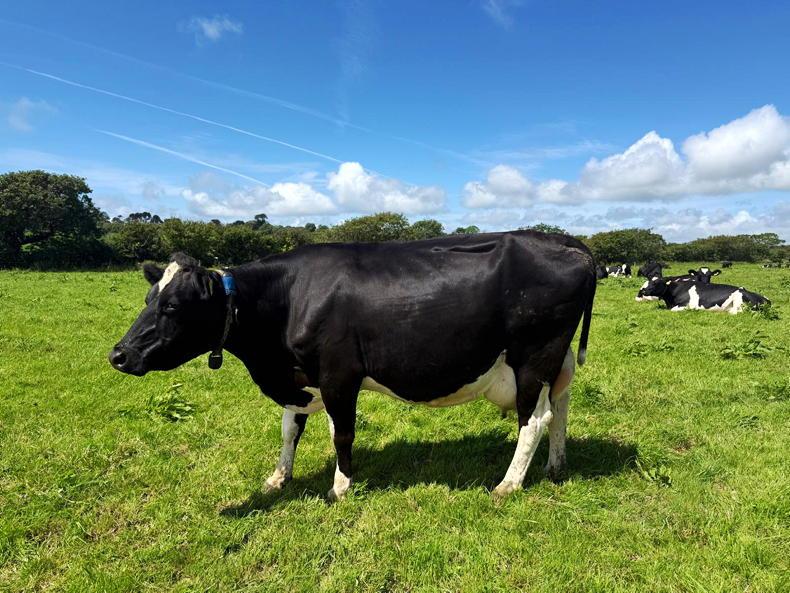
As reported in last week’s dairy pages, the newly formed Pasture Progress Award has taken the place of the old Sustainable Grassland Farmer of the Year competition.
Run by Teagasc’s Grass10 team, the new-look competition is aimed at recognising farmers who have made significant improvements to the grassland management aspect of their farming business and Liam Rochford has certainly achieved this.
After completing a bachelor’s degree in Animal and Crop production from UCD in 2016, Liam had his mind set on returning home to farm but not before travelling to New Zealand.
A year learning all about a low-cost grass-based system was all Liam needed to provide enough inspiration to return home and start expanding the family’s dairy herd.
Partnership
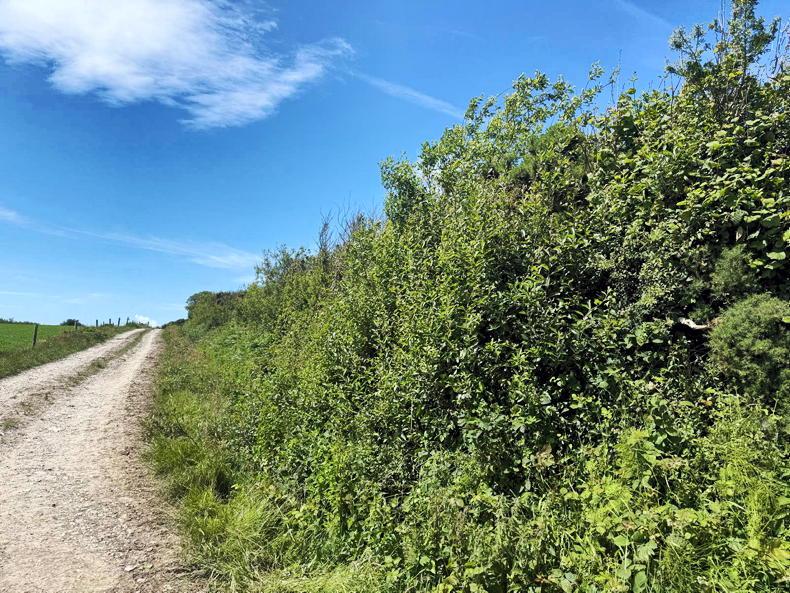
In the winter of 2017 he landed back to south Wexford and very soon after, a partnership was formed with his mother Mary and uncle John on the home farm.
At that time the farm was very much a mixed enterprise with a big calf-to-beef operation, some tillage and 55 milking cows.
Liam’s passion however, was dairy farming and together the family made the decision to cut back the other enterprises gradually and scale up the dairy business.
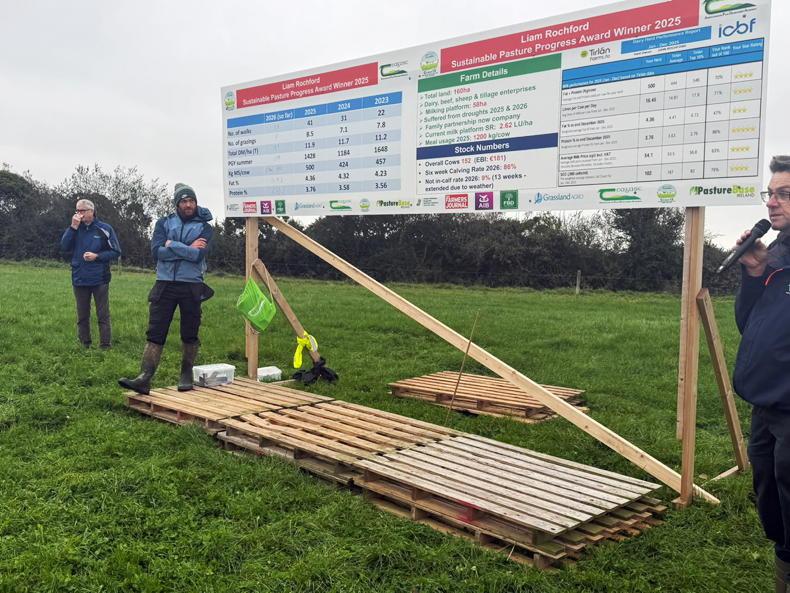
The early years were all about expanding and growing cow numbers on the home block. The herd was built up year by year to where it is today; 152 Holstein Friesian cows being milked across a 56ha milking platform.
The total farm area is 160ha with some of the additional ground being used for silage and the rest used to rear close to 70 animals each year in a calf-to-beef system as well as another 24ha in tillage.
Liam runs the dairy farm while his uncle John is responsible for the majority of the tillage work with the calf-to-beef workload managed between the two.
The business also employs a local man, Frank Cullen, full-time and Aidan Brennan, a local student who works part-time at weekends and holidays.
In the future Liam hopes to continue expanding the dairy herd but with several outblocks and some of the land too far from the milking platform, it makes sense for the dairy herd to grow gradually.
Grassland management
Over the last three years Liam has placed more and more emphasis on maximising grass as a real asset to the farm.
While he was always measuring and using Pasturebase, more extreme weather was one of the key factors in helping to really focus his attention.
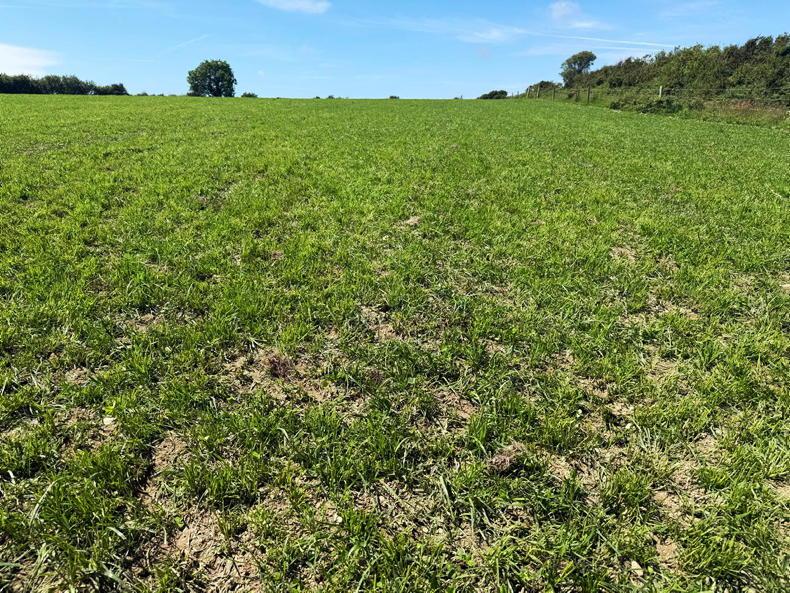
“I was always big into grass but over the last few years I’ve really started to monitor it more closely. Weather was a factor in this, as we were getting wetter springs and drier summers.”
“Knowing the numbers makes it easier to manage in those times and you can make better decisions whether that’s putting in extra feed or cutting it back that bit earlier” Liam says.
In 2023, Liam was walking and measuring the farm 20 times per year. In 2024, he upped it to 31 times and by the end of 2025, he had walked the farm 41 times in the year.
“I’d be measuring nearly twice a week at this time of year when it’s peak growing season. It’s back to once a week in autumn and in spring when growth is slow, it’s less often” he says.
Over the three-year period, the number of grazings per paddock, has increased from 7.3 to 8.7.
With more frequent grazings, grass quality has also improved. Liam is now going into lighter pre-grazing covers during the summer months and the average pre-grazing yield has dropped from 1,462kg DM/ha in 2024 back to 1,319kg DM/ha in 2025.
As cows are grazing higher-quality grass, supplement feeding has gone down, protein levels of the milk have improved and cows are producing more milk solids.
The milk solids delivered in 2025 was up to 500kg/cow from 424kg/cow in the year previous. The level of meal fed in 2025 was back to 1.06t/cow.
In terms of grass production, the farm grew just over 12t DM/ha on average in 2025. This was also an improvement on the previous years, with 11.7t DM/ha grown in 2024.
Grazing infrastructure
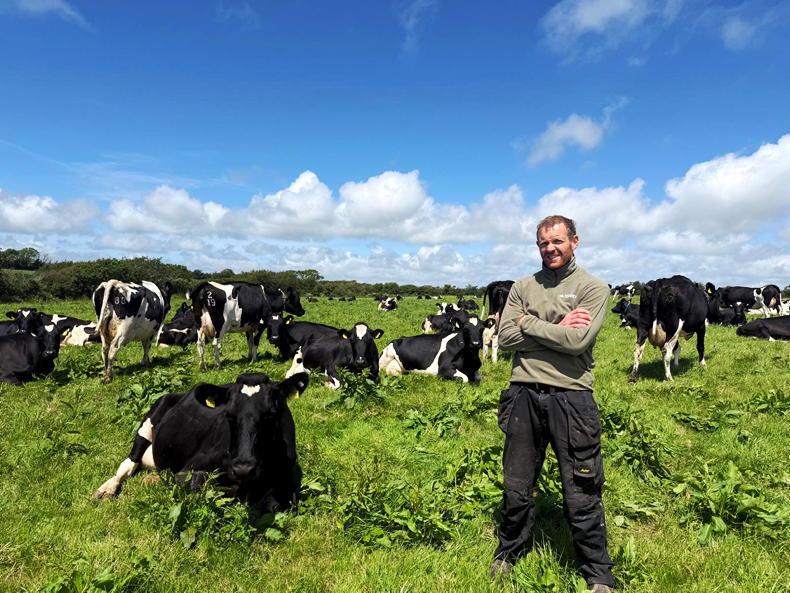
Down through the years Liam has been making a big effort to set the farm up to achieve more days at grass.
It’s not a simple farm to manage as there is a heavy clay soil type which makes spring and late-autumn grazing very challenging.
To get around this, Liam has created extra gaps into paddocks, developed a series of smaller spur roadways and increased the number of water troughs on the farm. On/off grazing is the only way for him to get cows to grass both early and late in the year and the infrastructure has had to develop on the farm in order to manage this.
Investing in reseeding was another element of the competition that impressed the judges. Over 10% of the farm is now reseeded annually.
Over the years Liam has become a big fan of the spring reseed. One of the reseeds for this year was sown in late April and was just after being grazed at the time of the Irish Farmers Journal’s visit. Cows went into the paddock at a cover of slightly over the 1,000kg DM/ha.
The residual was perfect at around 3.5cm and Liam intended to graze it at least twice more at a cover of less than 1,200kg DM/ha. There was plenty of clover in the sward and with the early grazing he was hoping it would continue to flourish.
“I’d love to have the farm with a high percentage of clover and reseeding is going to be a big part of that. Our real issue though, is the heavier soil. Soil fertility has improved a lot, the P and K indexes are good and the pH of the farm is strong but getting early and late grazings on it has been hard.
“We’ve tried oversowing but it wasn’t working that well. The full spring reseed seems to be the best job and then just get it grazed at lower covers for three or four rounds” Liam says.
In recent years Liam has gotten very serious about getting soil fertility right on the farm. There is a detailed nutrient management plan for the farm in place and soil sampling is now done every two years to get more up to date analysis.
Slurry is targeted at any paddocks with low indexes and Liam started spreading high phosphorus fertiliser with 23% P on the fields that are particularly low for phosphorus.
With high clay soils its harder to build up phosphorus in soils.
Current situation
At present, the farm cover is 553kg DM/ha with a cover per cow of 180kg. The farm was growing 52kg DM/ha at the time of last week’s visit and demand is set in line with growth.
The stocking rate has come down to 3.08 LU/ha, as over 20 acres of after grass from first cut silage came back into the round.
Liam has gotten a good handle on grass quality at this stage but like everyone else, it was a struggle for a couple of weeks after the big burst of growth in late May.
As there was a lot of ground out for first cut silage, Liam couldn’t afford to take out too many paddocks for surplus bales and was keen to avoid topping if possible.
He was going into lighter covers around 1,300kg DM/ha as much as possible but if stem was an issue, he was then resorting to topping.
With plenty of after grass in front of cows, Liam is expecting milk protein to lift over the coming weeks as he says it had taken a slight check at the last collection. Cows were milking 24.5 litres at 4.22% fat and 3.62% protein, which equates to 1.98kg of milk solids/day.
They are getting two kilos of meal per day and are being followed with 15 units/acre of nitrogen. Any clover paddocks are getting half-rate nitrogen.
Breeding started on 27 April and Liam is happy enough with how it’s going. There are collars on the cows and based on the data, repeats seem to be low enough so far.
A mix of both sexed and conventional dairy semen was used on cows selected for a dairy mating in the first three weeks. Using the collar data, a conventional straw was given to cows outside the optimal time range for sexed.
After the first three weeks of breeding, Liam is using beef AI on all cows that come bulling. He’s selecting bulls based on their figures in terms of easier calving and short gestation as opposed to selecting on breed alone.
A mix of Limousin, Charolais and Angus were used on cows this year with Angus to be used in the last couple of weeks to maximise short gestation length.
The majority of the beef calves are kept for the calf-to-beef system with roughly 40 of the calves sold this year.


SHARING OPTIONS