It’s well known at this stage that farms across the country have experienced some very contrasting conditions when it comes to grass production. This week we’re looking at how two of these farms are managing their situations.
The farms are just over an hour drive apart, but conditions couldn’t be more different. They give us an insight into how they are tackling the autumn, to bring to an end what has been an excellent year overall for grass production in the country.

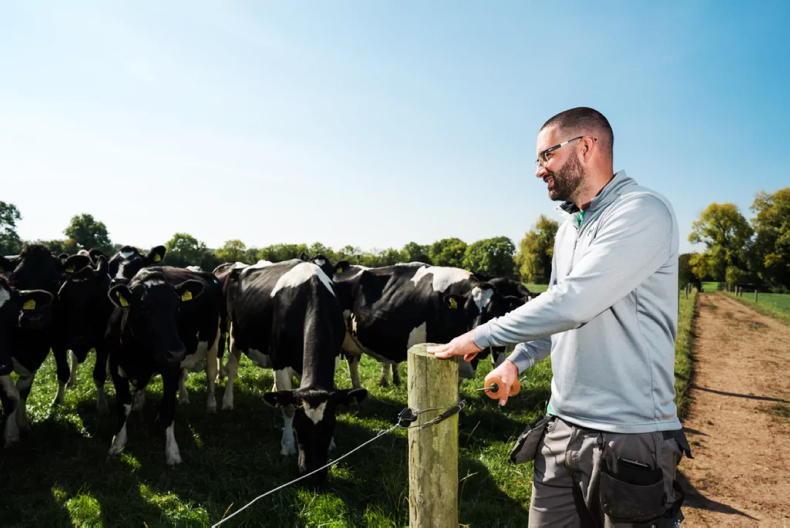
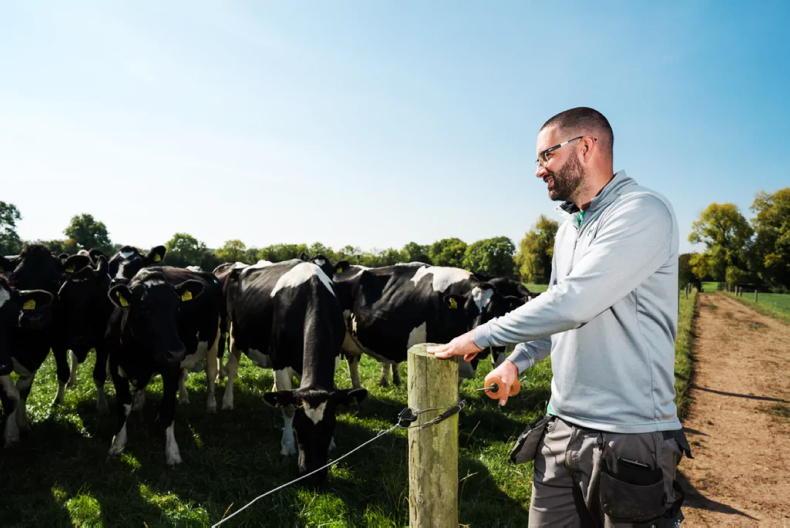
Tom O'Connell (left) hosted the walk to mark the end of his eight-year term in the Teagasc/Dairygold monitor programme. \ Patrick Kiely
Tom O’Connell, Iniscarra, Co Cork
Tom O’Connell is milking 315 cows in Iniscarra, Co Cork, a 20-minute drive from Cork city. Tom held a Dairygold/Teagasc farm walk last week and managing the low grass growth was a big talking point on the day.
Tom’s farm is dry and free draining; recent conditions have seen growth drop below 30kg DM/ha and fields are visually starting to feel the pinch with some grazed paddocks burning up and going brown. Rain is obviously in high demand across the region.
The farm is representative of many in the south, and in the east too, which have only received a few millimetres of rain for the months of July and August.
Tom’s average farm cover at 694kg DM/ha is above the average for many in the area. On the day, there were several farmers reporting covers closer to 450kg DM/ha. This makes achieving autumn targets a big challenge, but one that must be worked around.
The goal for Tom was to have 900-1,000kg DM/ha by 1 September. This was unrealistic now, as growth was well below demand with the farm stocked at 3.2 LU/ha. Flexibility was key though for Tom and he had altered his plan to get where he needed to be, albeit slightly later than wished.
“Rain will come; this is Ireland after all. For now, we want to hold farm cover where it is. That means going in with 6kg of silage and 6kg of meal. This will be fed as 3kg of meal in the parlour and 3kg of palm kernel.”
Cows are being offered 18kg DM per day, leaving a grass intake of 6kg per day. At a stocking rate of 3.2LU/ha that’s a demand of 19kg per day. With growth of 30kg, Tom is adding 11kg/day to his average farm cover despite the dry conditions.
If growth stays where it is, the farm will build over 100kg every 10 days. By the middle of September, it will be a lot closer to the target, and they can reassess things then. When rain comes, there should be a bounce in growth and things should be easier to manage.
Tom had only started feeding this level of supplement, so the effect on grass intakes hadn’t yet been noticed. He would expect the substitution affect to kick in and cows will struggle to clean out paddocks.
The farm was extending the rotation by allocating 1/30th of the milking platform per day. As September progresses this will continue to extend out to 40 days by early October.
This approach is being replicated on other farms in the same position, and it shows that it’s still possible to build cover where there is some level of growth. At minimum farmers are looking to hold cover where it is by matching growth with demand and extending the rotation length.
Production has held up well all things considered with cows milking 20.6l/day at 4.82% fat and 4% protein. The herd is predominantly crossbred with an average economic breeding index (EBI) of €255.

A big crowd attended Tom's walk. Growth has really slowed as soil moisture deficits rise. \ Patrick Kiely
Clover
Developing clover has been a big focus for Tom in the last five years. Soil fertility is excellent which has been a big help in getting clover established. Over two-thirds of the farm is in clover, and this is enough according to Tom.
“We’re happy at two-thirds of the farm. Clover only really kicks in for us in the second half of the year,” he said.
“We need to have some area that we can apply higher levels of nitrogen on, to get us over that hump when we start cutting back the nitrogen on the clover.”
Reseeding is the preferred method of sowing on the farm.
Tom previously tried stitching in and oversowing but found these techniques much more difficult to manage. There hasn’t been any major trouble with bloat over the years. However, with autumn being the risk period it’s something Tom is wary of.
Heavy clover paddocks can be divided into 12-hour breaks and bloat oil added to the water, particularly on wet days when the risk is higher.
An interesting point of note given the current dry condition was Tom’s confidence that clover was giving him 10 days’ extra growth than grass only paddocks in times of moisture deficit.
“We’re definitely getting 10 days more out of those paddocks when growth slows up on the rest of the farm. They stay greener for longer and don’t really burn up at the same rate,” he said.
This was clearly the case as we stood in a paddock 17 days since it was last grazed. The cover was close to 1,500kg DM/ha, clover content was high, and the paddock was still very green compared to other parts of the farm.
In terms of autumn management of clover paddocks, the plan was to close the farm with a flat wedge and a closing average farm cover of 900kg DM/ha.
Individual paddocks would be closed at 500-1,200kg DM/ha. This lower cover of grass gives light a chance to penetrate down to the clover over the winter months. Heavy covers over the winter would cause clover to die off as it’s shaded out.
With most of the farm in clover there isn’t a big demand for chemical nitrogen currently. Clover paddocks receive nothing unless they are struggling.
On the non-clover paddocks, Tom plans to spread one more round of 30 units/acre of nitrogen (N) when rain comes.
Niall Moloney, Crecora, Co Limerick
Niall is milking 174 cows on a 49ha milking platform outside Limerick city. In contrast to Tom O’Connell’s, the farm is heavier, and moisture deficit hasn’t been an issue.
Growth was 61kg DM/day, and average farm cover was up at 895kg DM/ha. This farm reflects the majority in the midlands, north and western part of the country. Soil moisture deficits are much lower at closer to 25mm and covers are building rapidly.
The herd is all Holstein Friesian genetics with cows currently producing 22.2l at 4.14% fat and 3.68% protein. Niall was feeding 2kg in the parlour and cows were eating 17kg of grass giving a demand of 57kg DM/ha. Niall is wary of building cover too high by 1 September.
“We don’t want to go too heavy here, when the rain comes, I don’t want very heavy covers,” he said. “Ground will get wet, and cows will struggle to graze them out without damaging ground. An average farm cover of 1,200kg/ha by mid-September is the highest I’d go.”
Niall came home to farm in 2012 and since then he’s been on a mission to make the system simpler by getting as much grass into the cows as possible. He had walked the farm over 40 times already this year and was clearly very tuned in when it came to managing his grass.
He was in the middle of getting out fertiliser when the Irish Farmers Journal visited. Paddocks were getting different compounds depending on their requirement. Everything was getting at least 21 units of N/ac on the day and will get one more round before the closing period.

Fresh clover reseed gone in last week on Niall's farm.
Planning
The plan over the next number of weeks was to gradually extend the rotation out to 30 days by mid-September. However, at the current growth rates now, Niall just wants to keep on top of grass as it’s a wetter farm. Extending the rotation too early for him would just result in heavy covers too difficult to graze.
Rotation length is important, but he wants to keep a lid on grass the moment. As Niall gets closer to 1 October, he will be more focussed on rotation length. At that stage he’ll be closer to a 40-day round.
The farm is typically closed by 1 December at an average cover of 900kg DM/ha and opening the start of February with an opening cover of 1,100kg DM/ha.
There’s clover on the farm, but it hasn’t been a major success for Niall. He pointed out his high stocking rate of 3.45 LU/ha was impacting the level of clover.
“With the stocking rate we have, we need grass back at least every 21 days in the peak of the year. On this farm the clover paddocks just need an extra couple of days to achieve the same cover as grass paddocks receiving the full-rate nitrogen, so they don’t last as well,” he said.
Niall has a lot of land in out blocks which allows him to stock as heavily on the platform with all youngstock and majority of silage coming from land not on the platform.
Although clover isn’t a roaring success Niall still wants to implement it and try to maximise it. He has just finished reseeding 2.5ha with a clover grass mix. He’s hoping to get at least one grazing off the new reseed and two if possible when it comes up. He will close the rest of the clover paddocks at lighter covers and graze them last in the rotation if conditions allow.

The land is obviously heavier on Niall Moloney's farm. Grass covers are also heavier.
In brief
Each situation requires different management at this time of year given the weather conditions. Where the farm cover is low on Tom’s farm, he’s aiming to maintain average cover where it is currently and wait for the bounce from the rain when it comes.On Niall’s farm he’s building cover towards 900-1,000kg DM/ha in the next couple of weeks. He doesn’t want it much higher than this or utilisation will become an issue when the weather turns.Both farmers are aiming to extend the rotation to 30 days by mid-September and closer to 40 days by the beginning of October.
It’s well known at this stage that farms across the country have experienced some very contrasting conditions when it comes to grass production. This week we’re looking at how two of these farms are managing their situations.
The farms are just over an hour drive apart, but conditions couldn’t be more different. They give us an insight into how they are tackling the autumn, to bring to an end what has been an excellent year overall for grass production in the country.
Tom O'Connell (left) hosted the walk to mark the end of his eight-year term in the Teagasc/Dairygold monitor programme. \ Patrick Kiely
Tom O’Connell, Iniscarra, Co Cork
Tom O’Connell is milking 315 cows in Iniscarra, Co Cork, a 20-minute drive from Cork city. Tom held a Dairygold/Teagasc farm walk last week and managing the low grass growth was a big talking point on the day.
Tom’s farm is dry and free draining; recent conditions have seen growth drop below 30kg DM/ha and fields are visually starting to feel the pinch with some grazed paddocks burning up and going brown. Rain is obviously in high demand across the region.
The farm is representative of many in the south, and in the east too, which have only received a few millimetres of rain for the months of July and August.
Tom’s average farm cover at 694kg DM/ha is above the average for many in the area. On the day, there were several farmers reporting covers closer to 450kg DM/ha. This makes achieving autumn targets a big challenge, but one that must be worked around.
The goal for Tom was to have 900-1,000kg DM/ha by 1 September. This was unrealistic now, as growth was well below demand with the farm stocked at 3.2 LU/ha. Flexibility was key though for Tom and he had altered his plan to get where he needed to be, albeit slightly later than wished.
“Rain will come; this is Ireland after all. For now, we want to hold farm cover where it is. That means going in with 6kg of silage and 6kg of meal. This will be fed as 3kg of meal in the parlour and 3kg of palm kernel.”
Cows are being offered 18kg DM per day, leaving a grass intake of 6kg per day. At a stocking rate of 3.2LU/ha that’s a demand of 19kg per day. With growth of 30kg, Tom is adding 11kg/day to his average farm cover despite the dry conditions.
If growth stays where it is, the farm will build over 100kg every 10 days. By the middle of September, it will be a lot closer to the target, and they can reassess things then. When rain comes, there should be a bounce in growth and things should be easier to manage.
Tom had only started feeding this level of supplement, so the effect on grass intakes hadn’t yet been noticed. He would expect the substitution affect to kick in and cows will struggle to clean out paddocks.
The farm was extending the rotation by allocating 1/30th of the milking platform per day. As September progresses this will continue to extend out to 40 days by early October.
This approach is being replicated on other farms in the same position, and it shows that it’s still possible to build cover where there is some level of growth. At minimum farmers are looking to hold cover where it is by matching growth with demand and extending the rotation length.
Production has held up well all things considered with cows milking 20.6l/day at 4.82% fat and 4% protein. The herd is predominantly crossbred with an average economic breeding index (EBI) of €255.
A big crowd attended Tom's walk. Growth has really slowed as soil moisture deficits rise. \ Patrick Kiely
Clover
Developing clover has been a big focus for Tom in the last five years. Soil fertility is excellent which has been a big help in getting clover established. Over two-thirds of the farm is in clover, and this is enough according to Tom.
“We’re happy at two-thirds of the farm. Clover only really kicks in for us in the second half of the year,” he said.
“We need to have some area that we can apply higher levels of nitrogen on, to get us over that hump when we start cutting back the nitrogen on the clover.”
Reseeding is the preferred method of sowing on the farm.
Tom previously tried stitching in and oversowing but found these techniques much more difficult to manage. There hasn’t been any major trouble with bloat over the years. However, with autumn being the risk period it’s something Tom is wary of.
Heavy clover paddocks can be divided into 12-hour breaks and bloat oil added to the water, particularly on wet days when the risk is higher.
An interesting point of note given the current dry condition was Tom’s confidence that clover was giving him 10 days’ extra growth than grass only paddocks in times of moisture deficit.
“We’re definitely getting 10 days more out of those paddocks when growth slows up on the rest of the farm. They stay greener for longer and don’t really burn up at the same rate,” he said.
This was clearly the case as we stood in a paddock 17 days since it was last grazed. The cover was close to 1,500kg DM/ha, clover content was high, and the paddock was still very green compared to other parts of the farm.
In terms of autumn management of clover paddocks, the plan was to close the farm with a flat wedge and a closing average farm cover of 900kg DM/ha.
Individual paddocks would be closed at 500-1,200kg DM/ha. This lower cover of grass gives light a chance to penetrate down to the clover over the winter months. Heavy covers over the winter would cause clover to die off as it’s shaded out.
With most of the farm in clover there isn’t a big demand for chemical nitrogen currently. Clover paddocks receive nothing unless they are struggling.
On the non-clover paddocks, Tom plans to spread one more round of 30 units/acre of nitrogen (N) when rain comes.
Niall Moloney, Crecora, Co Limerick
Niall is milking 174 cows on a 49ha milking platform outside Limerick city. In contrast to Tom O’Connell’s, the farm is heavier, and moisture deficit hasn’t been an issue.
Growth was 61kg DM/day, and average farm cover was up at 895kg DM/ha. This farm reflects the majority in the midlands, north and western part of the country. Soil moisture deficits are much lower at closer to 25mm and covers are building rapidly.
The herd is all Holstein Friesian genetics with cows currently producing 22.2l at 4.14% fat and 3.68% protein. Niall was feeding 2kg in the parlour and cows were eating 17kg of grass giving a demand of 57kg DM/ha. Niall is wary of building cover too high by 1 September.
“We don’t want to go too heavy here, when the rain comes, I don’t want very heavy covers,” he said. “Ground will get wet, and cows will struggle to graze them out without damaging ground. An average farm cover of 1,200kg/ha by mid-September is the highest I’d go.”
Niall came home to farm in 2012 and since then he’s been on a mission to make the system simpler by getting as much grass into the cows as possible. He had walked the farm over 40 times already this year and was clearly very tuned in when it came to managing his grass.
He was in the middle of getting out fertiliser when the Irish Farmers Journal visited. Paddocks were getting different compounds depending on their requirement. Everything was getting at least 21 units of N/ac on the day and will get one more round before the closing period.
Fresh clover reseed gone in last week on Niall's farm.
Planning
The plan over the next number of weeks was to gradually extend the rotation out to 30 days by mid-September. However, at the current growth rates now, Niall just wants to keep on top of grass as it’s a wetter farm. Extending the rotation too early for him would just result in heavy covers too difficult to graze.
Rotation length is important, but he wants to keep a lid on grass the moment. As Niall gets closer to 1 October, he will be more focussed on rotation length. At that stage he’ll be closer to a 40-day round.
The farm is typically closed by 1 December at an average cover of 900kg DM/ha and opening the start of February with an opening cover of 1,100kg DM/ha.
There’s clover on the farm, but it hasn’t been a major success for Niall. He pointed out his high stocking rate of 3.45 LU/ha was impacting the level of clover.
“With the stocking rate we have, we need grass back at least every 21 days in the peak of the year. On this farm the clover paddocks just need an extra couple of days to achieve the same cover as grass paddocks receiving the full-rate nitrogen, so they don’t last as well,” he said.
Niall has a lot of land in out blocks which allows him to stock as heavily on the platform with all youngstock and majority of silage coming from land not on the platform.
Although clover isn’t a roaring success Niall still wants to implement it and try to maximise it. He has just finished reseeding 2.5ha with a clover grass mix. He’s hoping to get at least one grazing off the new reseed and two if possible when it comes up. He will close the rest of the clover paddocks at lighter covers and graze them last in the rotation if conditions allow.
The land is obviously heavier on Niall Moloney's farm. Grass covers are also heavier.
In brief
Each situation requires different management at this time of year given the weather conditions. Where the farm cover is low on Tom’s farm, he’s aiming to maintain average cover where it is currently and wait for the bounce from the rain when it comes.On Niall’s farm he’s building cover towards 900-1,000kg DM/ha in the next couple of weeks. He doesn’t want it much higher than this or utilisation will become an issue when the weather turns.Both farmers are aiming to extend the rotation to 30 days by mid-September and closer to 40 days by the beginning of October. 





SHARING OPTIONS