



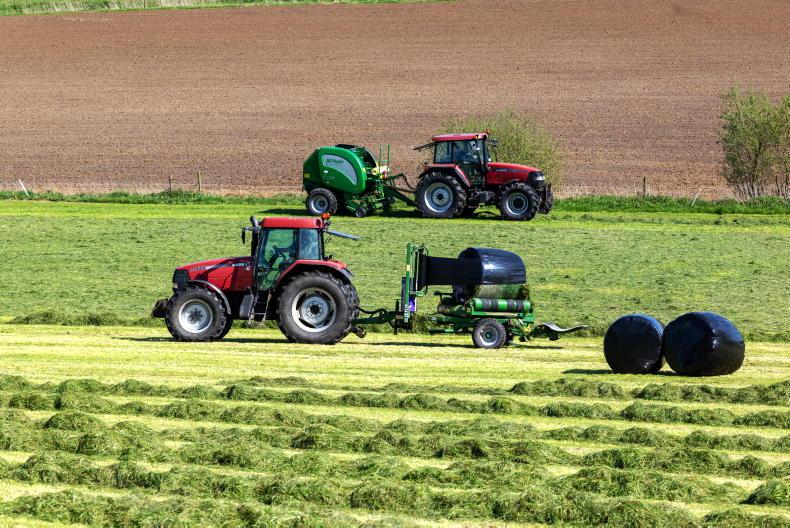
Grass: I see the average grass growth rates continue to be in the mid-50s according to Paturebase data.
If anything, this is probably a bit lower than I would have expected, but the thing to remember is that if a farm hasn’t measured in a while, the average figures will be lower.
I do see some farms with growth rates up close to 100kg/ha/day, which is probably more reflective of the current grass growth rates. This should be a warning to people that grass growth and pre-grazing yield will be going out of hand soon. To get on top of grass quality and avoid a situation where pre-grazing yield gets too strong, farmers need to be on top of skipping over paddocks. The best policy is to close up a set portion of the farm for long-term silage and reseeding. Generally speaking, setting the stocking rate at 3.8 to 4.2 cows/ha – which is a daily grass demand of between 65kg and 75kg/ha/day – is good policy.
Going higher than this is possible, but only for short periods because as we know, grass growth rates can be variable.
Taking out paddocks for silage is one thing, but don’t forget about reseeding. A lot of farmers have cut back on reseeding, to the detriment of their farms. It’s something that needs to be prioritised in order for it to happen. Use a high-quality glyphosate at the correct rate in order to get a good kill.
Breeding: Much depends on achieving a high submission rate and a high conception rate in order to have a high six-week calving rate next spring. The key thing is to make sure that all cows in heat are identified and served at the right time. The cows that are well marked are easy to spot, but those that are exhibiting only a few signs of heat are harder to spot, but they’re still in heat. Tail paint or scratch cards or some other tool is essential, especially as some cows will only be mounted a handful of times. Remember, tail paint should be applied in a 2” by 9” strip from the top of the tail head back. Some farmers cover a larger area but this makes it harder to identify. The difference between once a day and twice a day AI in terms of conception rate is minimal, but the timing of AI is very important for sexed semen. On sexed semen, Daire Cregg has looked at an analysis on the costs and benefits on page 33.
Weeds: I think its safe to say that where docks and other perennial weeds are a major problem, the best way to control them is through a full reseeding programme, including post-emergence spraying. That said, spraying docks in the spring and autumn will give good control for a number of years, but most find that the docks eventually come back.
The key ingredient for a good kill is plenty of water, upwards of 160 litres per acre. For smaller infestations of thistles or nettles, spot spraying will be effective. In the past, many farmers used to spray under the wires in ditches and hedgerows but by doing so kill off wildflowers. These wildflowers are an important source of food for bees, so it’s better to leave the hedgerows to nature.



SHARING OPTIONS