The good weather over the last few days combined with ample grass supplies on most farms has meant that heat activity in dairy herds has increased considerably over the last week.
Most farmers plan to start the breeding season in the coming days, with some farmers opting to delay the start this year by a few days, due to the poor weather experienced this spring.
Their theory is that cows are calving too quickly, too early and they would be better off delaying calving for a few days to put back mean calving date.
Whenever breeding starts, the key thing over the next three weeks is to maximise submission rate. If the cow is not presented for AI, then there is no hope of her going in-calf to AI.
Therefore, knowing the signs of heat is a critical part of the whole process. Seasoned farmers will be well aware of the signs but think of younger farmers or farm employees who maybe do not have the same level of experience.
So what are the signs of heat? The first thing to say is that oestrus or heat is a spectrum and in any herd there will be cows coming into, on heat and coming off heat.
The following are some of the signs and activities associated with each period:
Cows coming into heat (duration six to 10 hours):
The cow coming into heat will not stand to be mounted.She may be smelling other cows.Attempting to mount other cows. Display a moist, red, and slightly swollen vulva. She may be restless and could be bellowing a lot.Cows in heat (duration two to 30 hours – average 15 hours):
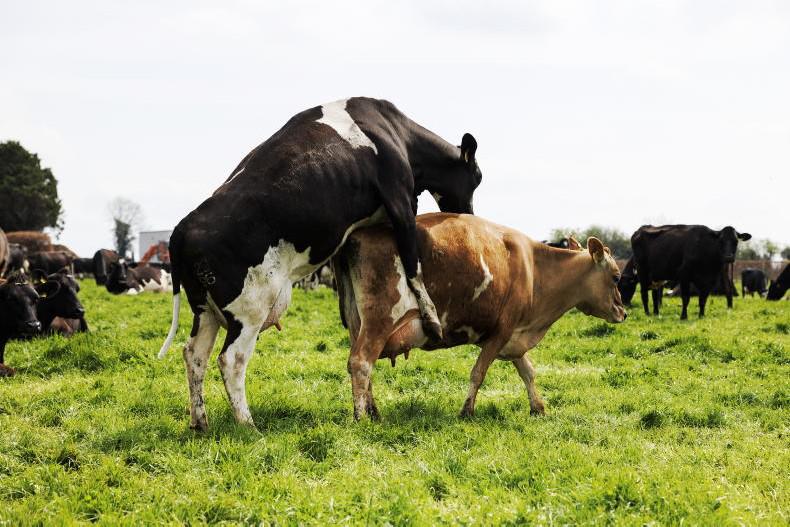
Stand to be mounted - hair and skin rubbed off crest of tail. Are nervous, excitable, and restless.May mount other cows. May stand with back arched and tail in air. Spend less time than usual grazing.Display moist, red vulva.• Clear mucus discharge from vulva. May hold milk.Frequently change from their usual order coming into the parlour - often lead the herd from the paddock or lag behind.Cows after heat:
Will not stand to be mounted Smell other cows.Clear mucus discharge from vulva.Farmers should monitor cows for signs of heat at least three times per day. This includes the two milking periods and one other time, ideally late in the evening.
Heat detection aids such as tail paint, scratch cards, crayons or some other device is very useful because it can be difficult to actually see cows being mounted.
Of course, farmers with automated heat detection aids usually don’t do any additional monitoring but the systems themselves need to be monitored to ensure they’re working correctly.
Farmers with the best breeding results will pay very close attention to heat detection and spend time monitoring cows.
The good weather over the last few days combined with ample grass supplies on most farms has meant that heat activity in dairy herds has increased considerably over the last week.
Most farmers plan to start the breeding season in the coming days, with some farmers opting to delay the start this year by a few days, due to the poor weather experienced this spring.
Their theory is that cows are calving too quickly, too early and they would be better off delaying calving for a few days to put back mean calving date.
Whenever breeding starts, the key thing over the next three weeks is to maximise submission rate. If the cow is not presented for AI, then there is no hope of her going in-calf to AI.
Therefore, knowing the signs of heat is a critical part of the whole process. Seasoned farmers will be well aware of the signs but think of younger farmers or farm employees who maybe do not have the same level of experience.
So what are the signs of heat? The first thing to say is that oestrus or heat is a spectrum and in any herd there will be cows coming into, on heat and coming off heat.
The following are some of the signs and activities associated with each period:
Cows coming into heat (duration six to 10 hours):
The cow coming into heat will not stand to be mounted.She may be smelling other cows.Attempting to mount other cows. Display a moist, red, and slightly swollen vulva. She may be restless and could be bellowing a lot.Cows in heat (duration two to 30 hours – average 15 hours):
Stand to be mounted - hair and skin rubbed off crest of tail. Are nervous, excitable, and restless.May mount other cows. May stand with back arched and tail in air. Spend less time than usual grazing.Display moist, red vulva.• Clear mucus discharge from vulva. May hold milk.Frequently change from their usual order coming into the parlour - often lead the herd from the paddock or lag behind.Cows after heat:
Will not stand to be mounted Smell other cows.Clear mucus discharge from vulva.Farmers should monitor cows for signs of heat at least three times per day. This includes the two milking periods and one other time, ideally late in the evening.
Heat detection aids such as tail paint, scratch cards, crayons or some other device is very useful because it can be difficult to actually see cows being mounted.
Of course, farmers with automated heat detection aids usually don’t do any additional monitoring but the systems themselves need to be monitored to ensure they’re working correctly.
Farmers with the best breeding results will pay very close attention to heat detection and spend time monitoring cows.
SHARING OPTIONS