



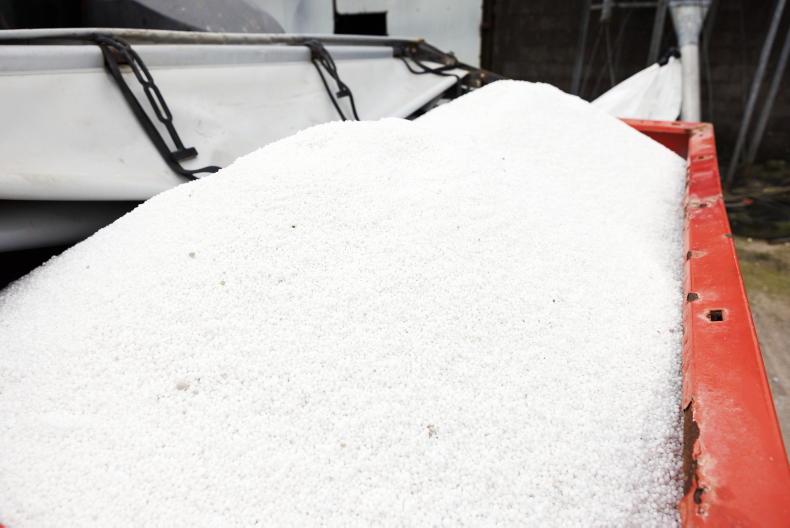
The first day of the prohibited period for spreading chemical fertiliser is 15 September, meaning the last day for spreading is 14 September, which is just over two weeks away.
I am a fan of blanket spreading nitrogen in late summer and early autumn, as I think it allows farmers to use nitrogen more strategically.
How much to spread all depends on the demand for autumn grass, which is dependent on stocking rate, whether or not the farm is on target for grass now and how much clover is present in swards.
Waste
Nobody wants to waste nitrogen, not least because it’s bad for the environment. When planning on how much nitrogen to apply this autumn, farmers need to ask themselves if it is really needed.
Cost and environment aside, building up enough grass in autumn is critical if you are to have grass in spring.
On most highly stocked dairy platforms, farmers should be applying between 20 and 30 units of nitrogen over the next two weeks.
Lower stocked farms or where there is an abundance of grass can get less nitrogen.
Where clover is present in good quantities, half rate can be applied or it can be skipped altogether.
An advantage of blanket spreading at this time of year is that all paddocks are covered, whereas if you are following grazing with nitrogen, some poor-performing paddocks will get less nitrogen than they probably need.
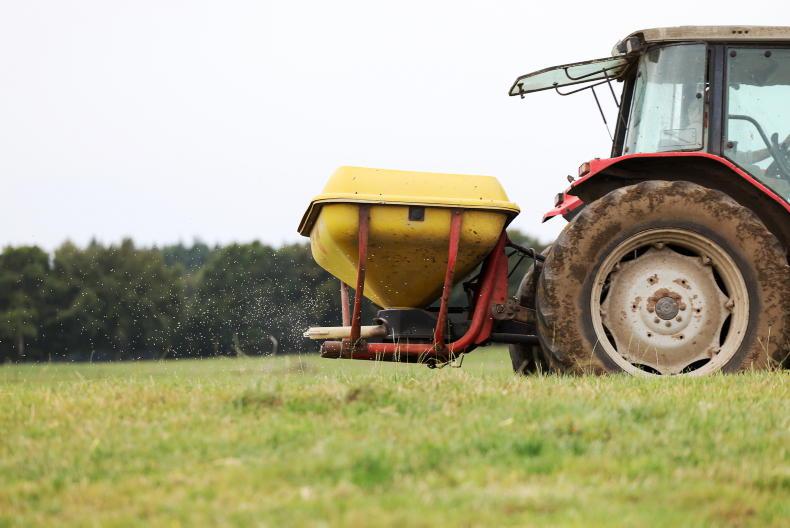
Make sure fertiliser spreaders are correctly set up before spreading to ensure the correct rate is going out.



SHARING OPTIONS