




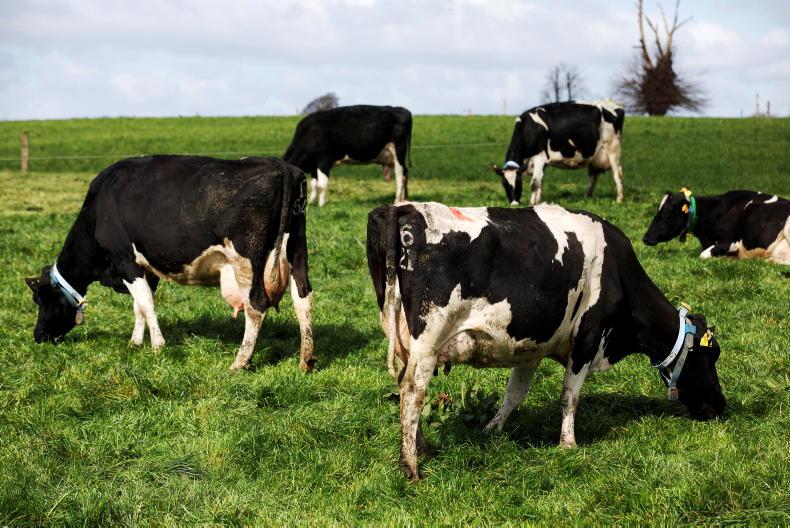
A number of farmers have contacted the Irish Farmers Journal over the last few days to say they’ve had cases of bloat in dairy cows grazing high clover pastures.
In two out of the three cases the cow was found dead – so no treatment was even possible.
With clover contents increasing now, it is likley that more cows will be at risk over the coming months.
It’s a sickening feeling finding a cow dead, or struggling with bloat. The problem is caused by cows gorging themselves on very lush grass and clover.
This creates a froth in the rumen which prevents gas from escaping and the cow swells up and suffocates if untreated. It can happen quickly so a dead cow is often the first sign of a problem.
The high risk times for bloat are;
However, it has been pointed out to me that you rarely ever get bloat when you expect you might get it – it usually happens at a time and place when you don’t expect it.
The advice for preventing bloat is;
There are two ways of treating cows with bloat. Speed is critical as cows can die quickly after developing bloat.
Bloat oil or paraffin oil can be given down the neck at a dose rate of 60ml to 100ml. This oil will help to displace the froth build-up in the rumen.
In severe cases the rumen may need to be punctured in order to release the gas. This should be done using a trocar and canula but where not available a very sharp knife will also work.
Looking at the cow from behind, identify the triangle area on her left between her last rib and the hip bone. Puncture the cow close to the centre of this triangle and if successful the gas will be released.






SHARING OPTIONS