



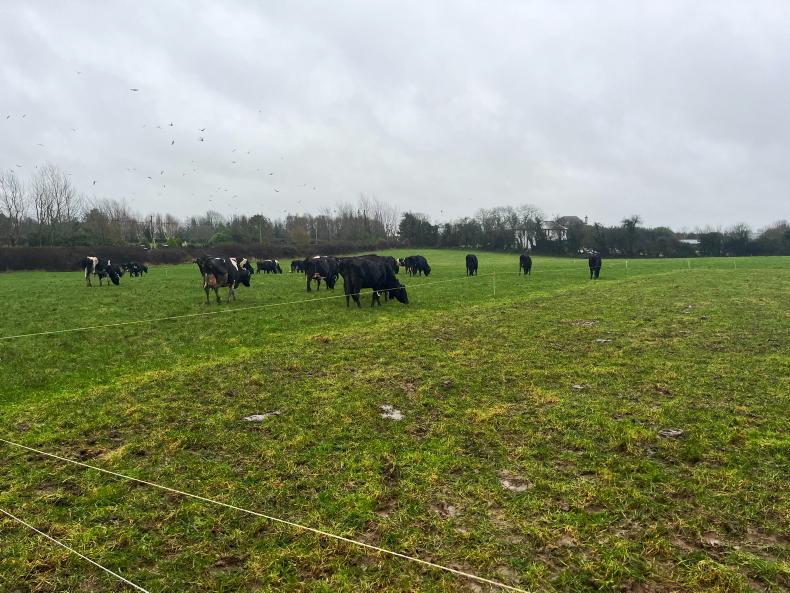
In less than 10 days most spring-calving herds in the country will be back in the thick of the action. The time for planning will be well and truly gone and, for most, it’ll be a case of managing day-to-day over the next couple of months.
With this in mind, using this next week to make a grazing plan and develop a spring rotation planner could save the farm a lot of money.
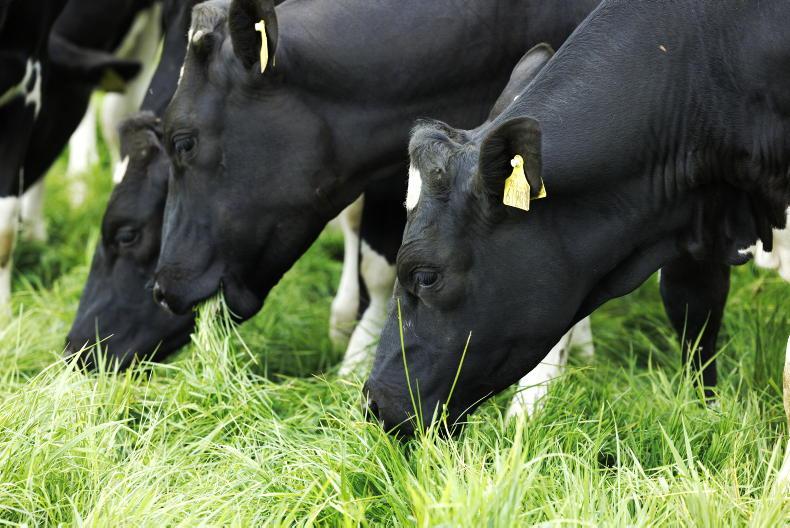
While ground conditions have deteriorated significantly with the recent heavy rain and grazing may seem unthinkable for some, getting grass in the cow’s diet will be vital if farms are to keep costs low this spring.
From a cost-saving point of view, every extra day at grass is worth €4/cow/day according to Teagasc analysis.
With base milk-price in the low-30s that figure becomes even more important.
Farm cover
Walking the farm should be a priority in the next week to see what grass is available.
Ideally, the farm needs to open with an average farm cover of over 1,000kg DM/ha.
If the cover is lower than this, it will be difficult to make grass last until the beginning of April.
Look to fill this gap with silage in early February when the impact of silage feeding on milk yield is less substantial, and allow the farm cover to build.
From mid-March on, feeding silage will have a severe negative impact on peak milk yield so avoid this at all costs.
For farms that have an average farm cover above 1,000kg DM/ha and soil type is relatively dry, getting grass into freshly calved cows in early February should be a priority.
Spring grass is a high-energy and high-protein feed, which is exactly what freshly calved cows need.
Every 1kg dry matter of spring grass has more energy than 1kg of grass silage, maize silage and even rolled barley.
As conditions are likely to be difficult, target the drier paddocks with lighter covers for the first grazings.
These lighter covers are far more digestible which is important as the cow’s appetite is small after calving.
On/off grazing
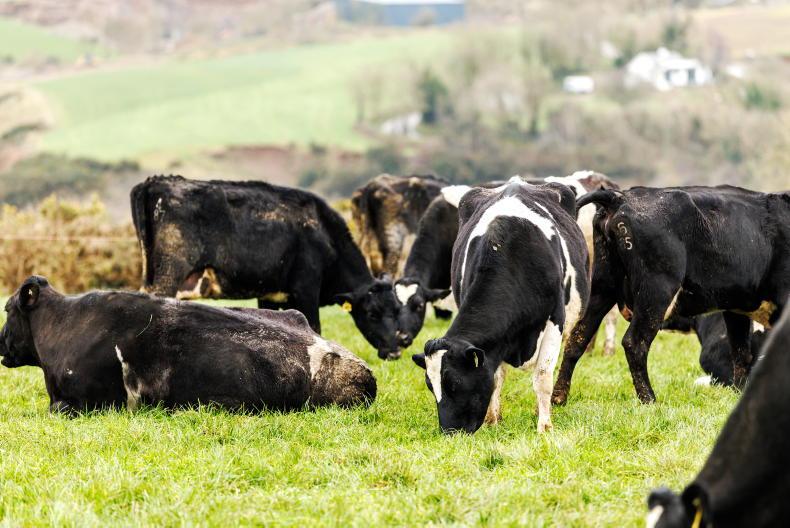
Use on/off grazing, strip wires, back fences and spur roads to avoid damaging paddocks.
By allowing cows access to paddocks for just three hours after each milking, they will be able to eat close to 90% of their daily feed requirement.
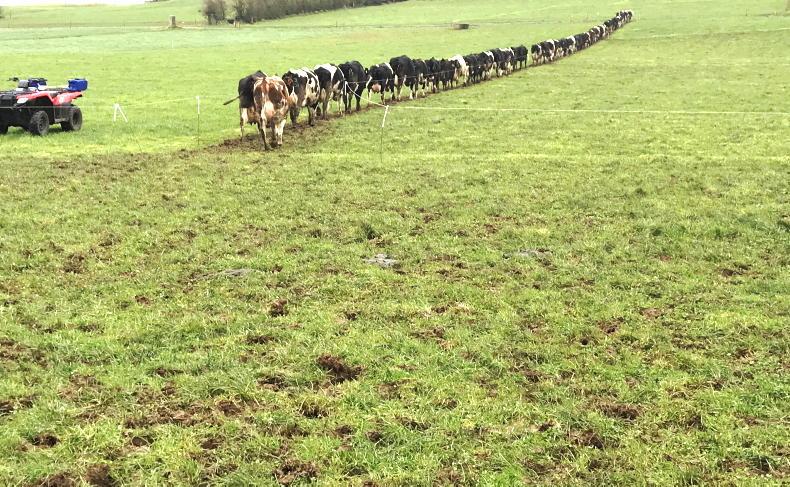
Paddocks with multiple entrances and troughs are the best option. However, these paddocks could be even more beneficial when more cows have calved and the risk of poaching is greater in late February.
Identifying the right paddocks for the right time will take planning and inevitably there will be mistakes made and some ground damaged but this is all part of spring grazing.
Spring rotation planner
Following a spring rotation planner can help to manage grass through the first rotation.
On drier soil types the target is to have 30% of the farm grazed by the end of February, 60% by St. Patrick’s Day, with 100% grazed by the first week of April.
For heavier soil types, these targets can be delayed by about 10 to 15 days.
The planner can be easily drawn up using an online tool like Pasturebase, for example.
The targets will help to keep the farm on track while also identifying potential future obstacles
Once the farmer knows the farm area, rotation start date and the rotation end date, the planner will be automatically formulated with the weekly grazing area targets outlined.
It’s important not to get ahead of these targets as it will mean putting in more feed in March and early April to slow the cows down, which will be detrimental to cow performance.
On farms where synchronisation programmes were used and calving may be more compact in the first few weeks, extra care should be taken to avoid breaking the targets.
While breaking targets is a problem, missing the targets can be equally detrimental and, in particular, the 30% target.
In that scenario there won’t be enough stronger covers back in those paddocks that were grazed first, to begin the second rotation with.
It’s very much a balancing act and that’s why the spring rotation planner is so important.
The targets will help to keep the farm on track while also identifying potential future obstacles.



SHARING OPTIONS