



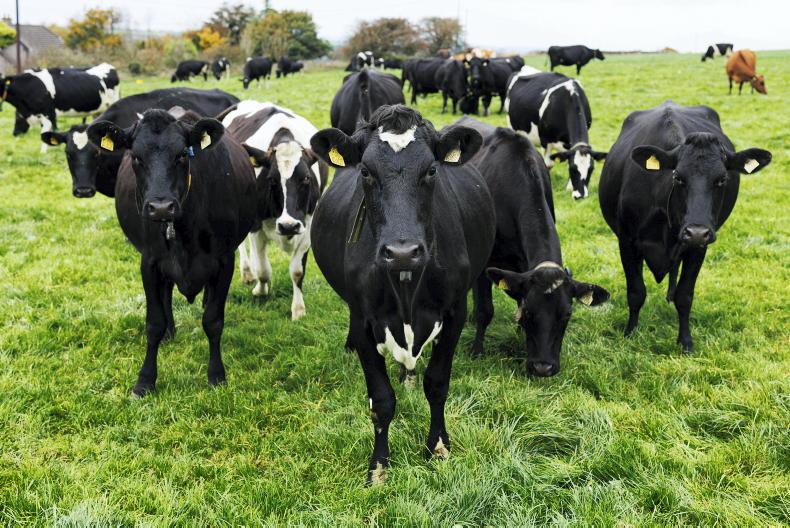
May and June are often considered the peak months for grass growth. While we haven’t fully got there yet due to colder temperatures, growth rates in the 90s and 100s are sure to come soon.
This brings its own challenges. Very high growth often results in a grass surplus, as demand is lower than the supply of grass on the farm.
Inevitably, grass quality then suffers, unless the farm is being walked very regularly and paddocks are taken out weekly for silage.
Pre-grazing yields start to creep up towards 1,500 and 1,600kg DM/ha and cows fail to clean them off properly.
By the following round, the sward has a lot of stem through it and it’s then that the real problems begin.
The cows will only graze the best of what is left, and forcing them to eat it down will significantly impact on milk production.
The higher fibre in the available grass slows down rumination meaning cows eat less dry matter and spend longer digesting.
Protein
On top of eating less and producing less milk yield, milk protein also takes a dive when cows are grazing paddocks with high pre-grazing yields.
This carries a big cost, as protein is the most valuable component of the milk cheque. A lower protein content means less solids and overall lower value milk.
Take two farms, similar in size with similar genetics and cow numbers. The two farms are both feeding two kilos of meal and allocating 17kg DM of grass.
The impact has been felt in the bulk tank. Protein content for both farmers was 3.7% but Farmer B’s has now dropped to 3.50% after a couple of days grazing the higher covers
The only difference between the two, is the farm cover per cow. Farmer A is grass measuring once every five days during the peak growing months, matching growth with demand and is taking out paddocks for silage as needs be.
The cover per cow is consistently around 170kg DM/ha and the cows are going into pre-grazing covers of 1,350kg DM/ha.
Farmer B on the other hand is measuring grass every two weeks at the most. After a week of growth in the high 90s and a demand of 60kg DM/ha, cover per cow has very quickly jumped to 210kg/cow.
Cows are now going into covers of 1,700kg DM/ha and failing to clean them off well enough.
The impact has been felt in the bulk tank. Protein content for both farmers was 3.7% but Farmer B’s has now dropped to 3.50% after a couple of days grazing the higher covers. Farmer A’s protein remained at 3.7%.
In terms of milk yield Farmer A is producing 24 litres, while Farmer B has dropped from 24 to 23 litres/day.
Cost
The cost of a drop in yield by one litre per day across a 100-cow herd at a milk price of 37c/l is €37/day.
On top of this, the cost of a drop in protein percentage of 0.2% across a 100-cow herd is approximately €62/day.
This was calculated by taking an average current value per kilo of protein at €7.20/kg. Across a 100-cow herd the value difference of protein between the herd doing 24 litres/day, versus the herd doing 23 litres/day at 3.7% protein and 3.5% protein respectively equates to €62.
In total, the daily milk cheque is reduced by €99/day (€62 and €37). While this may not seem a major figure, by failing to act quickly to reduce farm cover the impact could last for at least one full rotation but the likelihood is grass quality will suffer for up to three to four lactations while the farmer plays catch up.
Over one month of lower yield and protein percentages, the cumulative cost to a 100-cow herd is €2,970.
This highlights the important of monitoring grass closely and reacting quickly during the main growing season to maintain optimum pre-grazing yields, cow performance and profitability.




SHARING OPTIONS