



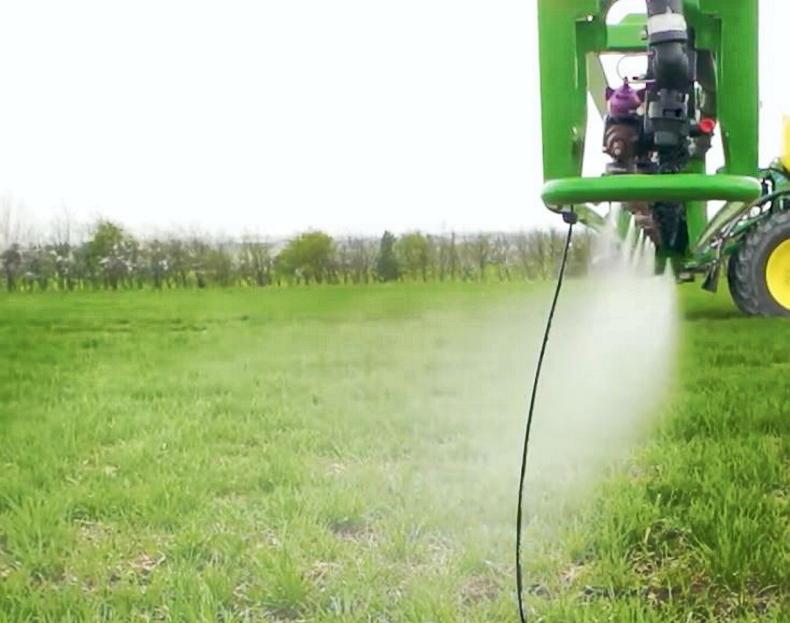
Nozzle choice has always been an issue on sprayers. They have evolved over time, with cone nozzles displaced by flat fans and in recent years flat fans have almost been replaced by air-induction nozzles. But is this evolution correct and what mix of nozzles should we have on a sprayer working in cereal crops?
Multi-nozzle bodies
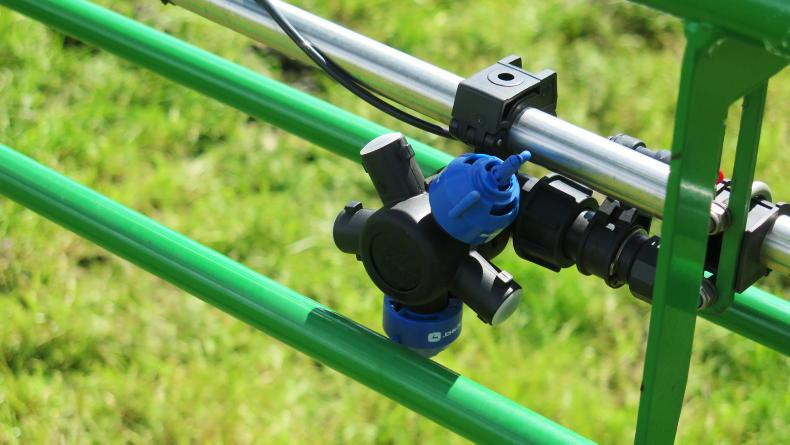
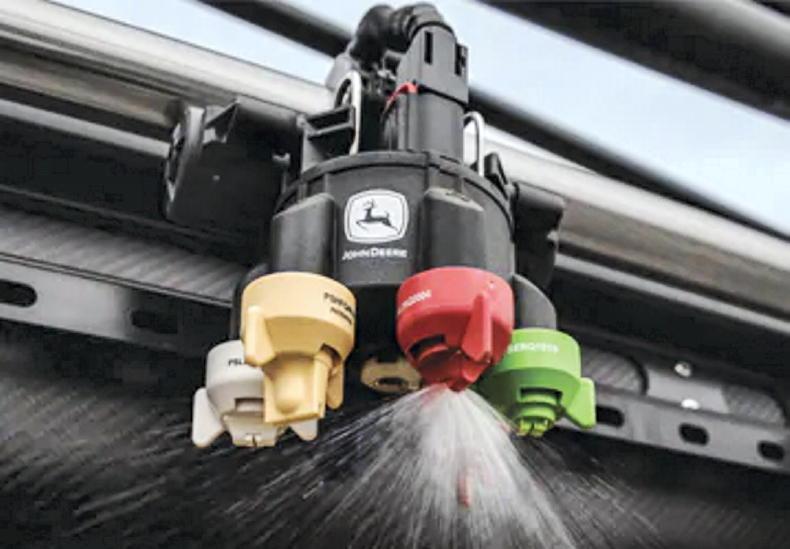
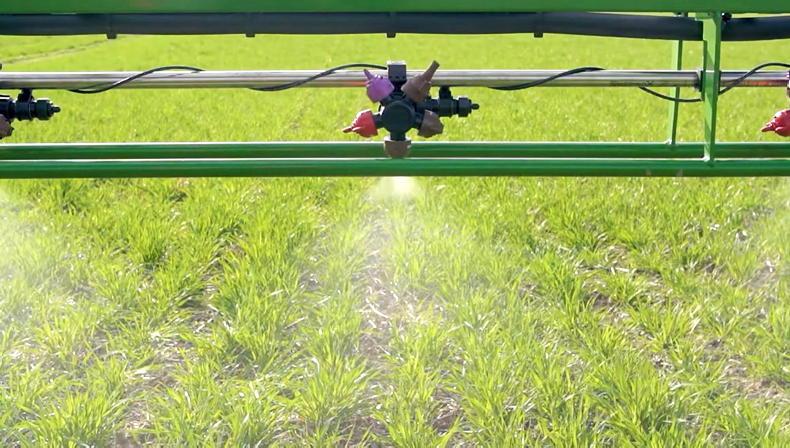
Most tillage farm sprayers have manually selectable nozzle body units that hold three or four nozzles at each nozzle position.
At a time when there are different spray characteristic requirements from pesticide manufacturers (on product labels) and different nozzle types available, it is essential to pick the right nozzles to fit in these positions.
Sprayer developments
Over the last 30 years, when the pipeline of ever-improving agrochemicals (fungicides, herbicides and insecticides) was really strong, the emphasis on spraying was mainly around technology which allowed us to:
Sprayers got bigger, with wider booms and good suspension allowing faster spraying speeds. Growers started using lower water volumes (100-160l/ha) to increase work rate.
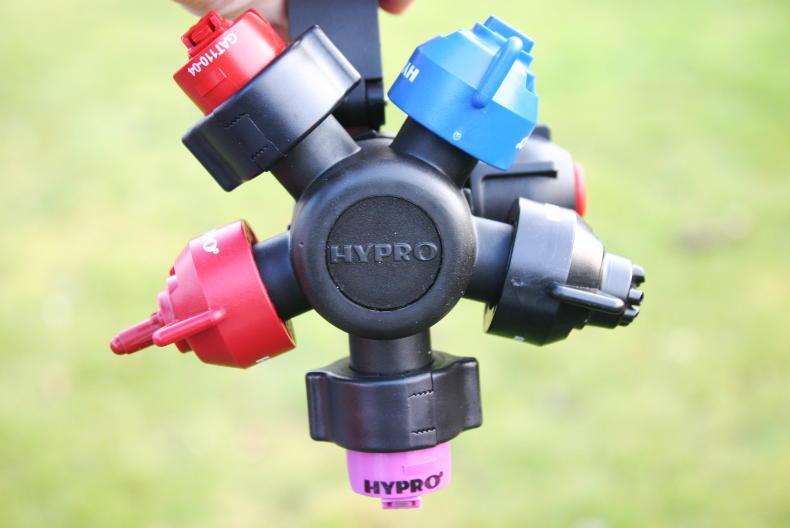
GPS technology allowed automated section control and headland switching. Drift control became a focus with the complex but effective air-sleeve system being replaced by air-induction nozzles which are inexpensive and effective.
Are all these developments good?
These developments allowed faster work rates and wider work windows, reducing costs and/or improving timeliness.
But some of the above practices can compromise the performance of the product applied, due to impacts on spray distribution.
Why we need better spraying today
The pipeline of agrochemicals is much more restricted today, against a background of evolving resistance and higher safety and environmental standards for product registration.
It’s now critical that we use plant protection products very carefully. This can result in more effective control of diseases where product efficacy has declined due to disease strain evolution.
But better application can also reduce the speed of resistance development in both diseases and weeds.
What spraying characteristics are important?
A number of spraying characteristics are important in ensuring proper application
All of these in combination with the plant protection product’s own mode of action (systemic/contact, formulation etc) and weather conditions impact on how well the product is applied.
Selecting nozzles: the manufacturer’s label
The nozzle types that are best in any situation are determined largely by:
While lower water volume requirements will increase sprayer work rates and coarser spray qualities will reduce spray drift, they can compromise application to the target.
While the product manufacturer’s requirements are stated on the label, the manufacturers differ in their approach to determining what these are.
Many take a very cautious approach and simply state: 200l/ha water volume and ‘medium’ spray quality for all of their products as this is what they are tested at. Other manufacturers would appear to be more aware of the potential to reduce drift and increase work rate and have determined what the lowest water volume and correct spray quality are for individual products.
So, one product may state that 120l/ha and ‘coarse’ spray quality are acceptable, whereas another product from the same manufacturer may require 160l/ha and ‘medium/fine’ spray quality.
Other manufacturers may stick to 200l/ha and medium, but suggested lower water volumes can be used at the grower’s own risk. It would be useful if all plant protection product manufacturers determined more precisely the range of spray quality and water volumes that are effective with their products.
Spray quality
Spray quality is the term used on most product labels to indicate the droplet size spectrum. While common words like ‘fine’, ‘medium’ and ‘coarse’ are used, these are precise categories on a seven-point scale. There are other methods of expressing how fine or coarse a spray is such as the VMD (volume median diameter) and % drift reduction (eg 70% or 90%).
In simple terms, the coarser the droplets, the less prone to drift they are. Low drift means less loss to the environment and better targeting / more precise application in the field. However, bigger droplets may not give the same level of deposition on the target surface (usually the leaf) as there are much less droplets, and bigger droplets can bounce too.
The importance of these characteristics in any situation depends on the product being applied. A very ‘systemic’ product may not require the entire leaf to be covered in spray deposition, so ‘very coarse’ spray quality may be satisfactory.
Certain herbicides need really good coverage requiring either a ‘fine’ or ‘fine/medium’ quality.
In many cases though, a compromise may be necessary, for example a ‘medium’ spray quality may be ideal, but on a particular day it would result in excessive drift.
In this case a coarser spray using a low-drift air induction nozzle, would allow timely spraying. However, if a label specifically states that ‘coarse’ or low-drift nozzles should not be used, then they should not be as this indicates their testing work shows a performance loss.
What nozzles?
To determine nozzles, you need to consult the manufacturer’s on-line, paper or app-based nozzle charts which supply a wealth of information about outputs and spray quality. Forward speed and water volumes used are the starting point.
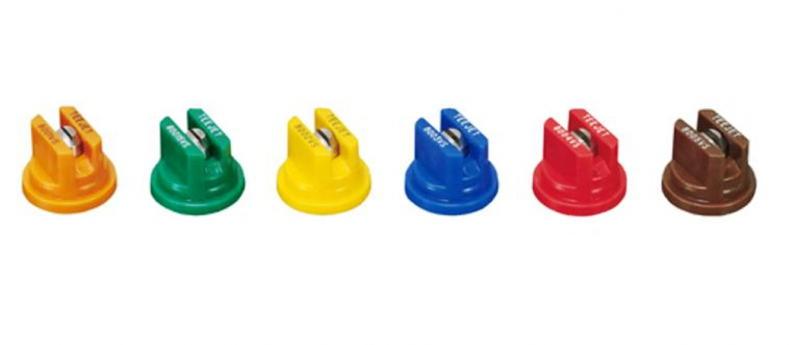
This will determine the basic size of nozzle (denoted by size number and colour) to be used. Most spraying today is carried out at 10km/hr to 12km/hr but modern booms on high-spec sprayers will allow faster speeds, but with a risk of more drift, particularly near the tramline.
With conventional flat fan nozzles, larger nozzles will produce larger droplets, coarser spray quality and less drift (table 1).
Within a nozzle size, increasing pressure will decrease droplet size (04 nozzle in Table 1).
To produce ‘Coarse’ spray quality with standard nozzles, very large nozzles are needed which will necessitate a greater application rate (08 nozzle in Table 1).
Air induction nozzles
Air induction nozzles use air drawn into the nozzle body to modify the droplet spectrum. This can bring spray quality into the ‘very coarse’ to ‘ultra coarse’ category (Table 2).
But note that not all air induction nozzles are the same. One manufacturer produces three different types of air induction nozzles (Table 2). Note that the output from all nozzles whether air induction or standard is the same for a given size e.g. 03 (blue) at the same pressure.
With many air induction nozzles, sprayer pressure can be used to create a big impact on spray quality and this can be used to good effect (Table 3).
What nozzle combinations?
The nozzle combinations will be determined by the forward speed and application rate required. In tables 4, 5 and 6, a suggested mix of nozzle sizes is given for three different application rates (120, 160 and 200l/ha), all at 12km/hr.
In each case, the grower gets a choice of spray quality going from fine/medium to very coarse. Fine sprays are still required for some herbicides. ‘Medium’ and ‘coarse’ options will probably be selected in most cases, with drift reduction needs determining the coarser options. ‘Extremely coarse’ options should only be used where there is an extreme need to reduce drift risk, perhaps in buffer areas, or where the product specifically allows their use. Otherwise, there is a risk of poor performance.
Obviously if there are four positions you could add an extra nozzle in the 120 and 150 l/ha options and a nozzle would have to be dropped from the 200l/ha options. Other combinations are possible and will depend on the likely forward speed and application rates being used.
Conclusion
Given the price of sprayers, having three or four sets of well-chosen nozzles is quite inexpensive.
It is worth selecting them carefully to ensure a range of spray qualities can be achieved. While air induction nozzles have been a game changer in drift reduction, they can compromise performance with some products.
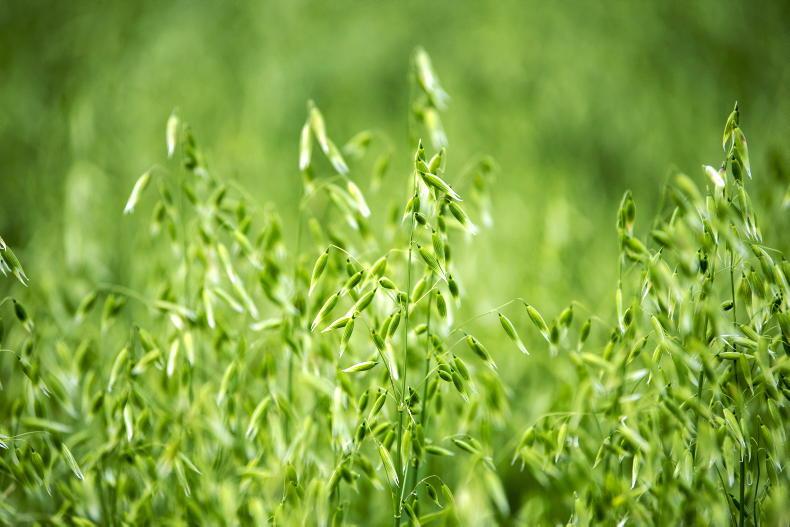
They need to be used carefully, and fine/medium spray quality nozzles selected when conditions allow, and always where the label explicitly states that they are needed (e.g. Axial Pro on wild oats).
Note too that air induction nozzles differ in their spray quality with ‘extremely’ or ‘ultra’ coarse qualities at highest risk of compromising performance with some products.



SHARING OPTIONS