The downturn in dairy prices has come as a shock to most observers. For the last 12 months, dairy prices have been high and stable as a result of reduced global milk supply and fairly solid demand.
There was limited enough fluctuation in the price of butter, cheese and milk powders over the last 12 months.
That all began to change in early-September when the price of butter began to tumble, losing €400 to €500/t per week over the following month.
Cheese, milk powders and casein all dropped in price too, but not by as much as the falls in butter.
The Ornua product price index (PPI), which is an index of product prices based on the typical product mix is a reasonably fair indication of the market returns.
Between January and July, the PPI milk price averaged 46.2c/l excluding VAT but including the Ornua value payment, which is the return from selling higher value products such as Kerrygold butter and Dubliner cheese.
Processing cost
In August, the PPI dropped to 44.55c/l while in September, the PPI dropped further to 42.63c/l excluding VAT and including the Ornua value payment.
These prices all assume a processing cost of 9.3c/l.
At the time of writing, the only co-op to announce September milk price is Lakeland Dairies, who have set their price at 42.1c/l, which is below the Ornua PPI including the Ornua value payment.
Increased milk supply has been on the cards in the US for some time. This time last year, it was reported that the US dairy sector was gearing up for expansion with increased processing capacity for cheese and whey.
Despite talk of high beef prices encouraging US dairy farmers to cull cows, there is anecdotal evidence that the high price for dropped Angus calves is encouraging farmers to milk on cows for longer, get a calf on the ground and then cull the cow. This has the effect of putting more milk in the tank and with cheap feed, farmers can afford to keep the cows for longer.
Across the main milk producing states in the US, supplies for August 2025 were up 3.3% compared to August 2024.
In July, milk supplies were up 4.3% compared to the previous July.
For the year to the end of August, milk production in the US is up 1.7% compared to last year.
Milk supply in Europe has also increased sharply, with recent figures showing an almost unbelievable rebound in milk supply. In Germany, provisional estimates are putting the increase in milk supply for July at 2% up on July 2024.
German market experts are estimating a similar increase for August while they say the current week on week increases are in the order of 5%, which is unheard of.
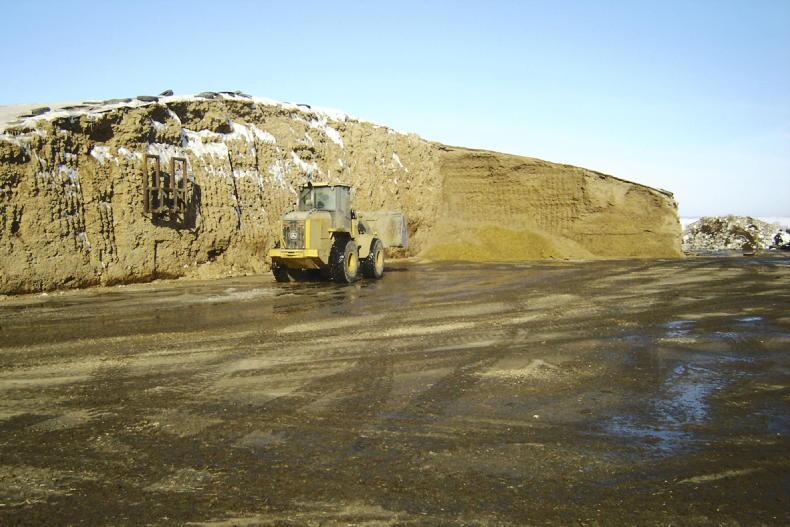
Cheap feed in the US is a key factor in the increase in milk supply across the US
In France, the situation is similar with milk production said to be up over 5% for August.
Supplies in France have been good for most of 2025, but the rate of increase is increasing as the year goes on.
In the Netherlands, milk supply is also up by almost 5% while in Poland, milk supplies there are up over 3.5% for August.
Across most of Europe, milk supplies tend to tail off in the autumn, past the summer peak. However, the same degree of decline is not evident this year. In fact, production is increasing week on week, which is unheard of.
A change in calving pattern as a result of the bluetongue outbreak that hit northwest Europe last year is being blamed for the change in milk supply profile, particularly in badly affected regions like France, Netherlands and parts of Germany.
Cows that should have become pregnant in September and October 2024, at the peak of the bluetongue outbreak didn’t; as a result there was fewer calvings across northwest Europe in May and June 2025.
Many of those cows subsequently calved in July and August, pushing up milk supplies for the autumn.
The weather is also a factor, with relatively benign weather across Europe helping to drive up milk output.
The impact of good weather is very obvious in Ireland, where some of the large dairy co-ops here are reporting on milk supplies up between 8% and 10% week on week compared to last year.
High milk prices are also a factor, with milk prices across Europe over 50c/l for most of 2025 giving farmers a strong signal to drive on production.
The increases in production seem to have caught the market off guard, with negative price sentiment driving global dairy commodity prices down.
Farm gate milk price cuts usually lag dairy commodity prices by a few months, particularly when milk prices are on the way up.
However, based on recent milk price announcements and announcements to come this week and next, they follow very quickly when prices go down.
Preparing for lower prices
According to the Irish Farmers Journal monthly milk league, milk prices in Ireland have already fallen by almost 7% between April, when prices averaged €6.70/kg MS (base price 47.92c/l) excluding VAT and August when prices averaged €6.25/kg MS (base price 44.71c/l) excluding VAT.
While we await the outcome of the September and October milk price announcements, farmers should be realistic about their expectations. Where milk prices are going to be next spring is almost impossible to predict but this topic will be discussed in more detail with leading experts at Dairy Day on 15 November with GIRA expert Christophe Lafougere.
For now, it’s prudent to plan for lower milk prices than experienced in 2025 and if prices are higher then all the better.
What can Irish dairy farmers do to shelter the farm business from milk price cuts?
At this time of year, many farmers are in the middle of, or are thinking about completing capital expenditure projects such as new buildings, equipment or machinery.
After a year of very positive cash flows, where surplus cash is fairly plentiful, the temptation might be to finance these investments out of cash flow.
There is no issue with this, provided there is enough cash available to finance negative cash flow periods in 2026. In other words, don’t drain the bank account at the end of 2025 and not have a cash buffer coming into 2026.
How much cash is required varies, but many accountants and advisors will say that €600 to €700/cow is required to cover all the costs incurred in the first half of the year, before the big milk payments start to come from May onwards.
This means there should be enough cash available to not only pay wages and fixed costs, but also to pay for fertiliser, feed, contractor and so on when these costs arise.
While milk prices are likely to start off lower in 2026 than they were in 2025, there is little indication that costs are going to be much lower. There should be more downward pressure on feed and fertiliser costs, given global feed prices and reduced demand for fertiliser due to low grain prices globally.
One of the best ways to counteract falling milk prices is to reduce on-farm spending. Utilising more grass is a key aspect to this, with all the analysis showing that the more grass that is utilised per hectare, the more profit that is made per hectare.
Having sufficient grass on the farm to allow for early spring grazing and having the infrastructure to facilitate this is crucial. The difference in animal performance is enormous when grass is part of the diet in early spring. This extra output is on top of the lower costs as a result of having grass in the diet.
If extra investment is required in roadways, water or fencing in order to improve grazing infrastructure then this should be prioritised this autumn.
Farmers should learn the skills of measuring and managing grass to ensure sufficient covers next spring, with the aim of reducing the amount of silage and meal that will need to be fed next year. This is real efficiency in practice.
Realistically, the best time for planning and budgeting is between now and mid-January as after that, farms get too busy and there are too many distractions.
Therefore, now is the time to complete the spring grass budget, pick what cows are suitable for dairy breeding and what cows are suitable for beef breeding, look at bulls for next year and, most importantly complete a cash-flow planner for the year ahead.


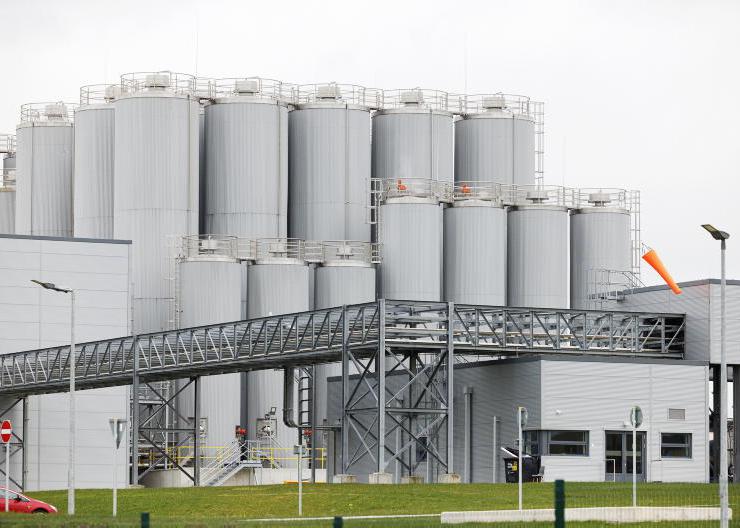
The US dairy industry has invested almost €10bn in new stainless steel over the last two years
Milk supplies around the world have increased ahead of expectations and this extra milk is driving down global dairy prices. Analysts are predicting milk supplies in large producing countries like Germany, France and Netherlands to be up by about 5% compared to this time last year. This extra milk is fuelling a drop in price for commodity products, such as butter and cheese. Farmers should be prepared for lower milk prices in the future.
The downturn in dairy prices has come as a shock to most observers. For the last 12 months, dairy prices have been high and stable as a result of reduced global milk supply and fairly solid demand.
There was limited enough fluctuation in the price of butter, cheese and milk powders over the last 12 months.
That all began to change in early-September when the price of butter began to tumble, losing €400 to €500/t per week over the following month.
Cheese, milk powders and casein all dropped in price too, but not by as much as the falls in butter.
The Ornua product price index (PPI), which is an index of product prices based on the typical product mix is a reasonably fair indication of the market returns.
Between January and July, the PPI milk price averaged 46.2c/l excluding VAT but including the Ornua value payment, which is the return from selling higher value products such as Kerrygold butter and Dubliner cheese.
Processing cost
In August, the PPI dropped to 44.55c/l while in September, the PPI dropped further to 42.63c/l excluding VAT and including the Ornua value payment.
These prices all assume a processing cost of 9.3c/l.
At the time of writing, the only co-op to announce September milk price is Lakeland Dairies, who have set their price at 42.1c/l, which is below the Ornua PPI including the Ornua value payment.
Increased milk supply has been on the cards in the US for some time. This time last year, it was reported that the US dairy sector was gearing up for expansion with increased processing capacity for cheese and whey.
Despite talk of high beef prices encouraging US dairy farmers to cull cows, there is anecdotal evidence that the high price for dropped Angus calves is encouraging farmers to milk on cows for longer, get a calf on the ground and then cull the cow. This has the effect of putting more milk in the tank and with cheap feed, farmers can afford to keep the cows for longer.
Across the main milk producing states in the US, supplies for August 2025 were up 3.3% compared to August 2024.
In July, milk supplies were up 4.3% compared to the previous July.
For the year to the end of August, milk production in the US is up 1.7% compared to last year.
Milk supply in Europe has also increased sharply, with recent figures showing an almost unbelievable rebound in milk supply. In Germany, provisional estimates are putting the increase in milk supply for July at 2% up on July 2024.
German market experts are estimating a similar increase for August while they say the current week on week increases are in the order of 5%, which is unheard of.

Cheap feed in the US is a key factor in the increase in milk supply across the US
In France, the situation is similar with milk production said to be up over 5% for August.
Supplies in France have been good for most of 2025, but the rate of increase is increasing as the year goes on.
In the Netherlands, milk supply is also up by almost 5% while in Poland, milk supplies there are up over 3.5% for August.
Across most of Europe, milk supplies tend to tail off in the autumn, past the summer peak. However, the same degree of decline is not evident this year. In fact, production is increasing week on week, which is unheard of.
A change in calving pattern as a result of the bluetongue outbreak that hit northwest Europe last year is being blamed for the change in milk supply profile, particularly in badly affected regions like France, Netherlands and parts of Germany.
Cows that should have become pregnant in September and October 2024, at the peak of the bluetongue outbreak didn’t; as a result there was fewer calvings across northwest Europe in May and June 2025.
Many of those cows subsequently calved in July and August, pushing up milk supplies for the autumn.
The weather is also a factor, with relatively benign weather across Europe helping to drive up milk output.
The impact of good weather is very obvious in Ireland, where some of the large dairy co-ops here are reporting on milk supplies up between 8% and 10% week on week compared to last year.
High milk prices are also a factor, with milk prices across Europe over 50c/l for most of 2025 giving farmers a strong signal to drive on production.
The increases in production seem to have caught the market off guard, with negative price sentiment driving global dairy commodity prices down.
Farm gate milk price cuts usually lag dairy commodity prices by a few months, particularly when milk prices are on the way up.
However, based on recent milk price announcements and announcements to come this week and next, they follow very quickly when prices go down.
Preparing for lower prices
According to the Irish Farmers Journal monthly milk league, milk prices in Ireland have already fallen by almost 7% between April, when prices averaged €6.70/kg MS (base price 47.92c/l) excluding VAT and August when prices averaged €6.25/kg MS (base price 44.71c/l) excluding VAT.
While we await the outcome of the September and October milk price announcements, farmers should be realistic about their expectations. Where milk prices are going to be next spring is almost impossible to predict but this topic will be discussed in more detail with leading experts at Dairy Day on 15 November with GIRA expert Christophe Lafougere.
For now, it’s prudent to plan for lower milk prices than experienced in 2025 and if prices are higher then all the better.
What can Irish dairy farmers do to shelter the farm business from milk price cuts?
At this time of year, many farmers are in the middle of, or are thinking about completing capital expenditure projects such as new buildings, equipment or machinery.
After a year of very positive cash flows, where surplus cash is fairly plentiful, the temptation might be to finance these investments out of cash flow.
There is no issue with this, provided there is enough cash available to finance negative cash flow periods in 2026. In other words, don’t drain the bank account at the end of 2025 and not have a cash buffer coming into 2026.
How much cash is required varies, but many accountants and advisors will say that €600 to €700/cow is required to cover all the costs incurred in the first half of the year, before the big milk payments start to come from May onwards.
This means there should be enough cash available to not only pay wages and fixed costs, but also to pay for fertiliser, feed, contractor and so on when these costs arise.
While milk prices are likely to start off lower in 2026 than they were in 2025, there is little indication that costs are going to be much lower. There should be more downward pressure on feed and fertiliser costs, given global feed prices and reduced demand for fertiliser due to low grain prices globally.
One of the best ways to counteract falling milk prices is to reduce on-farm spending. Utilising more grass is a key aspect to this, with all the analysis showing that the more grass that is utilised per hectare, the more profit that is made per hectare.
Having sufficient grass on the farm to allow for early spring grazing and having the infrastructure to facilitate this is crucial. The difference in animal performance is enormous when grass is part of the diet in early spring. This extra output is on top of the lower costs as a result of having grass in the diet.
If extra investment is required in roadways, water or fencing in order to improve grazing infrastructure then this should be prioritised this autumn.
Farmers should learn the skills of measuring and managing grass to ensure sufficient covers next spring, with the aim of reducing the amount of silage and meal that will need to be fed next year. This is real efficiency in practice.
Realistically, the best time for planning and budgeting is between now and mid-January as after that, farms get too busy and there are too many distractions.
Therefore, now is the time to complete the spring grass budget, pick what cows are suitable for dairy breeding and what cows are suitable for beef breeding, look at bulls for next year and, most importantly complete a cash-flow planner for the year ahead.
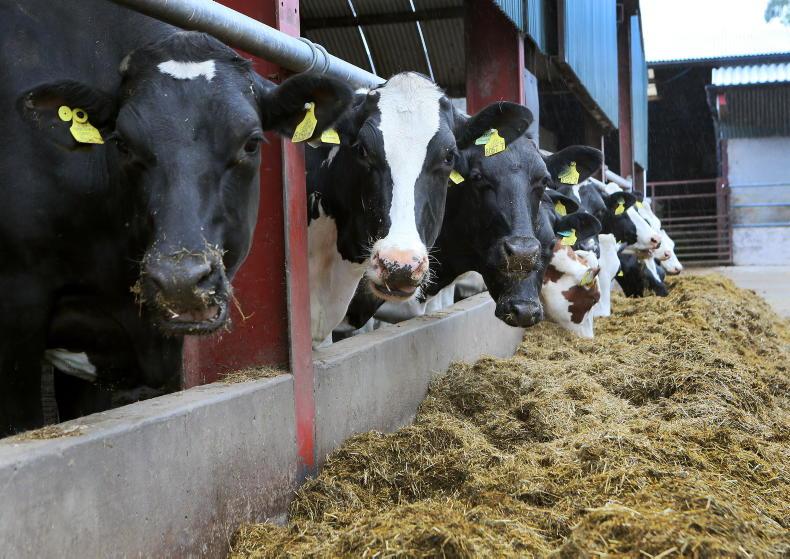
The US dairy industry has invested almost €10bn in new stainless steel over the last two years
Milk supplies around the world have increased ahead of expectations and this extra milk is driving down global dairy prices. Analysts are predicting milk supplies in large producing countries like Germany, France and Netherlands to be up by about 5% compared to this time last year. This extra milk is fuelling a drop in price for commodity products, such as butter and cheese. Farmers should be prepared for lower milk prices in the future.
SHARING OPTIONS