Consolidation is the big buzz word in the agricultural industry across Europe at the moment.
What does it mean? Well, essentially, it means smaller farms going out of business, with the bigger farm businesses expanding year on year.
This is no different in Sweden. Ten years ago, there were over 5,000 dairy farmers milking just over 300,000 cows.
Today, there are almost half that number of farms, with 2,600 farmers now milking the same number of cows.
Tie-up barns with 10 to 15 cows being milked by hand was the norm up to 20 years ago and can still be seen on rare occasions across the north of Sweden, but, in general, the landscape has changed.
The vast majority of dairy farms in operation are now in the south of Sweden, with an average of 115 cows per farm.
Milking robots are the most common way of milking cows in the high-input high-output system.
DeLaval
The DeLaval organisation originated in Sweden and is based roughly half an hour from Stockholm.
It controls the majority of market share for milking systems and farm technologies.
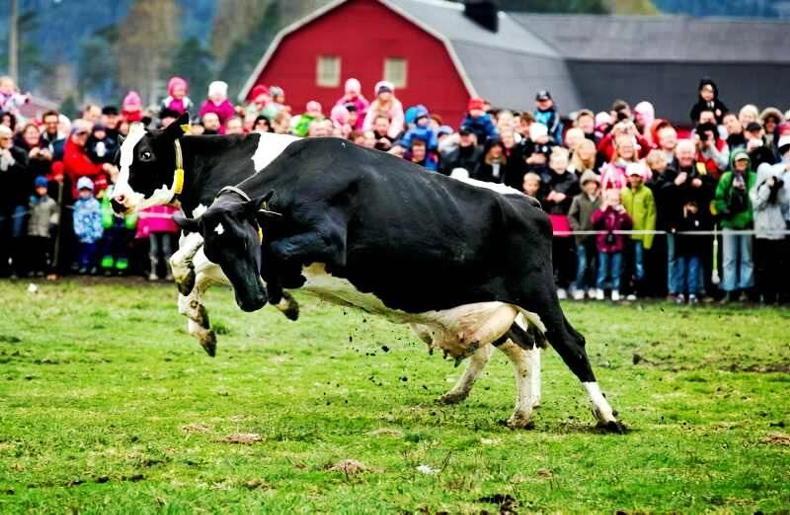
While the goal is a high-input high-output system, there is regulation in place from Government that requires Swedish farmers to offer outdoor access to cows for a minimum of six hours per day for a minimum of 90 days during the summer months.
The farms we visited were not practicing rotational grazing or paddocks systems. Cows were offered access to outdoor pasture with the option of returning to the shed at any stage.
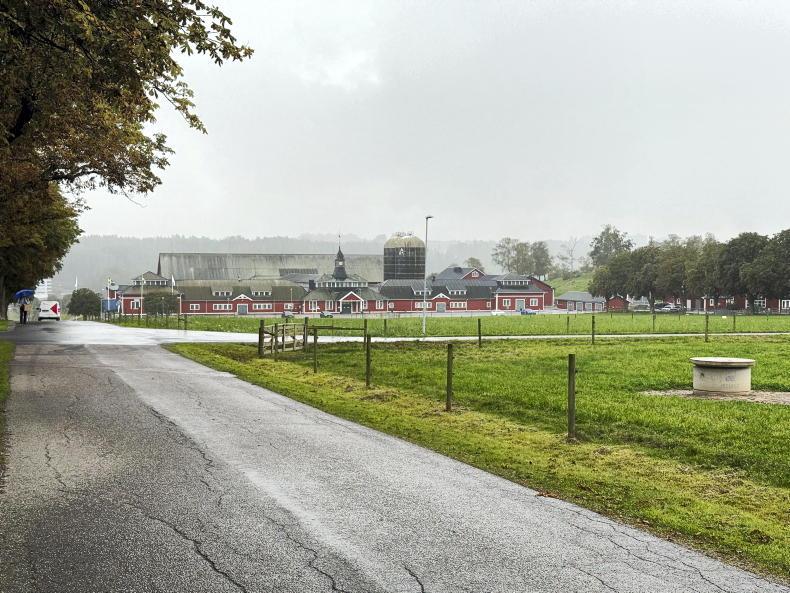
DeLaval headquarters and commercial farm in Tumba, Sweden.
The climate in the south of Sweden, where the majority of the dairy farms are, is not unlike the Irish climate. They receive over 1,000mm of rain per year, with summer and winter temperatures akin to those in Ireland. On top of this, the soil quality is relatively good, with all types of crops being grown there.
There is potential to grow grass, but there's no tradition of grass-based systems.
Most farmers choose not to offer cows water in the fields in an attempt to lure cows back inside to the feed passage (or "feed table" as they call it).
Milk production
In terms of milk production, on average for the farms visited, cows were producing 11,500 litres/year at around 4.1% fat and 3.3% protein, giving 876kg of milk solids/year.
While the yields are high, the farmers admitted the cows are well fed at high cost.
The typical diet consists of grass silage, maize silage, concentrates and a further energy source of either barley, wheat or oats.
An example of one of the farm's diets was 7kg DM of grass silage, 3kg DM of maize silage, 10kg of concentrates and a further 7kg of barley. This farm was producing north of 40 litres/cow/day.
It is a year-round calving system, with about 8% to 10% of the cows dry at any point of the year. The cow type is generally an even split between Holstein and Swedish Red breeds. The cows are not overly big animals, weighing around 650kg on average.
Milk price
AI (artificial insemination) is used throughout the breeding season. Sexed semen is being used on many farms for the first two straws a cow receives, with beef bulls used thereafter. The replacement rate runs above 35%, with cows lasting less than three lactations on average.
The current milk price in Sweden is running at 50c/l. Arla is the main milk processor, with several other smaller co-ops making up the rest of the market share.
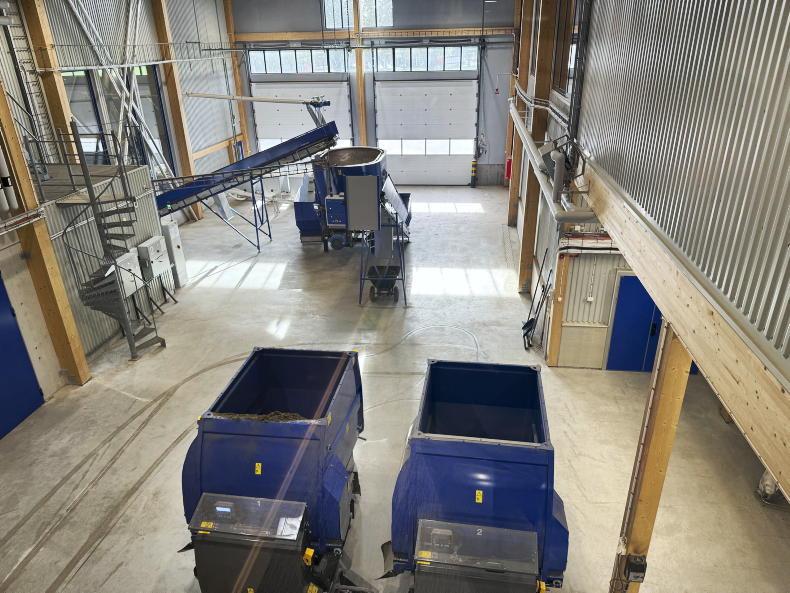
A lot of the farms are highly automated, with many operating robotic milking machines, automatic feeding systems and scrapers.
The level of debt is significantly higher than Ireland, with farmers highly leveraged. It seems they are comfortable with this, as is the case across many other parts of Europe.
The farmers we spoke to were not too concerned by their costs of production with higher yields the aim of the game.
Comment
It’s very difficult to compare the Swedish system to the Irish system.
Production is significantly lower in Ireland, but the costs related to the Swedish system are extremely high.
There were no metrics given for emissions or carbon footprints but their intensive system that relies on bringing in high levels of supplement will inevitably lead to higher emissions per cow. However, it would be interesting to see the comparison of emissions on a per kilogram of milk solids produced basis.
Stay tuned, as there will be more detailed reports from farm visits in Sweden, as well as information from DeLaval’s headquarter and commercial research farm in the coming weeks on the Irish Farmers Journal.
This article was updated on 10 October 2025
Consolidation is the big buzz word in the agricultural industry across Europe at the moment.
What does it mean? Well, essentially, it means smaller farms going out of business, with the bigger farm businesses expanding year on year.
This is no different in Sweden. Ten years ago, there were over 5,000 dairy farmers milking just over 300,000 cows.
Today, there are almost half that number of farms, with 2,600 farmers now milking the same number of cows.
Tie-up barns with 10 to 15 cows being milked by hand was the norm up to 20 years ago and can still be seen on rare occasions across the north of Sweden, but, in general, the landscape has changed.
The vast majority of dairy farms in operation are now in the south of Sweden, with an average of 115 cows per farm.
Milking robots are the most common way of milking cows in the high-input high-output system.
DeLaval
The DeLaval organisation originated in Sweden and is based roughly half an hour from Stockholm.
It controls the majority of market share for milking systems and farm technologies.
While the goal is a high-input high-output system, there is regulation in place from Government that requires Swedish farmers to offer outdoor access to cows for a minimum of six hours per day for a minimum of 90 days during the summer months.
The farms we visited were not practicing rotational grazing or paddocks systems. Cows were offered access to outdoor pasture with the option of returning to the shed at any stage.

DeLaval headquarters and commercial farm in Tumba, Sweden.
The climate in the south of Sweden, where the majority of the dairy farms are, is not unlike the Irish climate. They receive over 1,000mm of rain per year, with summer and winter temperatures akin to those in Ireland. On top of this, the soil quality is relatively good, with all types of crops being grown there.
There is potential to grow grass, but there's no tradition of grass-based systems.
Most farmers choose not to offer cows water in the fields in an attempt to lure cows back inside to the feed passage (or "feed table" as they call it).
Milk production
In terms of milk production, on average for the farms visited, cows were producing 11,500 litres/year at around 4.1% fat and 3.3% protein, giving 876kg of milk solids/year.
While the yields are high, the farmers admitted the cows are well fed at high cost.
The typical diet consists of grass silage, maize silage, concentrates and a further energy source of either barley, wheat or oats.
An example of one of the farm's diets was 7kg DM of grass silage, 3kg DM of maize silage, 10kg of concentrates and a further 7kg of barley. This farm was producing north of 40 litres/cow/day.
It is a year-round calving system, with about 8% to 10% of the cows dry at any point of the year. The cow type is generally an even split between Holstein and Swedish Red breeds. The cows are not overly big animals, weighing around 650kg on average.
Milk price
AI (artificial insemination) is used throughout the breeding season. Sexed semen is being used on many farms for the first two straws a cow receives, with beef bulls used thereafter. The replacement rate runs above 35%, with cows lasting less than three lactations on average.
The current milk price in Sweden is running at 50c/l. Arla is the main milk processor, with several other smaller co-ops making up the rest of the market share.
A lot of the farms are highly automated, with many operating robotic milking machines, automatic feeding systems and scrapers.
The level of debt is significantly higher than Ireland, with farmers highly leveraged. It seems they are comfortable with this, as is the case across many other parts of Europe.
The farmers we spoke to were not too concerned by their costs of production with higher yields the aim of the game.
Comment
It’s very difficult to compare the Swedish system to the Irish system.
Production is significantly lower in Ireland, but the costs related to the Swedish system are extremely high.
There were no metrics given for emissions or carbon footprints but their intensive system that relies on bringing in high levels of supplement will inevitably lead to higher emissions per cow. However, it would be interesting to see the comparison of emissions on a per kilogram of milk solids produced basis.
Stay tuned, as there will be more detailed reports from farm visits in Sweden, as well as information from DeLaval’s headquarter and commercial research farm in the coming weeks on the Irish Farmers Journal.
This article was updated on 10 October 2025
SHARING OPTIONS