News that Aurivo and Dale Farm co-ops are to work together to “scope potential cost synergies” and to “explore how Aurivo and Dale Farm could work together to maximise these synergies” is no great surprise.
There have been rumours circulating around the industry for the last 12 months that Aurivo is looking to partner with another co-op and also that Dale Farm is looking to grow its business.
What is a surprise is that these “synergy” talks are taking place while both co-ops are in a place of relative strength.
Whether or not the discussions between the two co-ops progresses to full or partial merger or joint venture remains to be seen, but history tells us that when Irish co-ops have merged in the past, it was usually as a result of one of the co-ops being under financial pressure, whether real or perceived.
Take the Tipperary Co-op merger with Arrabawn last year or the Lacpatrick merger with Lakeland Dairies in 2019. In both instances, the smaller co-op - Tipperary and Lacpatrick - were under pressure and that was reflected in the milk price they were paying to suppliers.
The same cannot be said of Dale Farm and Aurivo. Both are profitable companies and both are paying what they each consider to be decent milk prices.
Aurivo has been towards the top of division two in the Irish Farmers Journal monthly milk league for most of 2025.
Dale Farm is ranked in second place for the rolling 12-month milk price in the Northern Ireland milk league.
The fact that these co-ops are talking to each other about opportunities to cut costs and create synergies, while they are both performing well is good to see and should be welcomed.
Performance
On the face of it, it’s difficult to see where synergies between the two co-ops can happen. Aurivo has a milk pool of just over 500m litres, with 10% of its suppliers and 20% of its supply in Northern Ireland and the rest dotted around Connacht.
The Aurivo business is split into four sections. The consumer foods section includes a large liquid milk facility in Donegal along with the Connacht Gold retail butter brand.
The dairy ingredients business is based in Ballaghaderreen where butter and various forms of milk powder are manufactured. Outside of the core dairy business, the co-op also owns four marts and over 30 agribusiness stores.
For 2024, the co-op had turnover of €725m, with €290m of that coming from dairy ingredients, €158m from consumer foods, €160m from agribusiness and €117m from marts. Operating profit was €17m for 2024.
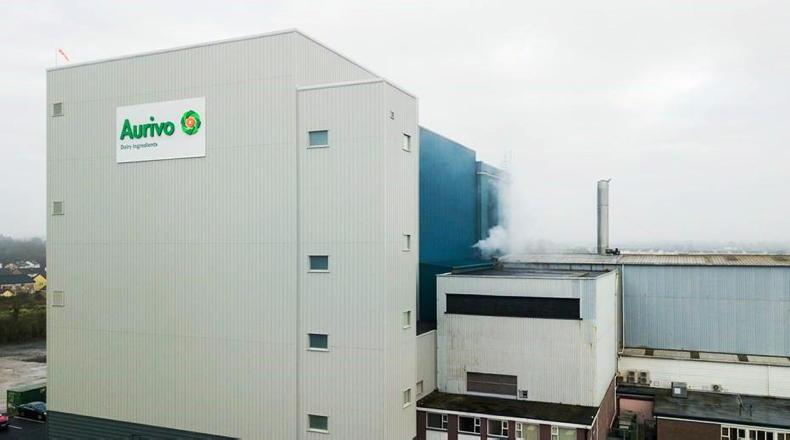
Aurivo dairy ingredients plant at Ballaghaderreen, Co Roscommon.
Aurivo has debt of €27m but a net debt position at the end of 2024 of €11.5m, after cash is deducted.
The Dale Farm business is significantly larger in terms of the milk pool, with 1bn litres of milk supplied in 2024.
There are three strands to the Dale Farm business: cheese, liquid milk/ice cream and butters/spreads.
The primary product is cheese and the co-op has recently invested £70m (€80m) in a new cheddar cheese plant in Cookstown, Co Tyrone, to replace a powder plant.
That investment brings the Dale Farm cheddar cheese-making capacity to over 90,000t annually, making the co-op one of the biggest cheese producers on the island of Ireland.
It is understood that the company has a close trading relationship with some of the large German-owned retailers to supply cheese under their own-brand labels.
A co-product of cheese making is whey and because the co-op makes a lot of cheese, it produces a lot of whey.
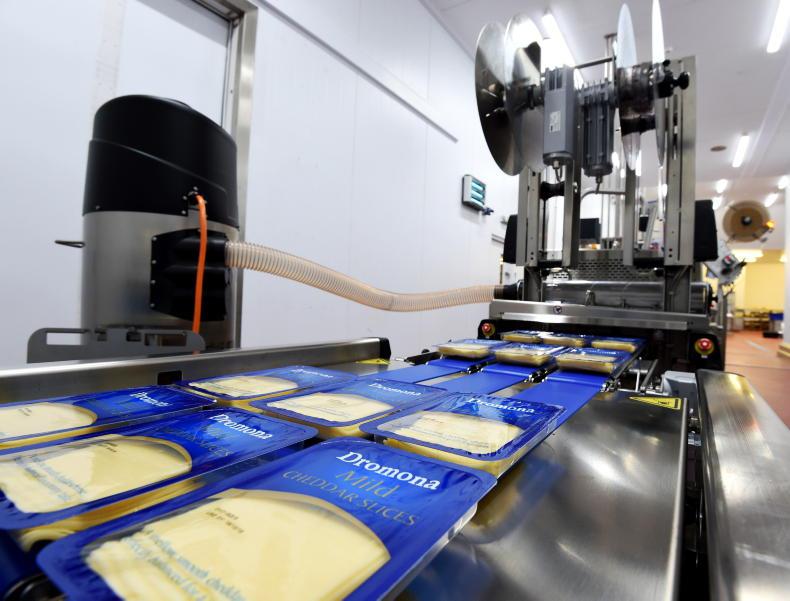
Dale Farm cheese processing plant.
While the co-op doesn’t refine its whey stream into the highest-quality whey protein, such as whey protein isolate (WPI) or whey protein concentrate 80% (WPC-80), Dale Farm has a relatively high-value route to market for its whey with Arla, which involves it being shipped overseas in liquid form for further processing by Arla.
In terms of brands, the co-op has a branded liquid milk, ice-cream and butter business, but it is understood that about 80% of the 1bn litre milk pool is used for cheese making.
Last year, the financial performance showed an increase in turnover to £722.4m (€859.7m), while net profit before tax rose to £31.9m (€38m), up from £29.8m (€34.5m) a year earlier.
Net debt remained stable at £61.1m (€71.2m). The co-op is run by Wexford man Nick Whelan, who joined Dale Farm as CEO in 2016.
Synergies
Change is never easy and both Aurivo chair Raymond Barlow and Dale Farm chair Fred Allen will have a job of work to do to convince their respective shareholders of the merits of any potential joint venture or merger, if that situation arises.
My view is that the challenge will be greater for Nick Whelan and Fred Allen to convince a Dale Farm shareholder to jump into bed with Aurivo, than for Donal Tierney and Raymond Barlow to convince an Aurivo shareholder to jump into bed with Dale Farm.

Dale Farm's Dunmanbridge processing site in Cookstown is the location for a new cheese plant.
Much of what Aurivo does is low margin - marts, agribusiness and indeed dairy ingredients are all low-margin activities. While butter had a good year for most of last year and indeed up to recently, it's not as reliable as other dairy products are.
Millk powder, Aurivo’s other key product category, is very low-margin, particularly to the north African market where most of Aurivo’s powders go.
Aurivo’s geographical spread is another challenge. The co-op says it’s collecting milk in 16 counties, which is a lot of driving for not a lot of milk.
Aurivo’s liquid milk business seems to be performing well and has certainly benefitted from the lift in liquid milk prices, with retailers having lost some of their control over the price of milk on the shop shelves.
Timing
The timing of the purchase of the Arrabawn liquid milk business seems to have been a good one.
The Connacht Gold brand of milk and butter is a household name in the west and with a rising population, is likely to have further growth opportunities.
If an agreement was to happen, it would probably involve moving some milk out of Aurivo’s liquid milk plant at Killygordon, Co Donegal, to Dale Farm’s processing facilities where that milk can be used to make higher-value cheese and whey.
In order to keep the Killygordon plant going and growing, milk that was destined for Ballaghaderreen would probably go to Killygordon instead.
In the absence of extra milk, this would reduce supply to Ballaghadeerren, but co-op management would surely be comfortable with this, if its aims are to maximise milk value.
Perhaps they could decide to do a joint venture on a new cheese plant at the Ballaghaderreen site. Let Aurivo make the cheese and let Dale Farm sell it?
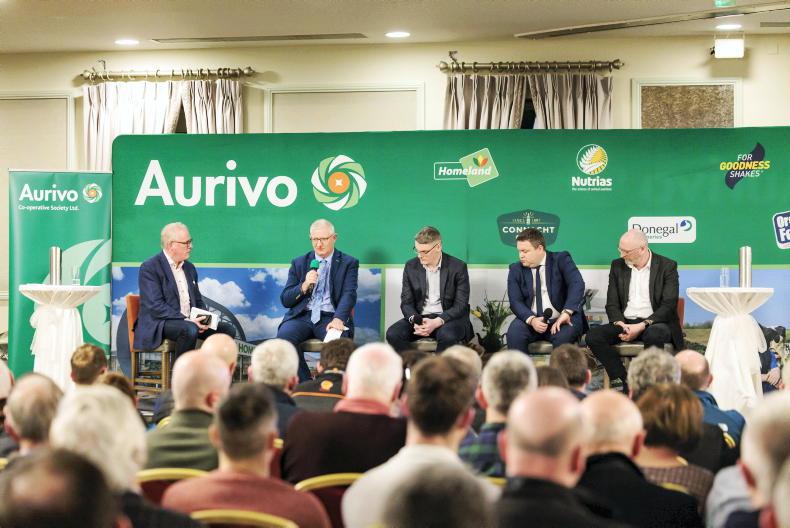
Aurivo CEO Donal Tierney speaking to over 350 farmers attending Aurivo Your Farm Your Future event in Claremorris, Co Mayo, last year. \ Richard McCarthy
For Dale Farm, getting access to extra milk is a big positive from any potential deal, as the threats posed to milk supply by the Northern Ireland Nutrient Action Programme are substantial.
In the south, suppliers to Aurivo are probably the least exposed to the threat posed by losing the nitrates derogation.
It’s interesting to note also that Aurivo CEO Donal Tierney is set to step down after the co-op’s AGM in May 2026.
No announcement has been made yet around who his successor is going to be. While there is much speculation as to who will take over, it could be the case that no announcement will be made and Nick Whelan will end up taking charge of both entities.
All of this is pure speculation, but I suspect both boards have their plans well worked out. The key thing now is to ensure that suppliers are well informed and that, ultimately, they will be the beneficiaries of any future collaboration.
The chairs of both co-ops are in the driving seat for how mature discussions on the future of their businesses should be conducted. They are setting the example for others to follow in the years ahead.
News that Aurivo and Dale Farm co-ops are to work together to “scope potential cost synergies” and to “explore how Aurivo and Dale Farm could work together to maximise these synergies” is no great surprise.
There have been rumours circulating around the industry for the last 12 months that Aurivo is looking to partner with another co-op and also that Dale Farm is looking to grow its business.
What is a surprise is that these “synergy” talks are taking place while both co-ops are in a place of relative strength.
Whether or not the discussions between the two co-ops progresses to full or partial merger or joint venture remains to be seen, but history tells us that when Irish co-ops have merged in the past, it was usually as a result of one of the co-ops being under financial pressure, whether real or perceived.
Take the Tipperary Co-op merger with Arrabawn last year or the Lacpatrick merger with Lakeland Dairies in 2019. In both instances, the smaller co-op - Tipperary and Lacpatrick - were under pressure and that was reflected in the milk price they were paying to suppliers.
The same cannot be said of Dale Farm and Aurivo. Both are profitable companies and both are paying what they each consider to be decent milk prices.
Aurivo has been towards the top of division two in the Irish Farmers Journal monthly milk league for most of 2025.
Dale Farm is ranked in second place for the rolling 12-month milk price in the Northern Ireland milk league.
The fact that these co-ops are talking to each other about opportunities to cut costs and create synergies, while they are both performing well is good to see and should be welcomed.
Performance
On the face of it, it’s difficult to see where synergies between the two co-ops can happen. Aurivo has a milk pool of just over 500m litres, with 10% of its suppliers and 20% of its supply in Northern Ireland and the rest dotted around Connacht.
The Aurivo business is split into four sections. The consumer foods section includes a large liquid milk facility in Donegal along with the Connacht Gold retail butter brand.
The dairy ingredients business is based in Ballaghaderreen where butter and various forms of milk powder are manufactured. Outside of the core dairy business, the co-op also owns four marts and over 30 agribusiness stores.
For 2024, the co-op had turnover of €725m, with €290m of that coming from dairy ingredients, €158m from consumer foods, €160m from agribusiness and €117m from marts. Operating profit was €17m for 2024.
Aurivo dairy ingredients plant at Ballaghaderreen, Co Roscommon.
Aurivo has debt of €27m but a net debt position at the end of 2024 of €11.5m, after cash is deducted.
The Dale Farm business is significantly larger in terms of the milk pool, with 1bn litres of milk supplied in 2024.
There are three strands to the Dale Farm business: cheese, liquid milk/ice cream and butters/spreads.
The primary product is cheese and the co-op has recently invested £70m (€80m) in a new cheddar cheese plant in Cookstown, Co Tyrone, to replace a powder plant.
That investment brings the Dale Farm cheddar cheese-making capacity to over 90,000t annually, making the co-op one of the biggest cheese producers on the island of Ireland.
It is understood that the company has a close trading relationship with some of the large German-owned retailers to supply cheese under their own-brand labels.
A co-product of cheese making is whey and because the co-op makes a lot of cheese, it produces a lot of whey.
Dale Farm cheese processing plant.
While the co-op doesn’t refine its whey stream into the highest-quality whey protein, such as whey protein isolate (WPI) or whey protein concentrate 80% (WPC-80), Dale Farm has a relatively high-value route to market for its whey with Arla, which involves it being shipped overseas in liquid form for further processing by Arla.
In terms of brands, the co-op has a branded liquid milk, ice-cream and butter business, but it is understood that about 80% of the 1bn litre milk pool is used for cheese making.
Last year, the financial performance showed an increase in turnover to £722.4m (€859.7m), while net profit before tax rose to £31.9m (€38m), up from £29.8m (€34.5m) a year earlier.
Net debt remained stable at £61.1m (€71.2m). The co-op is run by Wexford man Nick Whelan, who joined Dale Farm as CEO in 2016.
Synergies
Change is never easy and both Aurivo chair Raymond Barlow and Dale Farm chair Fred Allen will have a job of work to do to convince their respective shareholders of the merits of any potential joint venture or merger, if that situation arises.
My view is that the challenge will be greater for Nick Whelan and Fred Allen to convince a Dale Farm shareholder to jump into bed with Aurivo, than for Donal Tierney and Raymond Barlow to convince an Aurivo shareholder to jump into bed with Dale Farm.
Dale Farm's Dunmanbridge processing site in Cookstown is the location for a new cheese plant.
Much of what Aurivo does is low margin - marts, agribusiness and indeed dairy ingredients are all low-margin activities. While butter had a good year for most of last year and indeed up to recently, it's not as reliable as other dairy products are.
Millk powder, Aurivo’s other key product category, is very low-margin, particularly to the north African market where most of Aurivo’s powders go.
Aurivo’s geographical spread is another challenge. The co-op says it’s collecting milk in 16 counties, which is a lot of driving for not a lot of milk.
Aurivo’s liquid milk business seems to be performing well and has certainly benefitted from the lift in liquid milk prices, with retailers having lost some of their control over the price of milk on the shop shelves.
Timing
The timing of the purchase of the Arrabawn liquid milk business seems to have been a good one.
The Connacht Gold brand of milk and butter is a household name in the west and with a rising population, is likely to have further growth opportunities.
If an agreement was to happen, it would probably involve moving some milk out of Aurivo’s liquid milk plant at Killygordon, Co Donegal, to Dale Farm’s processing facilities where that milk can be used to make higher-value cheese and whey.
In order to keep the Killygordon plant going and growing, milk that was destined for Ballaghaderreen would probably go to Killygordon instead.
In the absence of extra milk, this would reduce supply to Ballaghadeerren, but co-op management would surely be comfortable with this, if its aims are to maximise milk value.
Perhaps they could decide to do a joint venture on a new cheese plant at the Ballaghaderreen site. Let Aurivo make the cheese and let Dale Farm sell it?
Aurivo CEO Donal Tierney speaking to over 350 farmers attending Aurivo Your Farm Your Future event in Claremorris, Co Mayo, last year. \ Richard McCarthy
For Dale Farm, getting access to extra milk is a big positive from any potential deal, as the threats posed to milk supply by the Northern Ireland Nutrient Action Programme are substantial.
In the south, suppliers to Aurivo are probably the least exposed to the threat posed by losing the nitrates derogation.
It’s interesting to note also that Aurivo CEO Donal Tierney is set to step down after the co-op’s AGM in May 2026.
No announcement has been made yet around who his successor is going to be. While there is much speculation as to who will take over, it could be the case that no announcement will be made and Nick Whelan will end up taking charge of both entities.
All of this is pure speculation, but I suspect both boards have their plans well worked out. The key thing now is to ensure that suppliers are well informed and that, ultimately, they will be the beneficiaries of any future collaboration.
The chairs of both co-ops are in the driving seat for how mature discussions on the future of their businesses should be conducted. They are setting the example for others to follow in the years ahead.






SHARING OPTIONS