




Milking is a time-consuming task on any dairy farm and, understandably, no-one likes to spend too much time standing in the parlour pit.
In this article, we’re looking at the options out there when it comes to upgrading the milking parlour in a bid to reduce the time spent milking cows.
The level of spec on modern parlours can vary massively from the basic models right up to more high-tech plant, with significant cost differences involved.
For this reason, we’ll also be looking at the costs of this extra technology that can be incorporated into a parlour and whether or not it adds value.
Cow flow
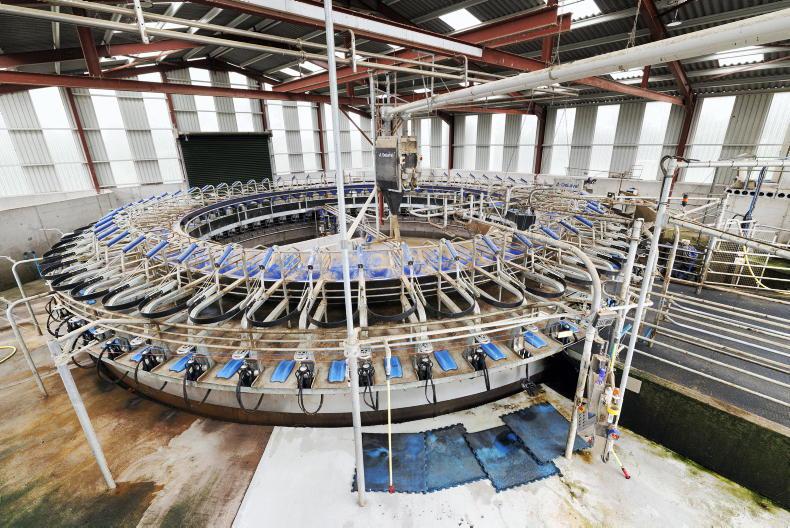
The most effective way of speeding up the milking process is to increase the number of units and reduce the number of rows of cows being milked.
It’s recommended that farmers should be milking between seven and nine rows of cows. Anything over this is too much and should signal a need for change.
When considering an upgrade, it’s important the parlour is future-proofed and going to be there long term. Invest with the future in mind.
If the farm has potential to milk more cows, then plan the upgrade based on those future numbers.
Parlour upgrades
Expansion post-2015 saw many farms outgrow the parlours on their farms. While expansion has slowed, there are still a plethora of farms looking to improve their current facilities.
Many held off on upgrading facilities until the most important investments such as reseeding, roadways and slurry storage had been completed first.
Take an example of a farmer who expanded the herd in the past 10 years. They were originally milking 70 cows through an eight-unit parlour, but have since increased cow numbers to 140.
To facilitate the expansion, they purchased additional land, which had put a strain on any available cash in the business.
They hadn’t been able to upgrade the parlour, but now is the right time for the farm.
They have decided on an 18-unit parlour, meaning just under eight rows of cows. This is an optimal number of units, as the cows can be milked in an hour and a half by one operator.
To buy the new plant is going to cost at least €4,000/unit for the basics, but including all the extras, the cost will rise to €8,000 to €10,000/unit.
The cost per unit is before the building work, as we’re assuming there is already a building in place.
The new parlour would include all the basic features plus some extras such as cluster removers, auto-wash, dump lines, auto feeders and cluster flush. We are also assuming the old plant is being completely ripped out and replaced.
For 18 units at the median figure of €9,000/unit excluding the VAT, the investment cost totals €162,000. Including VAT the cost rises to €199,260.
TAMS is not available for this machine as a farm is only eligible for a grant if they have less than 120 cows. This number rises to 160 cows if the farm is in partnership which is not the case here.
For farms with less than 120 cows the reference costs are €3,708/unit up to a maximum of ten units for the milking equipment. ICAR-approved milk meters have a reference cost of €1,280/unit, also up to a maximum of ten units and auto-wash has a reference cost of €6,280/parlour.
Returns
The farmer in the example above will now be milking eight rows versus the previous number of 18 rows. This will save just over 1.5 hours per morning milking at 11 minutes per row.
Given evening milkings are typically shorter, we’ll assume the saving is less at one hour.
That’s a daily saving of 2.5 hours. At a labour cost of €15/hour and 330 days milking a year, that’s a total labour saving of €12,375/year.
If the parlour is costing €199,260 after grant aid, the new parlour will take 16 years to pay for itself.
If the farm is relying on relief milkers receiving a higher rate of pay per hour, the payback would be significantly quicker.
This return does not account for the opportunity cost of the operator being free to do other jobs in that extra 2.5 hours, for example managing grass or feeding calves.
Nor does it account for the greater attraction to outside staff or relief milkers and the reduced burden on the farmer themselves.
Extras
The €9,000/unit cost which is before VAT will include the majority of the extras, but in the main, these are optional. We’ve managed to assemble some estimated costs based on market research for each extra component.
The prices given below are excluding VAT. The VAT can be reclaimed on milking equipment provided building work was required to construct or extend the parlour.
If the new plant is replacing the old plant but no new building development occurs, the VAT cannot be reclaimed.
Automatic cluster removers - €1,000/unit
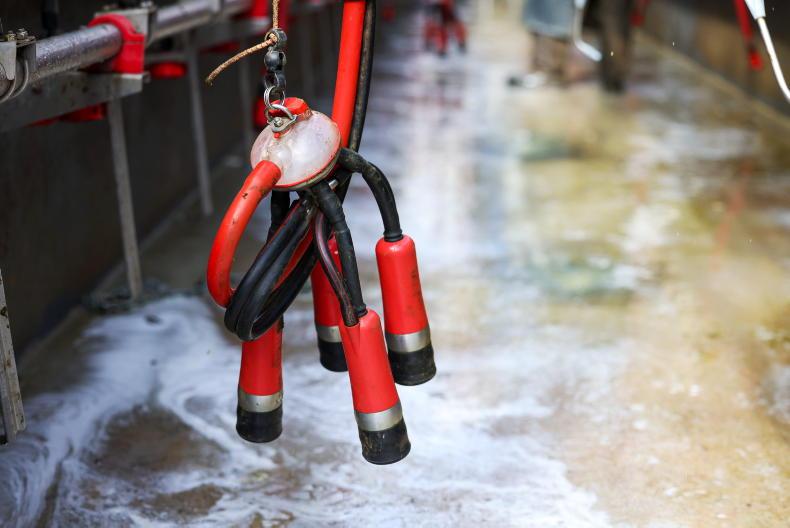
Starting with the automatic cluster removers, they can be useful tools in big parlours where there is only one operator. They will prevent the over-milking of cows and reduce the time spent removing the cluster from the cow.
On the downside, they need to be calibrated correctly to ensure they’re not coming off too early and the maintenance costs may be slightly higher for the parlour.
Cluster flush - €500/unit
The pros of cluster flush are that infection spread from cow to cow is reduced, which can help keep control of somatic cell count.
The cons are that the flush uses more water/acid and there’s a slight extra wait time as the cluster rinses.
Milk metres - €1,300/unit
This technology offers farmers an insight into the daily yield of individual cows. A big benefit of ICAR-approved milk metres specifically is that they can be used for milk recording.
The sample is taken using the milk meter and can be tested for its fat and protein constituents.
The only downside really to the milk meters is the investment cost and the potential maintenance costs associated with them.
Auto feeders - €1,400/unit
In terms of value for money, the auto-feeders can definitely offer something.
In the auto-feeders, the rate of feeding can be reduced to as low as 0.2kg at a time versus the 1kg minimum in many batch feeders. This saves a farmer feeding an extra 1.6kg of meal/cow/day.
This is a big bonus in low-cost systems, which are focused on utilising grass, especially during periods of surplus.
Other extras
Auto-wash, dump lines and air gates are all optional extras in new parlours. They all offer labour and time-saving opportunities.
It’s difficult to work out a cost on a per-unit basis, as they can be implemented on varying-size parlours. Each of the three will typically cost between €7,000 and €10,000 per parlour, depending on the manufacturer and parlour size.
Many of the sales people out there will do their best to convince farmers that they need every little bit of kit to milk the cow properly. It’s a long way from previous generations who managed with a bucket and stool.
Of course, times change and there’s no doubt some of the extras can be beneficial from a cow-flow and milk quality point of view, but try not to fall into the trap of thinking every added extra is essential to get the milk in the bulk tank.
I would be strongly in favour of investing in new plant or extending the parlour, provided it can help reduce the number of rows milked, increase cow flow and reduce the time spent milking.
The example given of the farmer moving from eight to 18 units is not uncommon and is certainly a worthwhile investment.
The payback time is long without any grant-aid and not spectacular from a financial point of view. However, the extra time is invaluable to a farmer. I would give this investment a 4/5 rating.
In relation to the added extras, I think they could be considered a luxury investment. They aren’t offering much of a financial return and can bring complexity to the system.
For me, they’d get a 2/5 rating and would be much lower on the priority list of investment options.
*This article was updated on the 1 October, 2025 to account for the TAMS limits that apply in relation to the Dairy Equipment Scheme (DES). The update reflects the current regulations that farm holdings over 120 cows, or partnership arrangements over 160 cows are not eligible for the DES in TAMS III.



SHARING OPTIONS