



Last Friday, Minister for Agriculture Charlie McConalogue launched a Food Vision dairy group to produce a detailed plan for managing the environmental footprint of the sector. Ultimately, the aim is to reduce dairy emissions, but the priority is for stakeholders to come forward with a plan in just eight weeks that will initially stabilise emissions. A similar group for beef and lamb is expected.
The fact that the minister is injecting a sense of urgency into developing a pathway for agriculture to work towards achieving emission reduction targets is to be welcomed.
We only have to look to the Netherlands, where mandatory herd cuts are being imposed, to get a glimpse of what a future policy framework could look like if progress is not made.
However, questions should be asked of Minister McConalogue as to the effectiveness of adopting a sectoral approach to achieving overall emission reductions from agriculture. Words are being carefully selected and statements cautiously crafted to prevent any accusation that he has moved to cap dairy cow numbers. But there is no hiding behind the impact at farm level of his decision to specifically focus on stabilising and reducing emissions from dairying rather than across the agricultural sectors.
Doubts over growth plans
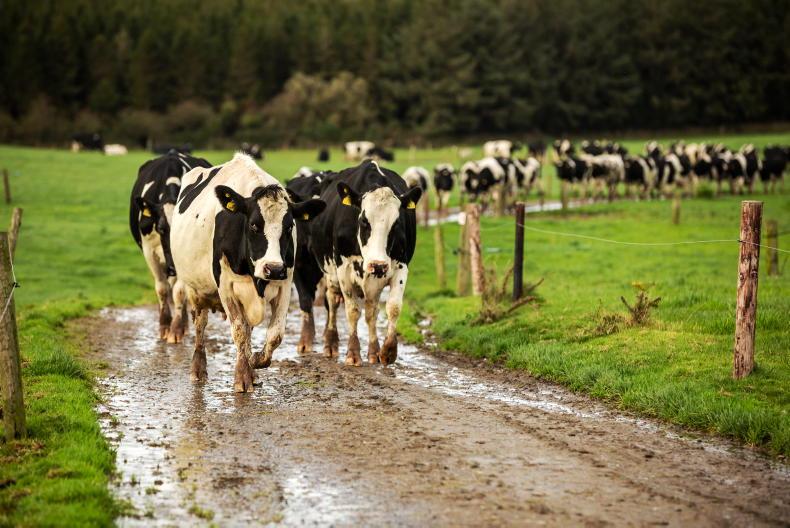
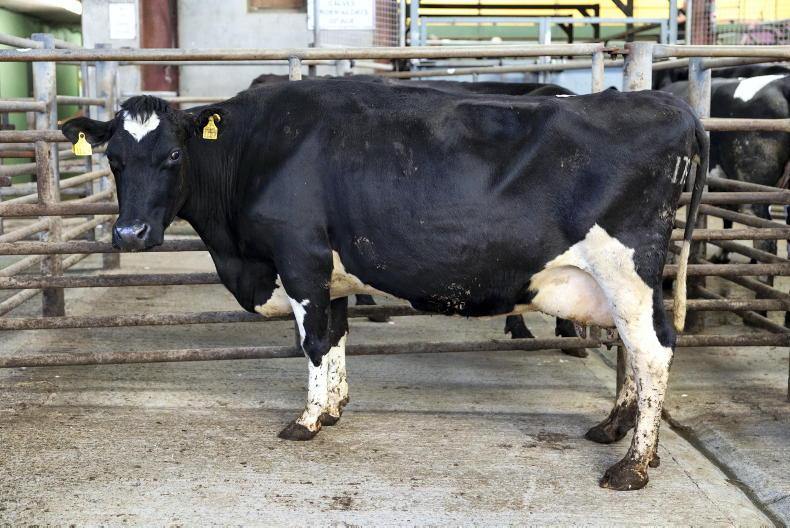
The reality is that by setting sectoral targets he has not just placed an immediate cap on dairy cow numbers but also cast real doubt over future growth plans. Many of these growth plans are already well developed at farm level. The Irish Cattle Breeding Federation (ICBF) forecasts that based on breeding decisions already taken, dairy cow numbers will increase by a further 200,000 head to 1.8m by 2025. Where does an emission cap or a break on expansion, permanent or otherwise, specifically applied to the dairy sector leave these farmers?
We cannot ignore the need for the increased concentration of dairy farming in specific regions to be carefully monitored in the context of water quality and biodiversity.
And of course dairy farmers must deploy all available emission reduction technologies. But the introduction of measures that prevents sustainable growth or restricts new entrants would be a huge failure in policy.
So, what form would an alternative approach take? Instead of sectoral targets, the minister would move to exploit the emission reduction potential that exists from integrating sectors – particularly the dairy and tillage sector, where the potential exists for nutrient balancing to improve carbon sequestration and for better crop rotation on tillage farms (eg red clover) to reduce chemical N use on livestock farms and reduce demand for imported proteins.
Thorny issue
The thorny political issue that is perhaps fuelling the minister’s sectoral approach is balancing the narrative around future dairy growth alongside a restructuring of the suckler herd. But the reality is that the future direction of the suckler herd will be shaped by decisions already taken by the minister in relation to the next CAP.
The flattening of payments, the allocation of 25% of direct payments into flat-rate eco-schemes and the lack of direct coupled supports are in effect negative subsidies that will fundamentally change the economic viability of the current suckler and beef models.
As the economic impact becomes apparent next year, the more intensive suckler and beef farmers will ultimately have two choices – either fund their enterprise from alternative income streams or turn to organics as providing the only support mechanism on which these sectors depend.
With a budget of €50m per annum under the next CAP, an organic suckler farmer with a flat area-based payment of €270/ha could draw down up to €590/ha, at a stocking rate of a cow per HA.
Brexit fund
Meanwhile, there have been mutterings around using the Brexit Adjustment Reserve fund to pay farmers to reduce cow numbers – but again this is seen as politically sensitive within the dairy/suckler cow debate. One way to address this would be to allow suckler farmers first access to any fund with any surplus then being made available to dairy. A €500m fund would provide a €1,000 per cow payment on up to 500,000 cows or a €2,000 per cow payment on 250,000 cows.
It would be easy to conclude that a strategy to set sectoral targets and divest responsibility for delivering these targets to industry stakeholders as being politically motivated. Doing so allows the minister and the Department distance themselves from making policy decisions that may be difficult and unpopular but right for the overall sector in the context of achieving emission reductions.
In the context of the new dairy group, is it credible to expect farmer-owned co-ops and farm organisations to come forward with a specific plan that will effectively curtail the development of one of the only industries where Ireland is globally competitive? Ultimately, responsibility for the regulation of the sector lies with the minister and the Department.



SHARING OPTIONS