


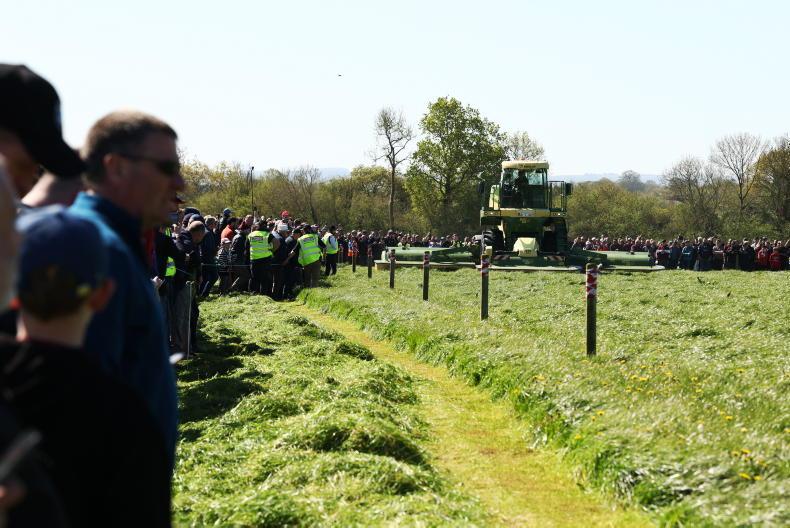
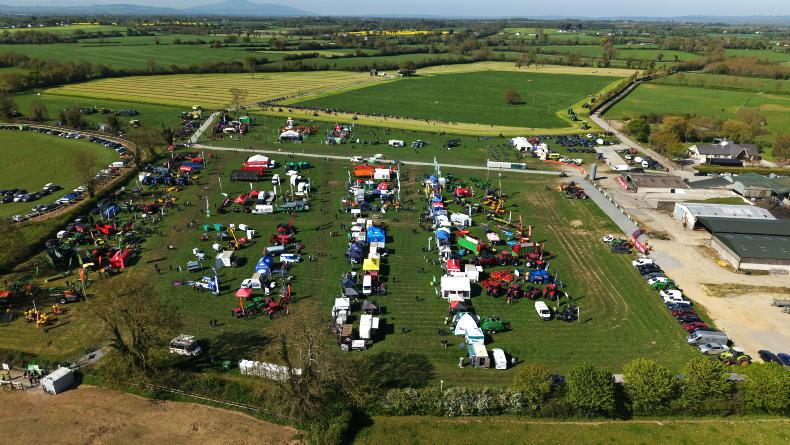
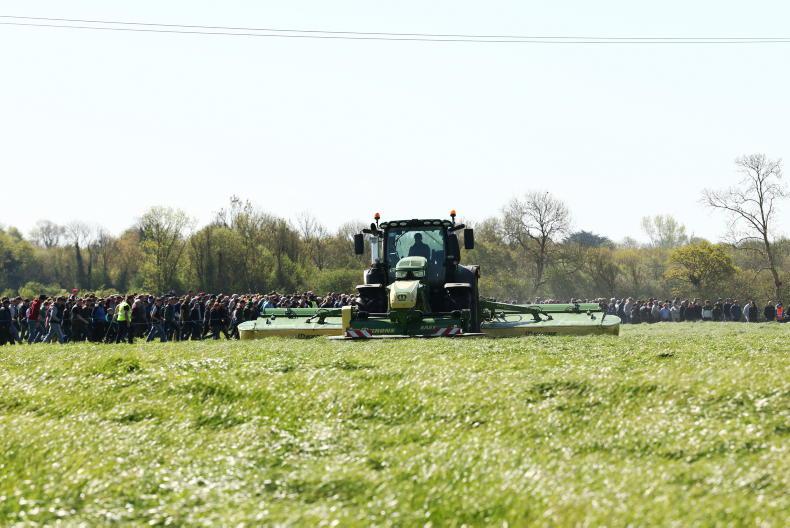
Thousands of farmers attended the Irish Farmers Journal GRASS 2026 event in Cuffesgrange, Co Kilkenny on Wednesday.
Despite all the challenges facing the machinery and contracting sector, the mood was positive on the day, with sunshine adding an air of excitement for the 2026 grass season which has already got underway in some parts of the country.
I’d like to thank FBD for their support of the hugely successful event, our host family farm, all our exhibitors, demo machinery providers and drivers, the Irish Farmers Journal team and most of all, the farmers and contractors who attended the event.
Speaking to some contractors on the day, that feeling of frustration and worry still exists with not knowing what’s coming next in relation to costs and price of diesel being some of the most talked about topics on the day.
The machinery sector is of huge importance to the Irish economy, with Irish machinery manufacturers now firmly positioned on the global stage.
Contractors are something of the unsung heroes of Irish farming operations and have become more and more important in recent years.
Bigger and better
Fifty years ago, a lot of farms had their own silage making machinery, but specialisation over the last few decades has meant machinery is bigger and better and what was a three-month season for some contractors has now been condensed into a matter of weeks.
Today, not only do large farms utilise contractors more; smaller, part-time operations also call on them to do jobs that time simply doesn’t allow.
For many farms, the contractor is an extra labour unit who provides the service when it’s needed in an efficient manner. Keeping these contractors in business by supporting them in any way is critical to our farming systems. It was clear on the day that contractors are under pressure, with a number talking about credit lines having to be changed in 2026.
Diesel has to be paid for before it’s delivered in some instances, so expecting a contractor to wait until the end of the year for payment won’t work this year, and it’s important that everyone does their bit to support their suppliers through the uncertain period of higher input prices.
I was speaking to a farmer early on the morning of the event who farmed through the 70s and 80s. We chatted, looking up at the Claas Jaguar 1100 series capable of cutting 300 acres/day if the fields are big enough.
He reminisced about the three to four month slog it was to get silage made in those decades. Side-mounted single-chop harvesters with a 42-inch cut were the order of the day back then with 8-12 acres being a very good day.
An MF 65 or MF168 drove the harvester with a smaller MF135 tractor or Fordson Major lifting the trailers in the field to cart to the pit.
The silage pit was like a community gathering with eight or 10 men poised with forks to spread the silage out off a buck rake: another two building and pulling along the sides on the ground.
Carnival
He chatted about the breakdowns, the fixing and the delays, but I could see he was still looking back on those days fondly, with great memories and stories of silage times being almost like a carnival in some yards.
It was a massive undertaking – and involved a huge amount of work – but silage time was always looked forward to, and for many it was the highlight of the summer.
Another farmer spoke about the summers of 1985 and 1986 and how the invention of the round baler saved some farms from having no fodder made at all in those winters.
On a day that celebrated new machinery and new technology, it was heart-warming to hear those stories of yesteryear, and it really made it hit home how far we have come in terms of the advancement of silage making.




SHARING OPTIONS