



In the way that the laps around the sun feel like they’re getting faster and faster, so it is that the absent-minded moments seem to become more common.
When they occur and I’m pulled up on something by my sons, I wearily sigh that I’m getting old and forgetful, and they will try to comfort me by saying that, in fact, I’m young and forgetful.
I’ll cling to their optimism as 1984, the year of my birth, recedes further into the rear-view mirror. Perhaps I feel older because a not-insignificant strand of my life was laid down in 1969.
That was the year that my father enrolled in boarding school and one of the first decisions he made was to become a supporter of Arsenal Football Club. It became a passion that was passed on to me, for better or worse.
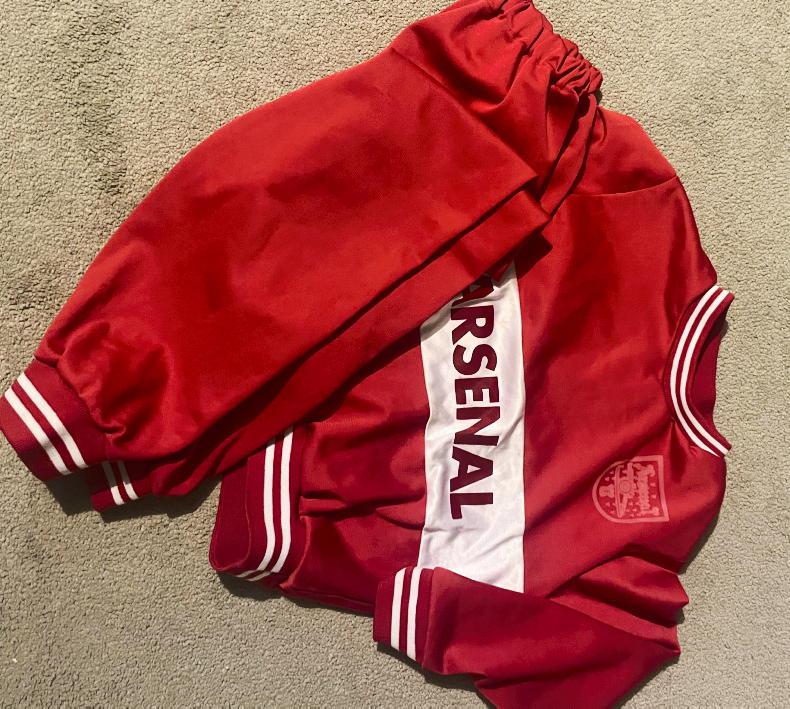
When I had to spend a few nights in hospital in early 1990, my mother purchased an Arsenal jumper and trousers from the Roches Stores across the road. Her dementia means I cannot ask her how conscious a choice that was, but the garments remain in my possession, an enduring token of her love and affection.
After the footballing overload of that summer’s World Cup, the first Arsenal game I consciously recall is the 1-0 win over Manchester United in October of 1990. Shown live on RTÉ’s Sports Stadium, it featured an infamous brawl that led to both clubs being docked points.
Despite that penalty, Arsenal still won the league that season and so obviously I was hooked. While United became the major force in English football in the 1990s, Arsenal were still able to win what had become the Premier League every few seasons, capped with the unbeaten season of 2003-04.
I was 19, just finishing my first year in college. I could never have imagined that my 20s and 30s would pass without the tally of 13 league titles being increased but that’s sport.
The wait came to an end at the beginning of last week as Arsenal’s 1-0 win over Burnley was followed by Manchester City failing to beat Bournemouth, confirming the Gunners’ success with a game to spare.
Excellent season
On top of that, Saturday’s Champions League final against Paris Saint-Germain offers a chance to make an already-excellent season an unprecedented one as the club looks to win Europe’s major trophy for the first time.
It’s somewhat fitting that Arsenal’s league win comes just as Pep Guardiola’s departure from Manchester City and Harrogate Town’s relegation from League 2, make Mikel Arteta the longest-serving manager in English football.
That his tenure stands at six and a half years is indicative of how little time managers get nowadays, but it serves as proof of the power of patience and allowing someone to put his stamp on a club.
Arteta has seemingly managed the near-impossible feat of keeping a group of 20 or so millionaires in their 20s happy, even though only 11 of them can be on the pitch at any one time. Such a feat of people-management is something I can only marvel at, taking my first coaching steps with an underage GAA team.
How does one get involved in such a role? It’s quite easy – you’re simply added to a WhatsApp group called ‘Boys U7 2026’ and thanked for giving your time, even if such a conversation hasn’t taken place.
Thankfully, there is a large enough group of mentors that absences due to work and other commitments are easily covered – more importantly, it means that the sizeable squad of players receive the kind of attention and care that was probably not always present in the days when I was actually young (and not forgetful).
Which is not to say that it’s all straightforward and easy – the phrase ‘minding mice at a crossroads’ is one that comes to mind.
While the guidance from Croke Park that scores should not be kept is a laudable one in the eyes of adults who recognise the importance of player development, we shouldn’t forget that six- and seven-year-olds do not yet have such a helicopter view of things. Standing in goal to ensure even numbers for a game, I was told indignantly by one player that I wasn’t even trying to stop the sliotar.
Corners will be cut during drills and smart answers occasionally provided to earnest questions intended to unlock potential – how to deal with such challenges is not provided in the glossy coaching handbooks that make everything seem so achievable, but then if it was easy, it wouldn’t be rewarding.
That reward comes from seeing small improvements, week-on-week, while ensuring it remains enjoyable for the players. At a coaching course at the beginning of the year, the man in charge laid out the measure of success in perfect terms.
“If you win a trophy, it means you had good players,” he said, “but if you start the year with 20 players and end it with 20 players, you’re a good coach.”
While success may not be measured in terms as stark as Arsenal’s Premier League title, it is no less rewarding to see the improvement in players – and coaches – from the year’s beginning to its end.”





SHARING OPTIONS