



It’s a curiosity of sports journalism that there are more than a few examples of cliché phrases that are factually incorrect.
You might sometimes read, for instance, that Stephen Cluxton “wore the sky blue of Dublin” on 128 occasions in the senior football championship, but of course the goalkeeper actually donned navy or white jerseys to avoid confusion with his celestially-clad teammates.
Equally, any assertion that Cluxton was “handed the captain’s armband” in 2012 ignores the fact that the sleeve accoutrement is a feature of soccer.
Last month, we were told that, by going back-to-back in the Masters Tournament, Rory McIlroy had “won a second green jacket” but of course he simply put on the one he had won in 2025 at the victory ceremony.
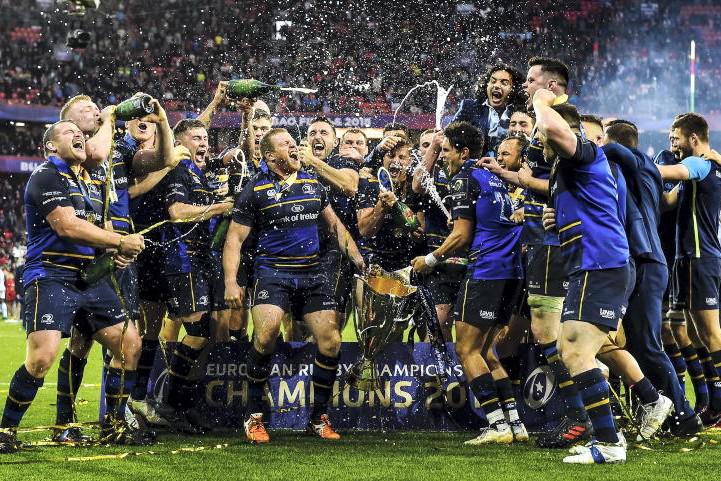
And, to bring us to the proper theme of this week’s column, you may well have heard this week how Leinster Rugby are chasing “the fifth star”; while it’s not fully false in a literal sense, it is now something of a Schrodinger’s cat.
The phrase refers to the four stars adorning the Leinster crest, representing the European victories of 2009, 2011, 2012 and 2018. Those wins brought the province to the top of the continental roll of honour along with French powerhouses Toulouse but since then there have been four final defeats, including three in a row from 2022-24 inclusive.
Ultimate glory
The quest for the fifth title had become all-encompassing, to the point where, at the beginning of the current campaign, the decision was taken to remove the stars from the regular and alternative jerseys worn by Leinster teams from senior down to age-grade levels, male and female.
Instead, they were to be confined to the darker blue kit worn only in the Investec Champions Cup.
“We are incredibly proud of our Champions Cup history and the stars will remain on our European jersey,” said Leinster CEO Shane Nolan at the time, “but we also believe the home jersey should speak to and celebrate the full Leinster journey for our men’s and our women’s teams and of course our age-grade and junior rugby representative teams – past, present and future.”
Leinster have made it back to the final, with holders Bordeaux-Bègles the opposition in Bilbao on Saturday. If they do manage to end the wait for ultimate glory, the decision to make the stars less of an issue – and, in the process, expedite the collection of the fifth one – will no doubt become a cornerstone of performance-management for years to come.
Equally, though, it feels like the competition is not the same draw that it once was. When Leinster won what was then still known as the Heineken Cup for the second time in 2011, their quarter-final and semi-final ties each drew around 50,000 to Aviva Stadium – this time, their three home knockout ties have attracted an aggregate of less than 80,000 to the venue.
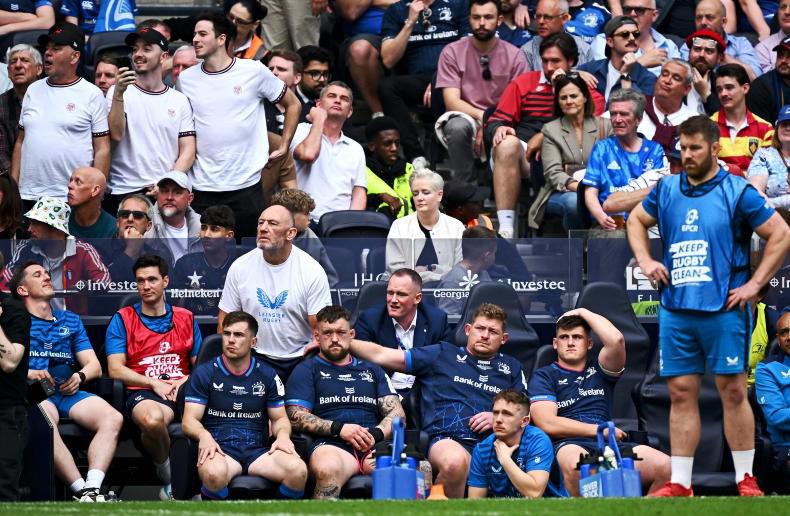
That there are three knockout rounds now points to an expansion that has not been complemented with an increase in quality or interest, with the labyrinthine pool stage a pale shadow of the cut-throat nature of the old system, where 24 sides battled to be the lucky eight in the quarter-finals.
The decrease in bums on seats is reflected by the siloing away of the television audience. If you wish to watch the game, it will be shown live on subscription channel Premier Sports, while those with access to ITV1 can see it there. When it was a terrestrial-only event, it had the feel of appointment viewing and, while entering a deal with a satellite broadcaster may mean an injection of cash, it does have a knock-on effect down the line in terms of eyeballs.
Will Leinster care if it means they get their hands on the trophy? No, and nor should they – they have become a byword for consistency, whatever the format, and while a valid case can be made that they benefit from numerous advantages, they still have to be translated into supremacy on the pitch.
They have been able to do that, up to a point, but the final remains the itch to be scratched. Perhaps the return to San Mamés Stadium, site of the 2018 final win over Racing 92, will be a good omen.
Of the Leinster matchday 23 that day, only six saw game-time in this year’s semi-final victory over another French side, Toulon.
Winning experience
While that winning experience counts for something – and plenty of the team have enjoyed success with Ireland in the Six Nations Championship – the question remains as to the extent of the scar tissue from the losses in the finals since then.
In the two years after Leinster’s last triumph, English sides prevailed but France has been on top for the last five seasons – Toulouse winning twice to move clear on the all-time list – and of course it is French opposition that Leinster must overcome.
Bordeaux have Noel McNamara in their coaching ranks, so whatever happens there will be some element of an Irish victory – if we were being mischievous, we might suggest that Leinster’s rivals would favour the Clare native being part of a second consecutive win.
For Leinster, it’s about making sure they don’t have stars in their eyes.



SHARING OPTIONS