



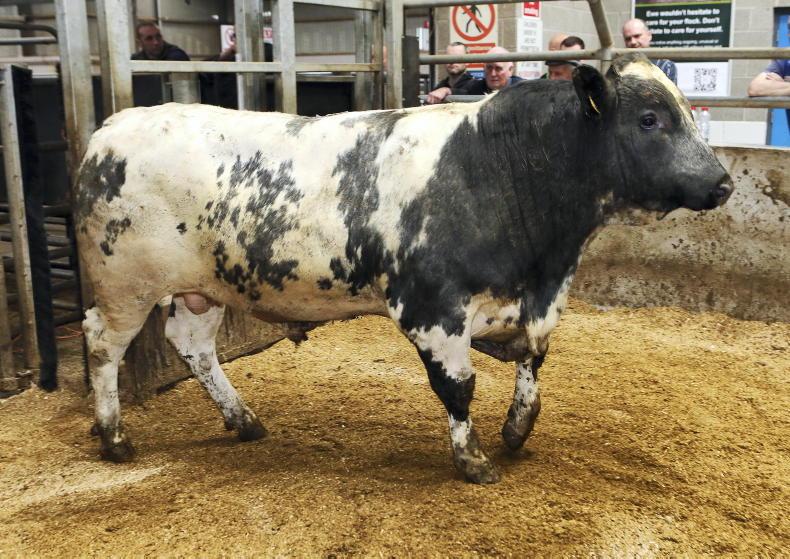
A reduction in demand from consumers is a key factor behind falling beef prices, the chief executive of the Livestock and Meat Commission (LMC) has said.
Speaking at a conference at Greenmount on Wednesday, Colin Smith said there was a delay with strong beef prices throughout 2025 filtering through to consumers.
“When those prices were passed on to consumers, there was demand softening and price moderation. It was seen across Europe, although we were perhaps hardest hit here,” he said.
In terms of supply, Smith pointed out that prime cattle throughput at local factories is currently 6% below last year’s levels, but average carcase weights are up 3.5%.
“Overall, processors have a supply of cattle for the demand that is there,” he said.
The LMC chief acknowledged that beef finishers are losing money at present and said a balance is needed between affordability for consumers and profitability for producers.
“We need to get the consumer to pay for it and that money needs to filter fairly back to the grassroots,” he said.
The stiff competition that the red meat sector has with poultry was mentioned several times during the opening session of the joint CAFRE/UFU conference.
Colin Smith presented figures which showed that while retail beef prices rose by 22% in recent years, poultry meat prices rose by just 0.5% over the same period.
Indeed, Peter Kennedy from Marks and Spencer described chicken as “inflation busting” during his remarks to conference delegates.
The other major influence in the beef market is the sharp rise in imports into the UK, particularly from the likes of Australia, New Zealand and Brazil.
Kennedy said beef imports would be “a challenge” for local producers, especially when it comes to supplying the food service sector.
“From a retail point of view, because labelling is prescriptive, it is going to be quite obvious what you have got. In food service, it is less clear cut,” he said.
“All I can say is that from an M&S point of view, we will not be moving away from our policy of UK sourced beef,” he added.
In the longer term, the outlook for beef producers from Wednesday’s conference was much more positive.
Kennedy said that the increased interest in veganism seen three to four years ago has waned, and there is now a strong demand for non-processed food.
“There is so much focus on clean food that is not ultra processed. In red meat, I think there is a massive area there,” he said.
Similarly, Colin Smith from the LMC said growing interest in healthy lifestyles among the public is an opportunity for the red meat sector.
Backing this up, he presented charts on the shopping habits of people who are using weight loss drugs, which currently equates to 5.4% of the UK population.
“They are buying less biscuits, sweets, alcohol, crisps, cheese and soft drinks. They are using more high protein products like meat, fish and poultry,” he said.







SHARING OPTIONS