



Disagreements are looming about funding the European Union’s budget, to which Ireland will remain a net contributor for the foreseeable future.
The seven-year budget plan agreed in 2021 is up for a scheduled midterm review in circumstances less favourable than appeared likely back in 2021 and there is no sign of an emerging consensus. The EU has borrowed substantial amounts centrally, about €400bn and rising. Until early 2022, interest rates on these borrowings were zero or close to zero but have risen sharply and are now well beyond what had been anticipated.
Debt service is a first call under the rules and something’s got to give. Members who are net contributors, including Austria, Denmark, the Netherlands and Sweden, are keen to trim overall spending to help balance the books, a threat to the bigger budget items including agriculture.
There is continuing pressure to offer greater assistance to Ukraine and the EU has ambitions to spend more in areas including climate change mitigation and the digital transition, while the list of potential joiners includes states in southeastern Europe, which will be recipients rather than net contributors.
Individual member states
The EU is not a fully fledged fiscal union across its constituent territories as are the individual member states within their own boundaries.
It is financed mainly through annual remittances from the national treasuries of the member states – only about 10% of its revenues come from taxes collected centrally by Brussels.
Each state is thus cognisant of what it pays and what it receives, a built-in source of dispute and arguments about fairness. Direct revenue comes mainly from tariffs on imports from outside the EU and these have declined in importance over the years.
Worldwide tariff levels have fallen steadily since the EU was founded and the search is on for new sources of central Brussels revenue.
Individual member states have one treasury each, collecting taxes and dispensing funds under expenditure programmes which are national in scope and in the definition of entitlements.
Imagine the politics if each county or region in Ireland had its own income tax rates and VAT system, and its own expenditure programmes, with just a small national treasury in Dublin.
Western and border counties would doubtless be net recipients and the more urbanised counties would be net payers.
Nobody looks at things this way in a centralised system, not even in the US which has a more federal structure.
The EU budget arrangements create maximum visibility for transnational transfers even though they are not large relative to the budgets of each member state.
But they are capable of inflaming perceptions that ‘our money’ is being donated to foreigners, as vividly illustrated during the Brexit referendum in the United Kingdom.
If the European Union is to finance itself in a less divisive fashion, bearing in mind that bigger collective expenditure programmes may well have political support as with COVID-19 and Ukraine, the least controversial route could be the expansion of direct revenues accruing to Brussels beneath the radar of national populism and there are two candidates.
CBAM would hit imports of steel from Asia, for example, but could also be applied to agricultural imports from south America
The first is the Carbon Border Adjustment Mechanism (CBAM), the plan to impose extra tariffs on imports from non-members deemed to have inadequate climate policies.
These are seen as unfair competition for producers in Europe where climate policy has been imposing costs.
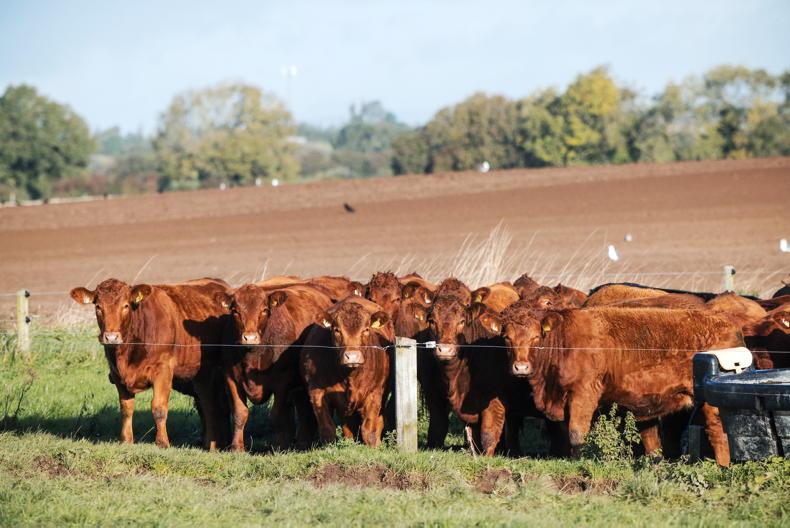
CBAM would hit imports of steel from Asia, for example, but could also be applied to agricultural imports from south America. The second option is a missed opportunity from the 1990s, when there was insufficient support for a Europe-level carbon tax.
The chosen climate policy has resulted in arbitrary national targets measured in part on the production side. In Ireland this approach has yielded sector-by-sector quotas which could damage farm output even in activities, including dairying, which appear to be carbon-efficient relative to alternative locations in the EU.
Ireland has so far ruled out nuclear power generation and an EU-wide carbon tax could be the trigger for a rethink
A Europe-wide carbon tax will be resisted by countries which expect to have to pay it, including Poland with a continuing reliance on coal-fired electricity, and Germany which rashly retired some nuclear stations well ahead of the end of their technical lifespan.
The supporters would include France, which has a big nuclear endowment and would pay less.
Ireland has already retired two of its high-carbon turf-fired stations and the coal-fired Moneypoint, commissioned 37 years ago and reaching end-of-life, would be closing shortly had it not been for the Ukraine invasion and resulting disruption to energy markets.
If the Irish Government’s plans for de-carbonisation are capable of delivery, with a quick rollout of onshore wind and solar, there would be a reduced liability to a Brussels carbon tax. If the extra renewables come from more costly offshore wind, the pain will be in the price of electricity.
Ireland has so far ruled out nuclear power generation and an EU-wide carbon tax could be the trigger for a rethink.



SHARING OPTIONS