The sustainability of current crop production practices in Ireland is challenged by higher production costs, lower profit margins and a deficit of cropping options in current rotations.
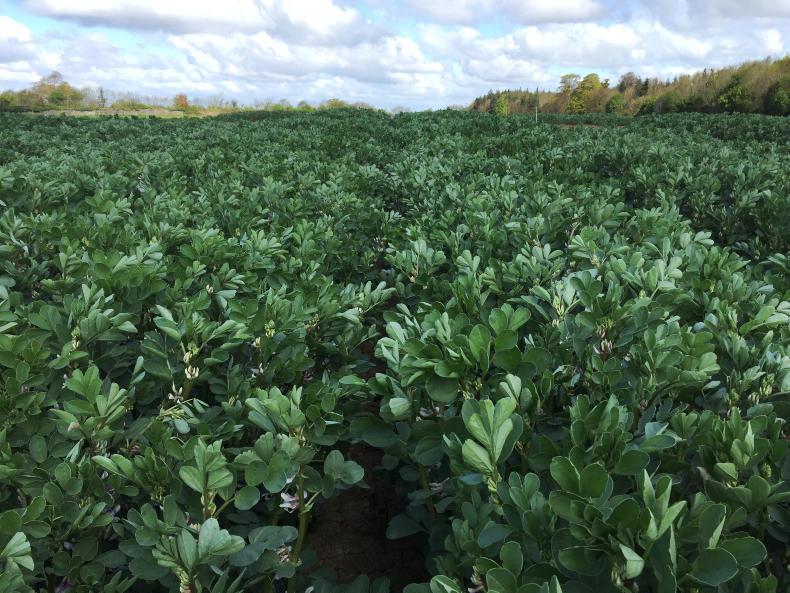
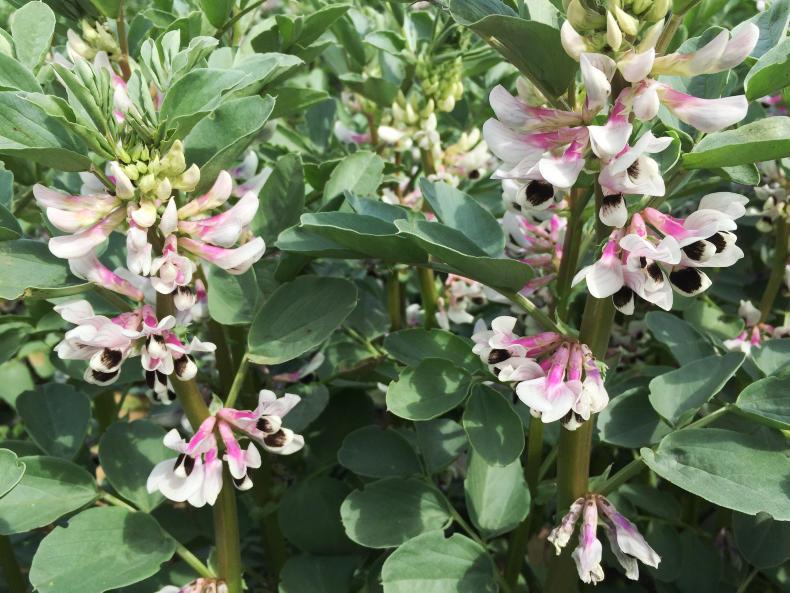
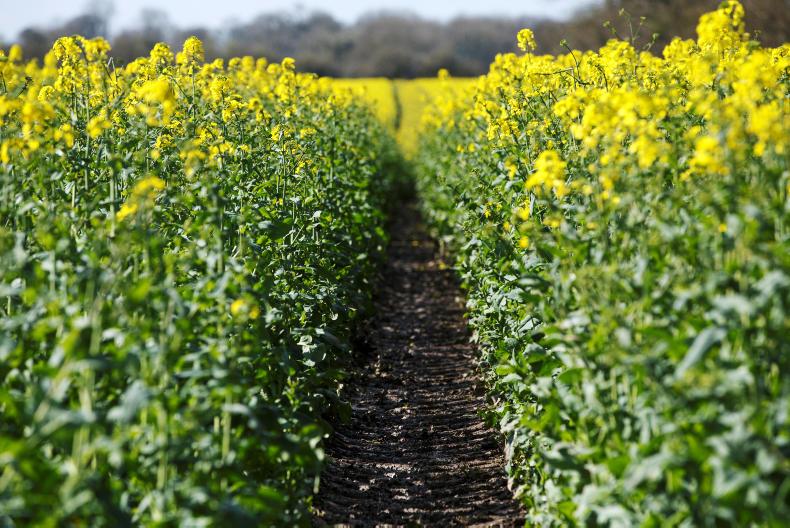
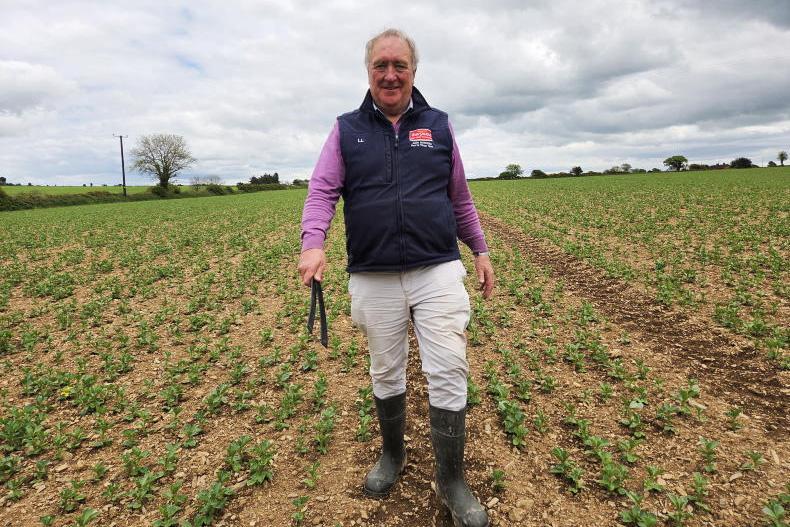
The main break crops grown in Ireland are faba beans and oilseed rape (OSR).
Both crops are well suited to the Irish climate and soils, with options for winter and spring sowing.
When included in crop rotations, both faba beans and OSR act as a useful break in many disease and pest cycles, benefitting yield and cost reduction in the following crop, improving soil structure and providing alternative weed control options.
Significantly, faba beans fix atmospheric nitrogen, eliminating the need for chemical N-fertiliser. The sparing effect on soil N and particularly the availability of N from decaying roots, boosts the yield and reduces the fertiliser N demand of the following crop and even further into the rotation.
Feed industry
Besides these listed benefits, faba beans and OSR also have valuable end-uses for the Irish feed industry. Faba beans and OSR meal constitute a home-grown alternative source of protein with the potential to begin to displace Ireland’s dependency on animal feed imports (~ 3Mt / year).
Legume-friendly greening measures introduced as part of the post-2014 Common Agricultural Policy (CAP) reforms, and the surge in feed demand brought about by the expansion of the dairy herd following milk quota abolition, have resulted in an increase in bean acreage in Ireland.
Cropquest
A previous scoping study (Cropquest) identified issues that needed to be addressed in order to promote the development of faba bean as a valuable break crop. These research targets included perceived variability in yield, limited varietal development and specific agronomy information (including disease control) in temperate climates.
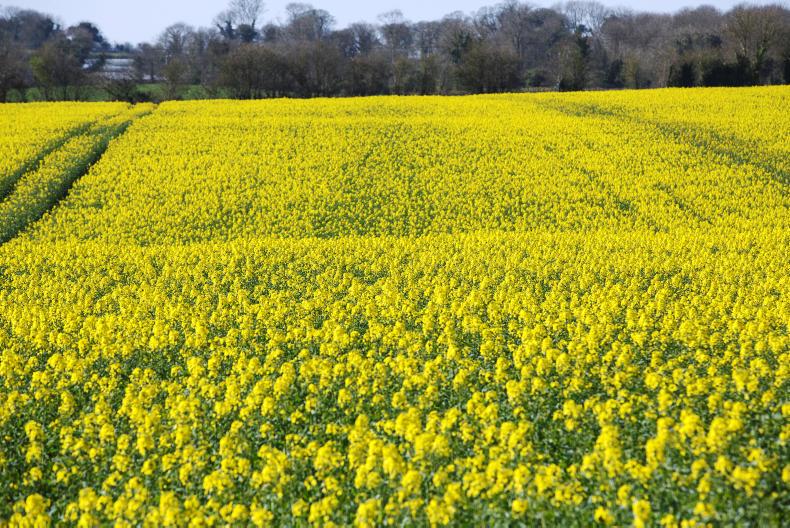
Teagasc aims to target the deficit in OSR research concerning yield variability and a number of other factors.
For OSR, Irish research on crop establishment and basic agronomy provides a good basis for production systems, but there is a significant deficit in OSR research concerning yield variability.
Factors influencing disease development and disease control strategies also need further study.
Survey
To address those knowledge gaps, Teagasc is surveying faba beans and OSR farms for three years (about 30 farms/crop/year) to determine the factors affecting break crop performance on Irish farms including climate, soil, management, crop structure and disease. This survey is included in a DAFM-funded project that also aims to:
Assess the impact of OSR crop structure post-winter on yield potential and develop appropriate management strategies to optimise yield potential.Determine the appropriate establishment system for field beans, to optimise plant structure and yield. Develop a toolkit approach for monitoring crop development and disease and to provide readily assessable updates to growers and advisers on the status of bothInvestigate factors that influence the fatty acid profile of rapeseed oil.Furthermore, Teagasc is participating in separate national and European projects aiming to develop breeding schemes and varieties to improve yield and disease resistance for faba beans in Irish conditions.
Both projects have international partners including major European breeding companies. Teagasc is also developing research in the area of faba bean physiology, which addresses yield formation and factors contributing to it.
Read more
Crops & Spreaders event offers something for everyone
The sustainability of current crop production practices in Ireland is challenged by higher production costs, lower profit margins and a deficit of cropping options in current rotations.
The main break crops grown in Ireland are faba beans and oilseed rape (OSR).
Both crops are well suited to the Irish climate and soils, with options for winter and spring sowing.
When included in crop rotations, both faba beans and OSR act as a useful break in many disease and pest cycles, benefitting yield and cost reduction in the following crop, improving soil structure and providing alternative weed control options.
Significantly, faba beans fix atmospheric nitrogen, eliminating the need for chemical N-fertiliser. The sparing effect on soil N and particularly the availability of N from decaying roots, boosts the yield and reduces the fertiliser N demand of the following crop and even further into the rotation.
Feed industry
Besides these listed benefits, faba beans and OSR also have valuable end-uses for the Irish feed industry. Faba beans and OSR meal constitute a home-grown alternative source of protein with the potential to begin to displace Ireland’s dependency on animal feed imports (~ 3Mt / year).
Legume-friendly greening measures introduced as part of the post-2014 Common Agricultural Policy (CAP) reforms, and the surge in feed demand brought about by the expansion of the dairy herd following milk quota abolition, have resulted in an increase in bean acreage in Ireland.
Cropquest
A previous scoping study (Cropquest) identified issues that needed to be addressed in order to promote the development of faba bean as a valuable break crop. These research targets included perceived variability in yield, limited varietal development and specific agronomy information (including disease control) in temperate climates.
Teagasc aims to target the deficit in OSR research concerning yield variability and a number of other factors.
For OSR, Irish research on crop establishment and basic agronomy provides a good basis for production systems, but there is a significant deficit in OSR research concerning yield variability.
Factors influencing disease development and disease control strategies also need further study.
Survey
To address those knowledge gaps, Teagasc is surveying faba beans and OSR farms for three years (about 30 farms/crop/year) to determine the factors affecting break crop performance on Irish farms including climate, soil, management, crop structure and disease. This survey is included in a DAFM-funded project that also aims to:
Assess the impact of OSR crop structure post-winter on yield potential and develop appropriate management strategies to optimise yield potential.Determine the appropriate establishment system for field beans, to optimise plant structure and yield. Develop a toolkit approach for monitoring crop development and disease and to provide readily assessable updates to growers and advisers on the status of bothInvestigate factors that influence the fatty acid profile of rapeseed oil.Furthermore, Teagasc is participating in separate national and European projects aiming to develop breeding schemes and varieties to improve yield and disease resistance for faba beans in Irish conditions.
Both projects have international partners including major European breeding companies. Teagasc is also developing research in the area of faba bean physiology, which addresses yield formation and factors contributing to it.
Read more
Crops & Spreaders event offers something for everyone





SHARING OPTIONS