The development of pests, whether insects, diseases or weeds, represents a significant threat to our ability to grow crops effectively and efficiently across all agricultural regions of the world. In our temperate climate, the production of arable crops is subject to specific pests that are often unique to our conditions.
Over the past 50 years, significant increases in yields of arable crops have been achieved, in part resulting from our ability to manage the threat imposed by these pests.
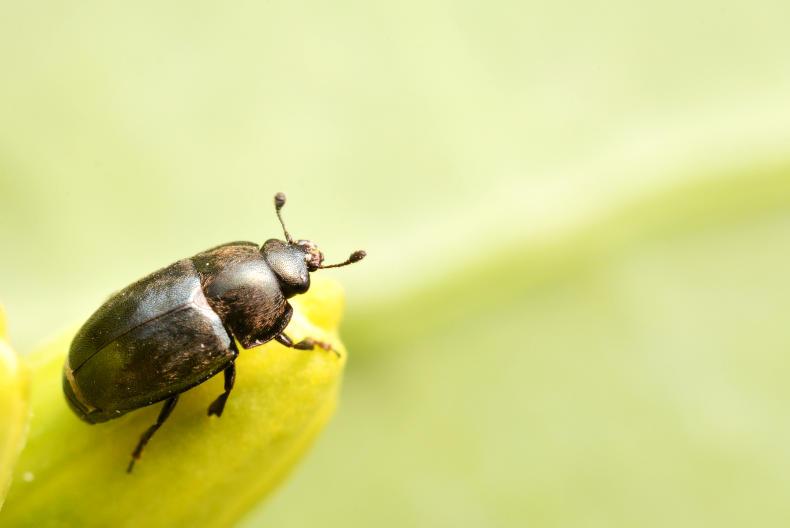
Monitoring pest populations and determining thresholds is just one example of IPM.
The development and application of pesticides in the form of insecticides, fungicides and herbicides have been key to achieving this.
However, coupled with intensification, increased reliance has been placed upon these pesticides to achieve this control. This has potentially led to an over-reliance of pesticides within arable production systems.
Such over-reliance has on occasion led to unwanted consequences, for example the development of pesticide resistance. This has introduced a vulnerability into the system, which represents a significant risk to entire production systems.
The recent losses of key pesticides, including the neonicotinoide seed treatment and the multi-site fungicide chlorothalonil, and the reliance of both in wheat and barley for BYDV and septoria/ramularia control respectively, also serve to highlight this over-reliance.
To counter this, and to potentially introduce resilience into production systems, the concept of integrated pest management (IPM) is often prescribed.
What is IPM?
In generalised terms, IPM is the various processes by which farmers manage pests in their crops, with emphasis being placed on all aspects of control and specifically on those measures that prevent or limit the initial development of the pest.
IPM must take account of the production system, the cost of not controlling the pest (whether monetary or other), plus all available means of controlling the pest with a view to combining these and where possible with a more specific or targeted use of pesticides (see Figure 1).

Figure 1: Process of Integrated Pest Management, placing emphasis on the initial prevention and suppression of the pest. Source: Teagasc
IPM has, in the past, often been viewed as a luxury that could be exploited on those crops where environmental conditions could easily be controlled, such as in glasshouses, etc.
Undoubtedly, the changeable and unpredictable environmental conditions associated with arable production systems limit the capabilities of specific aspects of pest control. However, IPM is inclusive of all systems.
Furthermore, it should not be viewed as a simple fixed approach, but one that is continually evolving measures that reflect the pressures that exist at any given time.

Choosing varieties with high disease resistance is an example of an IPM principle, something that tillage farmers naturally tend to do.
This of course means that it is a continual process that requires the engagement of the farmer.
Although this may sound both daunting and time-consuming, it is worth noting that these are generally processes that most growers implement in some form or other, often unknown to themselves.
However, it should also be recognised that improvements can potentially be made by all farmers.
IPM on Irish farms
If we are to assist the adoption of IPM in arable crops, it is important to accurately quantify what levels are being practised on Irish arable farms. As a knowledge-intensive, continually evolving process, this in itself is a difficult task.
To overcome this, a list of six questions were developed relating to specific farm practices. These questions included aspects relating to production system, variety choice, preventative measures, pesticide usage and knowledge sources.
Responses
The responses to these questions and their ranking in terms of IPM, whether low or high and how they related to the wider concept of IPM, were agreed upon by stakeholders, including farmers, agronomists, regulators, educators and researchers.
In this way, it has been possible to provide a consensus of what IPM is on arable farms and subsequently a means of measuring IPM adoption. These questions, in addition to questions relating to IPM familiarity and perception, have been included in the National Farm Survey specifically targeting specialised tillage farmers and in a wider survey of farmers at various conferences and crop walks.
Overall, a range of IPM adoption levels have been observed. Importantly, specific factors including familiarity with IPM, relationship with agronomist or adviser and sources of information were all identified as leading to differences in the levels observed.
Read more
Crops & Spreaders event offers something for everyone
The development of pests, whether insects, diseases or weeds, represents a significant threat to our ability to grow crops effectively and efficiently across all agricultural regions of the world. In our temperate climate, the production of arable crops is subject to specific pests that are often unique to our conditions.
Over the past 50 years, significant increases in yields of arable crops have been achieved, in part resulting from our ability to manage the threat imposed by these pests.
Monitoring pest populations and determining thresholds is just one example of IPM.
The development and application of pesticides in the form of insecticides, fungicides and herbicides have been key to achieving this.
However, coupled with intensification, increased reliance has been placed upon these pesticides to achieve this control. This has potentially led to an over-reliance of pesticides within arable production systems.
Such over-reliance has on occasion led to unwanted consequences, for example the development of pesticide resistance. This has introduced a vulnerability into the system, which represents a significant risk to entire production systems.
The recent losses of key pesticides, including the neonicotinoide seed treatment and the multi-site fungicide chlorothalonil, and the reliance of both in wheat and barley for BYDV and septoria/ramularia control respectively, also serve to highlight this over-reliance.
To counter this, and to potentially introduce resilience into production systems, the concept of integrated pest management (IPM) is often prescribed.
What is IPM?
In generalised terms, IPM is the various processes by which farmers manage pests in their crops, with emphasis being placed on all aspects of control and specifically on those measures that prevent or limit the initial development of the pest.
IPM must take account of the production system, the cost of not controlling the pest (whether monetary or other), plus all available means of controlling the pest with a view to combining these and where possible with a more specific or targeted use of pesticides (see Figure 1).
Figure 1: Process of Integrated Pest Management, placing emphasis on the initial prevention and suppression of the pest. Source: Teagasc
IPM has, in the past, often been viewed as a luxury that could be exploited on those crops where environmental conditions could easily be controlled, such as in glasshouses, etc.
Undoubtedly, the changeable and unpredictable environmental conditions associated with arable production systems limit the capabilities of specific aspects of pest control. However, IPM is inclusive of all systems.
Furthermore, it should not be viewed as a simple fixed approach, but one that is continually evolving measures that reflect the pressures that exist at any given time.
Choosing varieties with high disease resistance is an example of an IPM principle, something that tillage farmers naturally tend to do.
This of course means that it is a continual process that requires the engagement of the farmer.
Although this may sound both daunting and time-consuming, it is worth noting that these are generally processes that most growers implement in some form or other, often unknown to themselves.
However, it should also be recognised that improvements can potentially be made by all farmers.
IPM on Irish farms
If we are to assist the adoption of IPM in arable crops, it is important to accurately quantify what levels are being practised on Irish arable farms. As a knowledge-intensive, continually evolving process, this in itself is a difficult task.
To overcome this, a list of six questions were developed relating to specific farm practices. These questions included aspects relating to production system, variety choice, preventative measures, pesticide usage and knowledge sources.
Responses
The responses to these questions and their ranking in terms of IPM, whether low or high and how they related to the wider concept of IPM, were agreed upon by stakeholders, including farmers, agronomists, regulators, educators and researchers.
In this way, it has been possible to provide a consensus of what IPM is on arable farms and subsequently a means of measuring IPM adoption. These questions, in addition to questions relating to IPM familiarity and perception, have been included in the National Farm Survey specifically targeting specialised tillage farmers and in a wider survey of farmers at various conferences and crop walks.
Overall, a range of IPM adoption levels have been observed. Importantly, specific factors including familiarity with IPM, relationship with agronomist or adviser and sources of information were all identified as leading to differences in the levels observed.
Read more
Crops & Spreaders event offers something for everyone








SHARING OPTIONS