



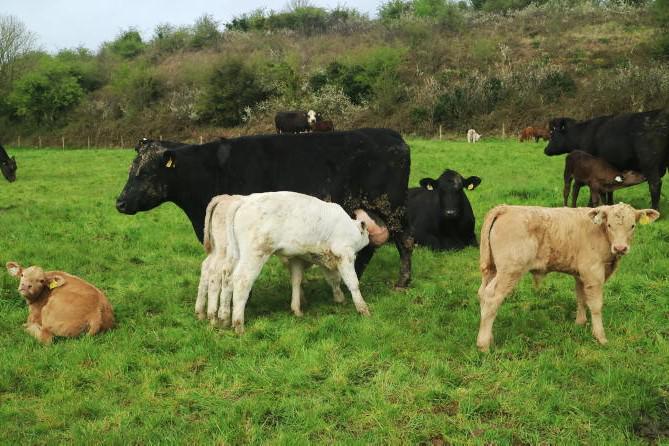
This week sees our four-week suckler series kick off in the Irish Farmers Journal. Over the next few weeks of this series, Declan O’Brien will be taking a look at the history of our suckler cow herd, the importance of CAP supports to the sector and what the future might look like.
There will be a particular emphasis on a reduced CAP budget and how that might affect suckler farming, one of the sectors most dependent on CAP supports. Record weanling prices and beef prices during 2025 have injected some much-needed confidence back into the sector, and that confidence has seen the first rise in suckler cow numbers in the last 10 years.
While the turnaround is a small one, rising by just over 15,000 cows, it does mark a significant milestone for the embattled sector.
It’s hard to believe that we have lost over 250,000 cows in the last 10 years, down from over one million cows in 2016.
There will be a particular emphasis on a reduced CAP budget and how that might affect suckler farming, one of the sectors most dependent on CAP supports
While we will never see numbers back up there again, it’s a positive to see the drop at least stalled.
Industry experts had predicted that suckler cow numbers would drop as low as 600,000 head by 2030.
While a drop in prices in 2026 may put further pressure on numbers, the sentiment around sucklers and their ability to deliver a decent margin in a part-time farming system has changed in the last 12 months.
On page 34-35 of this week’s paper, Darren Carty goes into detail on the Newford herd financial performance for 2025.
A beef price increase of €2/kg and a lift in carcase weights increased gross margin by €1,000/ha.
Teagasc’s Paul Crosson said at the event that the gross margin in their National Farm Survey farms is likely to have lifted from €100/ha to €800/ha last year.
Given the increase in costs this year, it is vital that the market returns a sustainable price to have any hope of maintaining the recent swing in suckler confidence.
Birth registrations are up over 10,000, but it is a fragile balance that could just as easy reverse in the other direction again if a sustainable beef price isn’t delivered to farmers.



SHARING OPTIONS