


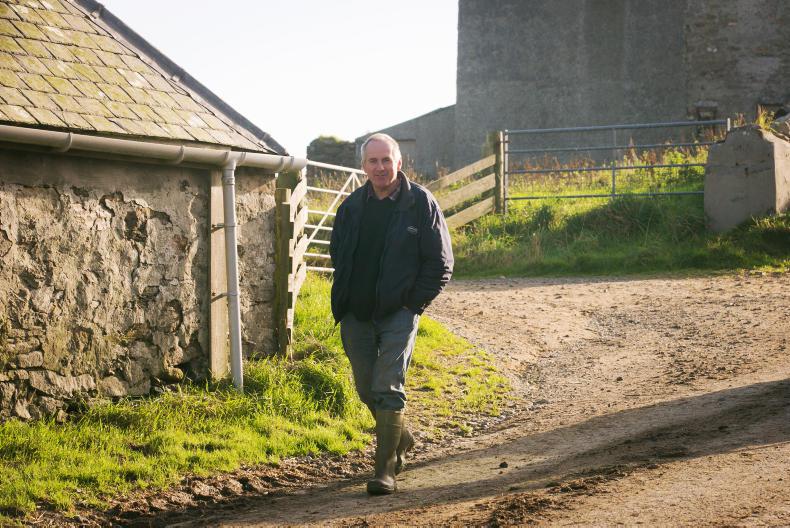
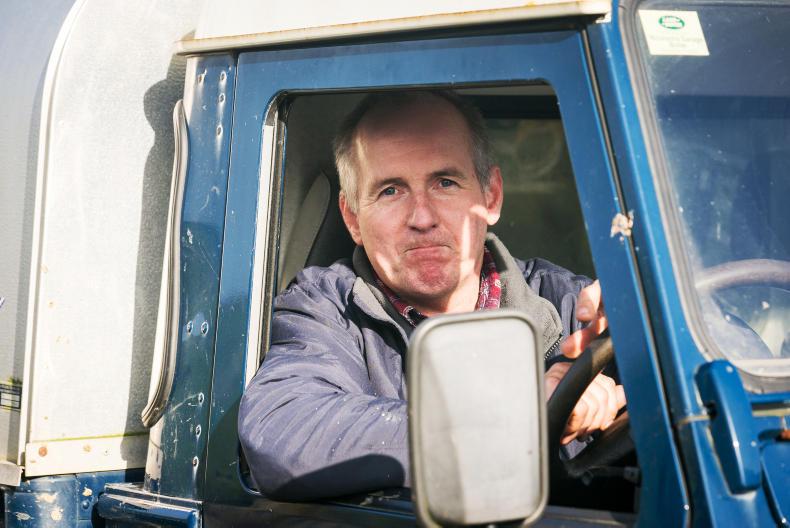
When Martin bought Quendale farm in 1994 it was one of 12 dairy farms on the islands. His is now the largest of four, milking approximately 100 cows as well as over 800 ewes.
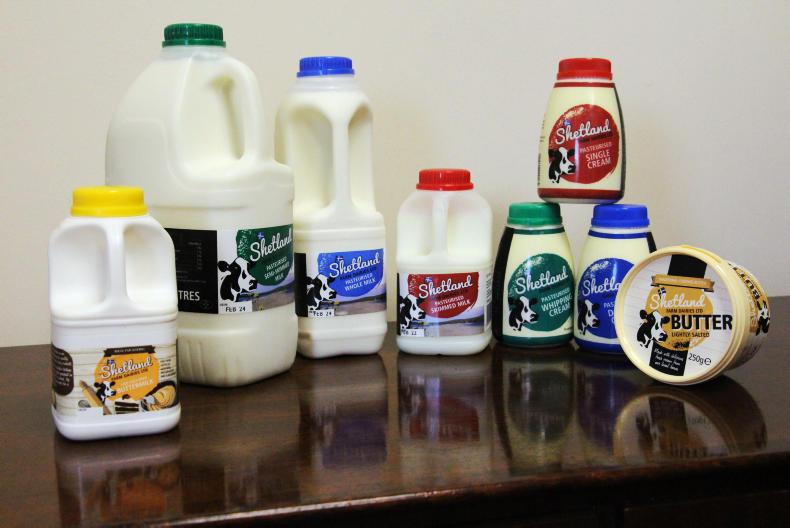
He milks Holstein Friesians all year round for the liquid market. Each cow averages around 7,000l/yr.
“Holstein Friesians are the best for the conditions here,” Burgess told Farmers Journal Scotland. “The pure Friesian lactation goes up and down too much, Holsteins are more level.”
The dairy enterprise is two thirds of the turnover on the farm which cannot expand due to land type.
“We have three guys that work for us because we have sheep as well. We could expand a little bit but we don’t have arable land to feed more cows. What we are desperately needing now in Shetland is for someone to come into cows, that’s what we would like to see. It’s just persuading someone to start up.”
However, he believes farming needs to become more profitable to attract young people into it. Owning the dairy with the other farmers means that Burgess has a say in the milk price, but that has to be based on what consumers are able to afford. The short grazing season really increases costs in Shetland.
“We used to graze from middle of May to mid-October, but now it’s nearly 1 June to 1 October. We buffer feed from the start of September onwards. We make two cuts of silage but the biggest limiting factor is the lack of arable ground,” Burgess said. “You can’t really buy in silage effectively in Shetland. You can occasionally get a few bales but the quality wouldn’t be up to what a dairy farm needs. So you just have to make your own. We do buy in concentrates and straights. It probably costs £40/t more than what it would cost you on the mainland, but that’s not our biggest cost. The climate is the biggest factor really, it’s dairying on the edge.”
When the grass does grow it thrives. During summer Shetland has nearly 24 hours of daylight, allowing growth to exceed the level it would be at on mainland Scotland.
“We would make around 1,700 to 1,800t of silage, including whole crop and two cuts of grass. We use a contractor and chop it. I don’t know why everyone is so enthusiastic about bales, labour wise you spend the whole winter unwrapping them.”
As well as feed, spare parts for the milking machine make dairy more expensive in such a remote location. Quendale farm always has two vacuum pumps as well as plenty of spares for the 12-unit swing over DeLaval.
“The nearest dairy engineer is Inverurie, so you need spares on site and an engineer at the end of the phone and just do it yourself. The engineer would come up once a year to do a service, but anything else you’re on your own. We get relatively little frost, but I have seen the pipes frozen occasionally.”


SHARING OPTIONS