Creating a premium brand for Shetland lamb is the way forward, many islanders agree. However, the majority of sheep leave the island on foot, despite the presence of a slaughterhouse in Lerwick.
The slaughterhouse was built around five years ago, with €450,000 of de-minimus money from the EU. It is owned by the Shetland Livestock Marketing Group and sits alongside the mart. Currently, the biggest percentage of its three-day per week kill is for freezers at home.
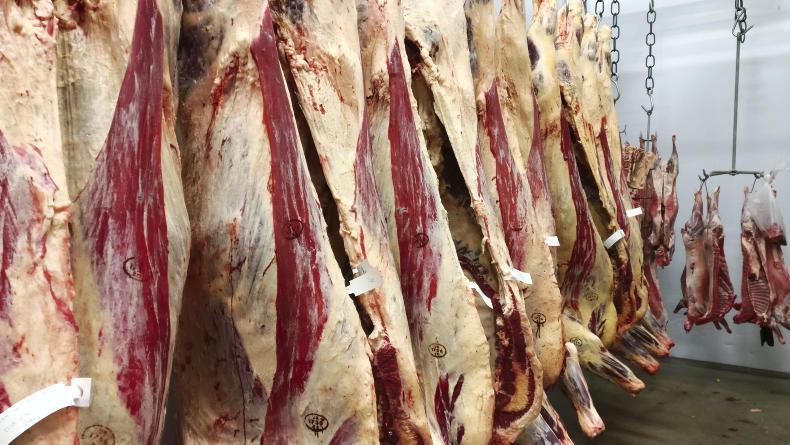
Beef carcases hanging in the Shetland Livestock Marketing Group abattoir in Lerwick
Newly elected chairman Cecil Eunson says “exporting native, quality Shetland lambs to a niche market; supermarkets of some fashion or specialist butchers” is something the group is aiming towards.
“I think there is a market, we’re not needing a big one,” he told Farmers Journal Scotland. “It would be seasonal; end of August to Christmas time. I think there would be a market for that. We don’t have anyone working on it at the moment, there is not enough money.”
Some crofters and farmers have found their own markets for Shetland lamb, one even sends lamb to butchers in both Glasgow and London. Abattoir manager, Lauraine Manson, hopes to see a full-time Shetland lamb marketing manager in place. On average each month, the abattoir kills 26 cattle, 400 sheep and 10 pigs.
 “At some point we will need to build a green room for offal,” said Manson, who has been in the business for 13 years. “From a value-added perspective I would like to see a tannery added. The hides are currently shipped to Yorkshire, our hides get a premium because they are taken off by hand.”
Helping producers to understand the needs of the end consumer plays an important role in the ambition to create a brand for Shetland produce. While some crofters’ pure Shetland hill lamb is considered too light for mainstream processing (carcase weights at the Lerwick abattoir are typically 15kg to 16kg), it could be a point of differentiation for their market.
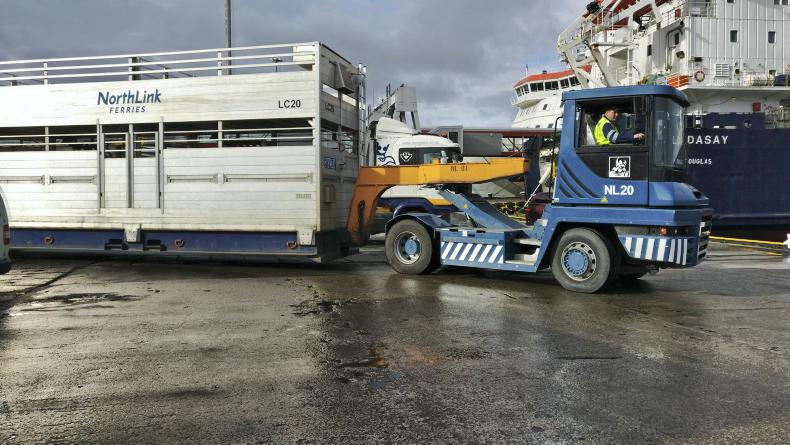
Live lambs sold at Lerwick mart being loaded on to the Northlink ferry to Aberdeen
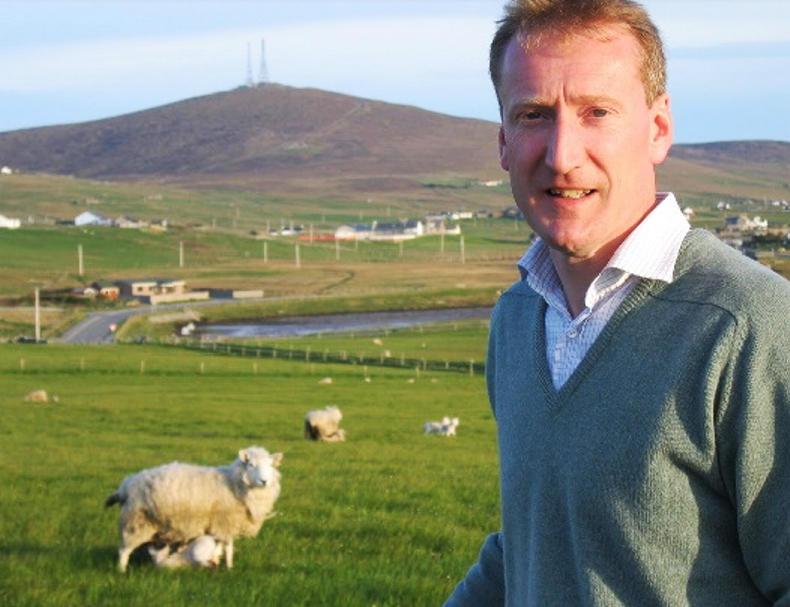
“We are starting to make the link between the crofter at a sheep sale, all the way through to lamb ready for the food trade; and then the links to the hotels, the catering trade and larger purchasers of primary products,” said Shetland MSP Tavish Scott, who used to run his own farm. “That’s the part that Shetland agriculture hasn’t done too well at in the past and we’ve now got a food strategy in place. That’s being thought through in terms of creating a supply chain in Shetland as well as the amount of store stock that leaves the islands. We need less of that and more of our products going directly into the trade here in the islands.”
No different to the rest of the UK, the threat of Brexit creates an urgency around the need to find that market for Shetland lambs. The landscape of the islands would change radically if the margins in crofting were further eroded.
“If government wants to maintain rural populations it does not matter whether it’s in Caithness, rural  Aberdeenshire or Shetland. You need to support primary agriculture because that is the backbone of the rural economy,” said Scott. “Most of our 900 agriculture units up here are, in effect, part time. But they underpin so many other things in our community. There is also an environmental aspect to this as well, if there were no crofters it would be wild. It wouldn’t be as the nature conservationists want it. They want swards of grassland because that’s where birds feed. So it works two ways. I think there is a public policy goal in terms of populations and there is a public policy goal in terms of the environment.”
Maintaining support funding to agriculture post-Brexit is high on the liberal democrats priority list.
“My biggest issue is that they are taking agriculture and the rest of the economy out of the Europe and no government of political persuasion will give that much money to the rural economy,” he said. “I think Gove’s rhetoric is irrelevant, the only thing that matters is money. If they don’t have that money then it’s all a pipe dream.”
Read more
Shetlands - Dairying on the edge
Shetland business profile: Saxa Vord distillery
Creating a premium brand for Shetland lamb is the way forward, many islanders agree. However, the majority of sheep leave the island on foot, despite the presence of a slaughterhouse in Lerwick.
The slaughterhouse was built around five years ago, with €450,000 of de-minimus money from the EU. It is owned by the Shetland Livestock Marketing Group and sits alongside the mart. Currently, the biggest percentage of its three-day per week kill is for freezers at home.
Beef carcases hanging in the Shetland Livestock Marketing Group abattoir in Lerwick
Newly elected chairman Cecil Eunson says “exporting native, quality Shetland lambs to a niche market; supermarkets of some fashion or specialist butchers” is something the group is aiming towards.
“I think there is a market, we’re not needing a big one,” he told Farmers Journal Scotland. “It would be seasonal; end of August to Christmas time. I think there would be a market for that. We don’t have anyone working on it at the moment, there is not enough money.”
Some crofters and farmers have found their own markets for Shetland lamb, one even sends lamb to butchers in both Glasgow and London. Abattoir manager, Lauraine Manson, hopes to see a full-time Shetland lamb marketing manager in place. On average each month, the abattoir kills 26 cattle, 400 sheep and 10 pigs.
“At some point we will need to build a green room for offal,” said Manson, who has been in the business for 13 years. “From a value-added perspective I would like to see a tannery added. The hides are currently shipped to Yorkshire, our hides get a premium because they are taken off by hand.”
Helping producers to understand the needs of the end consumer plays an important role in the ambition to create a brand for Shetland produce. While some crofters’ pure Shetland hill lamb is considered too light for mainstream processing (carcase weights at the Lerwick abattoir are typically 15kg to 16kg), it could be a point of differentiation for their market.
Live lambs sold at Lerwick mart being loaded on to the Northlink ferry to Aberdeen
“We are starting to make the link between the crofter at a sheep sale, all the way through to lamb ready for the food trade; and then the links to the hotels, the catering trade and larger purchasers of primary products,” said Shetland MSP Tavish Scott, who used to run his own farm. “That’s the part that Shetland agriculture hasn’t done too well at in the past and we’ve now got a food strategy in place. That’s being thought through in terms of creating a supply chain in Shetland as well as the amount of store stock that leaves the islands. We need less of that and more of our products going directly into the trade here in the islands.”
No different to the rest of the UK, the threat of Brexit creates an urgency around the need to find that market for Shetland lambs. The landscape of the islands would change radically if the margins in crofting were further eroded.
“If government wants to maintain rural populations it does not matter whether it’s in Caithness, rural Aberdeenshire or Shetland. You need to support primary agriculture because that is the backbone of the rural economy,” said Scott. “Most of our 900 agriculture units up here are, in effect, part time. But they underpin so many other things in our community. There is also an environmental aspect to this as well, if there were no crofters it would be wild. It wouldn’t be as the nature conservationists want it. They want swards of grassland because that’s where birds feed. So it works two ways. I think there is a public policy goal in terms of populations and there is a public policy goal in terms of the environment.”
Maintaining support funding to agriculture post-Brexit is high on the liberal democrats priority list.
“My biggest issue is that they are taking agriculture and the rest of the economy out of the Europe and no government of political persuasion will give that much money to the rural economy,” he said. “I think Gove’s rhetoric is irrelevant, the only thing that matters is money. If they don’t have that money then it’s all a pipe dream.”
Read more
Shetlands - Dairying on the edge
Shetland business profile: Saxa Vord distillery







SHARING OPTIONS