Sligo’s recent trip to play New York in the opening round of the Connacht Senior Football Championship in Gaelic Park provided me an opportunity to take a break from farming for the week and travel stateside to catch up with friends and neighbours living in the US.
This is a relatively quiet time of year for me on the farm compared to spring-calving suckler herds who are now in the middle of the breeding season.
So, before I left, it was just a matter of making sure things were set up properly to ensure a smooth running of the farm while I was away. There were some bigger jobs that had to be taken care of first though.
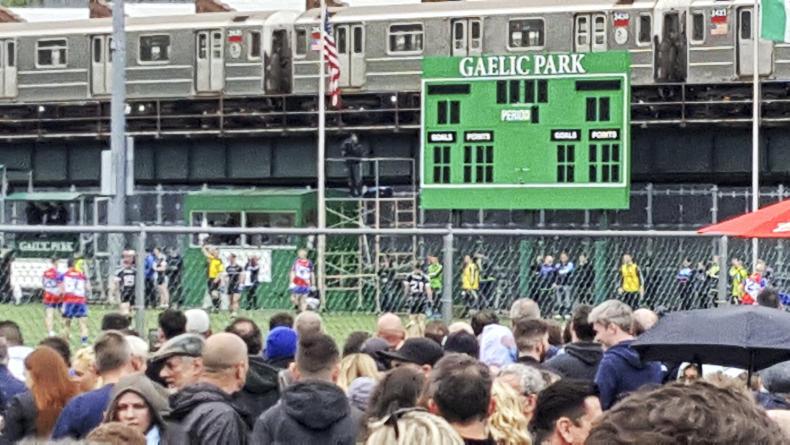
A shot from the New York Gaelic Grounds where Sligo recently beat New York in the Connacht GAA Championship.
Removing the docks and boosting silage
The last couple of years I have been spraying the silage ground to try and reduce or eliminate docks from the silage. Last year I found a big improvement in the quality of silage in the bale, with very little waste when feeding out during the winter.
Quality silage is a necessity for an autumn-calving herd and there is nothing more frustrating than clearing away waste silage left behind by cattle.
Next on the agenda was to organise the next round of fertiliser on the grazing ground.
Grass growth had slowed to 54kg of dry matter per day and the days I was ahead were getting a little tight. I spread two bags of 18:6:12 to the acre and with the rain arriving at the weekend I am expecting daily growth to increase significantly.
Having just received my latest soil sample results, phosphorus levels are still low and will need serious attention. Soil pH levels have certainly improved with lime applications, however, P levels are very slow to show any improvement.
GLAS tribulations
This is my second year to sow wild bird cover for GLAS, and given that last year’s crop was not a complete success I have made some changes this year.
Using a different seed with less oats should limit bird damage and by covering the seed after spreading I am hoping to avoid the bird attack that occurred in 2016.
Mind you, I’m still awaiting my first GLAS payment and looking for answers is more than annoying. The only excuse not used so far by the Department of Agriculture is that their IT systems fell victim to a ransomware attack and rather than pay needy farmers, they have paid the ransom.
Read more
Trevor Boland's Farmer Writes articles
Sligo’s recent trip to play New York in the opening round of the Connacht Senior Football Championship in Gaelic Park provided me an opportunity to take a break from farming for the week and travel stateside to catch up with friends and neighbours living in the US.
This is a relatively quiet time of year for me on the farm compared to spring-calving suckler herds who are now in the middle of the breeding season.
So, before I left, it was just a matter of making sure things were set up properly to ensure a smooth running of the farm while I was away. There were some bigger jobs that had to be taken care of first though.
A shot from the New York Gaelic Grounds where Sligo recently beat New York in the Connacht GAA Championship.
Removing the docks and boosting silage
The last couple of years I have been spraying the silage ground to try and reduce or eliminate docks from the silage. Last year I found a big improvement in the quality of silage in the bale, with very little waste when feeding out during the winter.
Quality silage is a necessity for an autumn-calving herd and there is nothing more frustrating than clearing away waste silage left behind by cattle.
Next on the agenda was to organise the next round of fertiliser on the grazing ground.
Grass growth had slowed to 54kg of dry matter per day and the days I was ahead were getting a little tight. I spread two bags of 18:6:12 to the acre and with the rain arriving at the weekend I am expecting daily growth to increase significantly.
Having just received my latest soil sample results, phosphorus levels are still low and will need serious attention. Soil pH levels have certainly improved with lime applications, however, P levels are very slow to show any improvement.
GLAS tribulations
This is my second year to sow wild bird cover for GLAS, and given that last year’s crop was not a complete success I have made some changes this year.
Using a different seed with less oats should limit bird damage and by covering the seed after spreading I am hoping to avoid the bird attack that occurred in 2016.
Mind you, I’m still awaiting my first GLAS payment and looking for answers is more than annoying. The only excuse not used so far by the Department of Agriculture is that their IT systems fell victim to a ransomware attack and rather than pay needy farmers, they have paid the ransom.
Read more
Trevor Boland's Farmer Writes articles






SHARING OPTIONS