



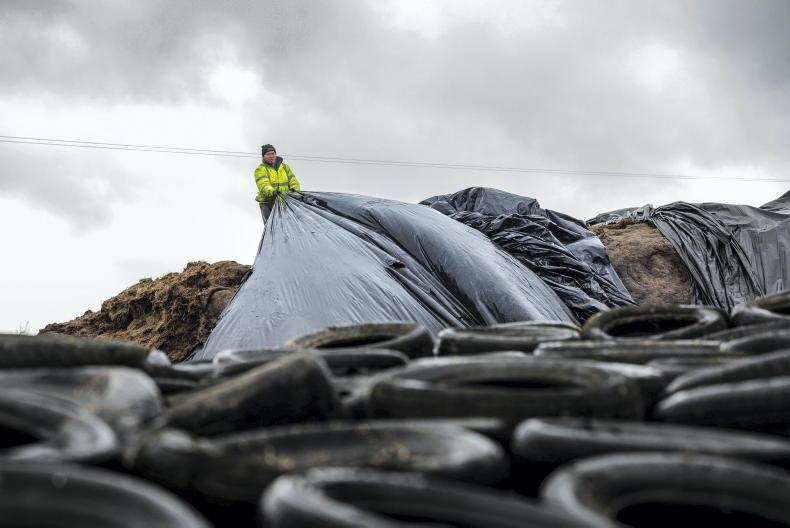
Some farmers openly admitted to the burning and burial of plastic waste on their farm in a recent study carried out by a Dundalk Institute of Technology student.
The study, carried out by Clodagh King, investigated farmers' attitudes towards agricultural plastics including their management, methods of disposal and their awareness and perceptions of the environmental impacts of plastics.
Despite the fact that some farmers admitted to such illegal activity, most farmers in the study said they are recycling agricultural plastic waste.
However, according to the findings, the rate of recycling depends on a wide range of factors including the type of agricultural plastic, cost, accessibility to recycling facilities and their knowledge on what can be recycled and how to recycle it.
Some of the other main findings from the study included that while farmers acknowledge that they need agricultural plastics to perform tasks on the farm, they also view agricultural plastics as a burden due to the logistical and monetary factors associated with them.
Concerned
Moreover, the study found that farmers are concerned about the negative impacts that the disposal of agricultural plastics present to the environment.
Despite this, awareness and concern towards the environment does not always correspond into positive action.
Other findings revealed that while farmers are relatively aware of microplastics, they are more aware of plastic pollution than microplastic pollution.
Further research focusing on the abundance and potential effects of microplastics on soils is needed
In addition to this, farmers feel that aquatic environments are under greater threat than the terrestrial environments are.
This, King said, may suggest that farmers understand and care more about the impacts plastics and microplastics have on water bodies and their counterparts, which might be because most of the research efforts have focused on these systems to date.
Further research
This finding would indicate that further research focusing on the abundance and potential effects of microplastics on soils is needed.
The study proposed that developments should be made in relation to the policies regarding soil health and this includes the contamination of soil via plastics and the potential impacts plastics have on soil stability and structure.
Governments, King argued, should set out initiatives to promote citizen engagement to help improve the functionality of agri eco systems.
New research and innovation into the economic and practical viability of bio-based and biodegradable plastics should be addressed to investigate the potential of these materials as alternatives to conventional plastics in agriculture, she said in conclusion.






SHARING OPTIONS