


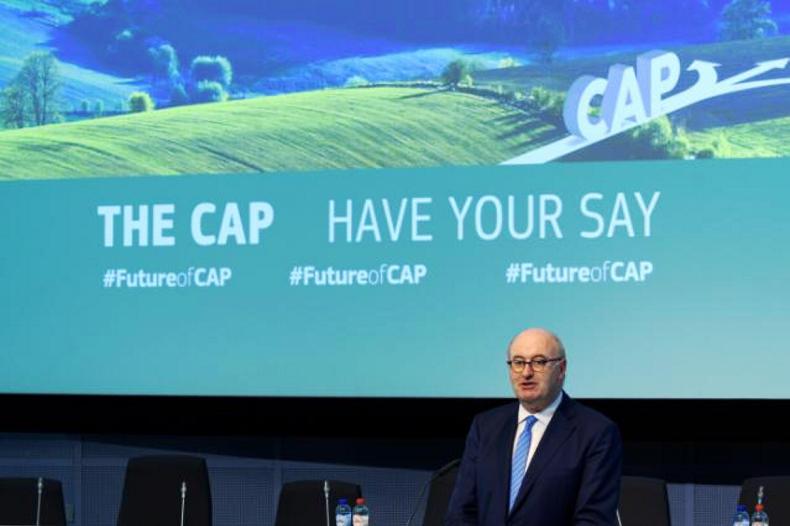
While Scotland and the rest of the UK heads out on a road to create a UK British Agricultural Policy, the EU is progressing with the latest revision to the Common Agricultural Policy (CAP) that is due to come into effect from 2020. While it won’t directly affect Scottish farmers, it is worth noting the direction of travel.
A draft of the EU Agriculture Commissioner’s written proposals, known in Brussels jargon as a “communication” on the shape of the next CAP reform, has been circulating in recent days, ahead of its formal publication on 29 November.
While further drafts may emerge in coming weeks, it is likely that the basic shape of the CAP 2020 is contained in the current document. Overall, the proposals will disappoint farmers looking for major reform, though there are modifications that will have an impact.
As expected from the consultation process earlier this year, there is a strong focus on the environment and rural community and industrial development. Innovation and smart farming are themes that feature throughout the communication, and the strong reference to the use of technology suggests that there is recognition that rural broadband throughout Europe is unsatisfactory.
A further feature is the delegation of more responsibility to member states to deliver the CAP objectives within overall EU policy objectives. This would replace the much-criticised tight EU audit controls and penalties, but of course there is no guarantee that a replacement at national level would be any more satisfactory without a change in policy.
The proposals link a smart and resilient agricultural sector, bolstering environmental care and climate action and the stimulation of employment and growth in rural areas. The buzz words in this section are “research” and “innovation”, and recognition that “there is a particular need to address small and medium-size farms’ access to technology”.
Full-time versus part-time
The idea of national governments co-financing direct payments has been rejected, as it would threaten disruption to the internal market. One noticeable progression from the current version of the CAP is the proposal that capping of direct payments in the €60,000 to €100,000 range should be considered. This would address the widespread criticism of the current CAP payments being structured so that 80% of payments are made to just 20% of farmers.
It also suggests that they should “focus on those who depend on farming for a living”, an indication that full-time farmers should take priority over part-time farmers. One of the biggest issues with the current CAP is that estates and landowners capture a disproportionate amount of the money.
Risk management
Reference is made to the fact that the market orientation of EU agriculture following CAP reforms over this decade has made agriculture more vulnerable to international markets and price volatility. There are no definitive proposals on how this should be addressed, beyond the setting up of a permanent EU-level platform on risk management.
This would involve all stakeholders and act as a forum for sharing experiences and have the objective of better using current tools and informing future policy development. The idea that national taxation policy could be modified to encourage farmers make provisions from good years to fund bad years is tabled as one suggestion for dealing with volatility.
Environment and generational renewal
Commissioner Phil Hogan has long advocated for farmers being the boots on the ground to deliver environmental policy. In his proposals, he suggests that the CAP should “allow member states devise a mixture of mandatory and voluntary measures in Pillar 1 and Pillar 2 to meet the environmental and climate objectives as part of the CAP strategic plan”. Income support through CAP will be dependent on farmers adopting environmental and climate practices as a baseline, with an opportunity to enhance revenue from CAP through what are described as “more ambitious voluntary practices”.
Getting new blood into farming has been a consistent theme of the Commissioner’s speeches over the past year. While he says it should be a priority in a new policy framework, he also says that member states are the vehicle to develop schemes that reflect the specific needs of their young farmers. Top-up payments are tabled as one suggestion to encourage new entrants.
Other points
The proposals also reference the progress that the EU has made in becoming a significant exporter of agri-food. However, it also recognised that some specific sectors of agriculture cannot withstand full trade liberalisation and free-for-all competition with imports.
The issue of antimicrobial resistance (AMR) was also raised, and it advocates the promotion of “new technologies, research and innovation to reduce risk to public health” [from the use of antibiotics].
Comment
These proposals indicate that CAP 2020 will be a Mark 2 version of the current CAP, rather than a radical departure.
Farmers who wanted to see a focus on productive agriculture will be disappointed, though full-time farmers look set to get priority, and the issue of 20% of claimants getting 80% of the fund will also be addressed through capping.
Part-time farmers will be concerned by this, though there may be some comfort in the line immediately before the reference to full-time farms, which suggests “enhanced support to smaller farms”. Expect plenty of debate on this section.
Ultimately what happens in the EU 27 won’t affect Scotland directly. However, whatever support mechanism is in place in the EU will have an impact on the future competitiveness of Scottish agriculture – and this is a consideration for any future British agriculture policy.


SHARING OPTIONS