Ask any farmer that calves cows what the most stressful fortnight of their year looks like, and they will probably describe a stretch in January, February or March.
The cold, the busyness, the sleepless nights, all in the pursuit of safely delivering calves into the world, regardless of their destination. And they would be right. As a farmer and vet myself, I know the story all too well from both sides.
However, there is another period, quieter in its arrival, that catches many of even the best farmers off guard every single year, and it costs the Irish cattle sector millions before it is finished.
We call it summer scour syndrome, and it deserves a lot more attention than it gets.
Every summer, without fail, I hear some version of the same story.
A farmer has calves going backwards at grass. They are scouring, losing condition fast, not responding to treatment. They have done the obvious things and nothing is working.
More often than not, what they are dealing with is summer scour syndrome, and the reason it is catching them off guard is that it does not behave like the diseases most farmers know well.
Understanding what it is, and crucially what it is not, is the starting point for dealing with it.
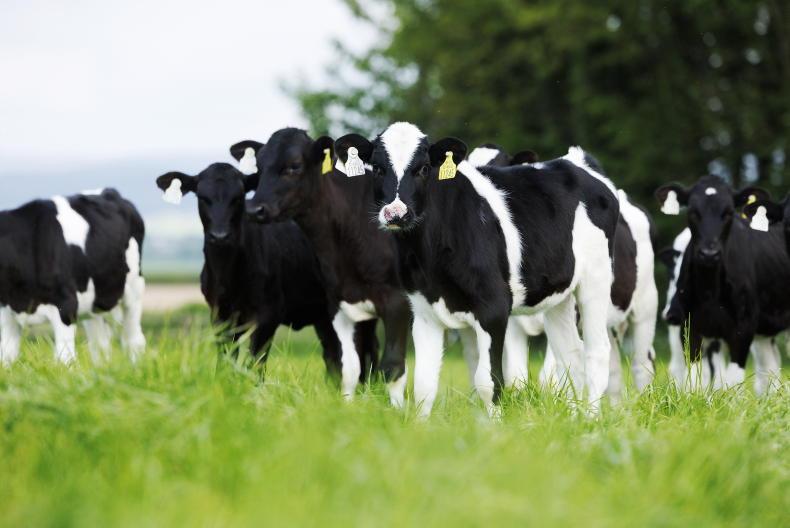
The timing of this focus series is very important, given that many calves are at grass or about to be turned out to grass for the first time.
What we are actually talking about
Summer scour syndrome is characterised by scour (where common causes have been ruled out), rapid weight loss, lethargy, weakness and lack of rumination. In severe cases, calves can develop ulceration of the mouth, oesophagus or muzzle.
The condition progresses and it can be fatal. Critically, the calves affected are usually unresponsive to conventional treatments. The one thing that consistently works is removing them from grass until they recover.
That last point is telling, because it brings you directly to the cause. The one common factor in every confirmed case of summer scour syndrome is grazing diet.
It typically affects calves within a month of turnout to grass, or after a dry summer following a period of good grass growth, and up to 12 months of age. Not all calves in a group will be affected, and severity varies from farm to farm and year to year, which is part of what makes it difficult to spot the pattern.
It is worth being clear about what the science currently says: an infectious cause has not been identified. This is a nutritional and rumen development issue, not an infection. And that matters enormously for how you approach it.
Grass is part of the problem
Summer scour syndrome is more common where calves are grazing rich or lush pastures, typically those with crude protein above 20% and low fibre content, less than 40% per kilogramme of dry matter.
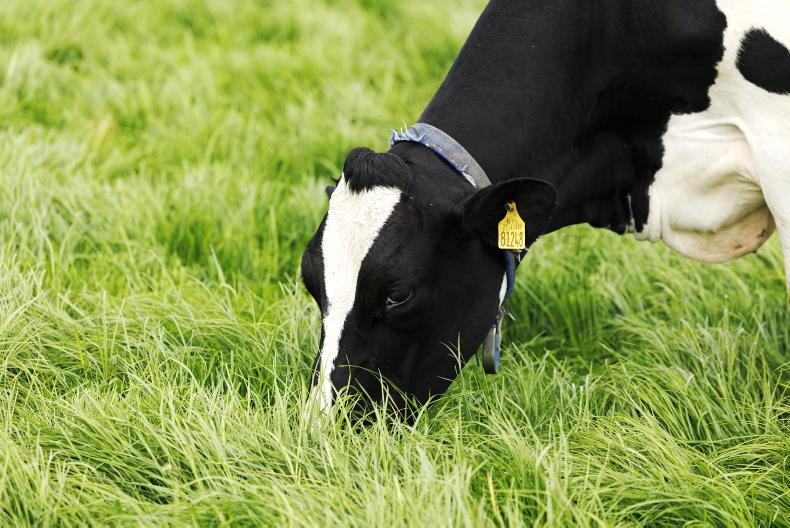
Calves are choosy pickers and selective grazers. They preferentially consume the top, leafier parts of the grass, the parts highest in nitrates and non-protein nitrogen. With an immature rumen, the young calf cannot handle large quantities of these compounds.
The suspected mechanism is an excessive build-up of ammonia in the rumen, along with an unstable pH that disrupts the rumen microbe population. The rumen simply is not ready for what it is being asked to digest. Think of it like calves wanting to dine out at the Michelin star restaurants all the time.
Reseeded paddocks, recently slurry-spread land and any pasture with very leafy covers are the highest risk environments. If your farm has a history of summer scour, those paddocks should be kept for older stock in the first months after turnout.
Do not delay, call the vet today
This is where farmers and vets sometimes lose time, and time matters with this condition.
Several other diseases can look similar: coccidiosis, high worm burden, mineral problems including molybdenum toxicity and copper issues, rumen acidosis, salmonellosis, and respiratory disease.
Your vet can distinguish between these, but doing so requires a proper diagnostic workup: clinical examination, faecal samples, grass trace element analysis, blood testing and assessing the response to treatment and supplementation.
Only when these common causes are ruled out can a diagnosis of summer scour syndrome be made with confidence.
Molybdenum deserves a specific mention. High molybdenum itself, not just the associated copper deficiency, can cause scour in calves at grass. If you are farming in a high-molybdenum area, it is worth discussing the mineral risk of your calf pastures with your vet before problems develop, not after. It can take a long time to get grass analysis results back from the lab and, as highlighted above, time is something we do not have a lot of.

If summer scour syndrome is suspected, affected calves must be removed from grass immediately.
Treatment is not linear
There is no single cure. That needs to be said plainly. Treatment options will vary and should be discussed with your vet.
What is non-negotiable is this: if summer scour syndrome is suspected, affected calves must be removed from grass immediately. The earlier you act, the greater the chance of recovery and the lower the chance of long-term issues arising.
In most outbreaks, only 10% to 20% of the calf group will be affected, so you are not necessarily looking at a whole-herd intervention.
Housed calves should be given good-quality forage, hay, silage or straw, along with good-quality calf concentrate and ad-lib access to water. Electrolytes may be required if calves are dehydrated.
After four to six weeks, if they have recovered sufficiently, they can be returned to pasture, but to pastures that are not lush, and with access to extra fibre and concentrate alongside.
Affected animals will be immunosuppressed, so your vet should check for concurrent disease, respiratory problems in particular, which would need treatment in their own right.
Prevention is the difference
The AHI CalfCare guidance is very clear on this, and it reflects what vets and farmers have learned through hard experience: prevention of summer scour syndrome begins well before turnout.
The timing of this focus by the Irish Farmers Journal is absolutely critical.
Weaning is the critical first link in the chain. Gradual weaning matters enormously. Both concentrates and water should be introduced in the first week of life, weaning should begin up to four weeks before milk is removed entirely, and calves should be eating at least 1.5kg of concentrate consistently for three consecutive days before they are fully weaned.
Rushing weaning, or weaning too early, sends calves to grass with a rumen that is not ready for the job, and that Michelin star food will cause a problem.
The 2026 AHI CalfCare Blueprint, which has been developed using the best advice and science courtesy of the CalfCare Technical Working Group, recommends that for farms with a history of summer scour, calves should be kept indoors on forage and concentrate for at least a week after weaning before any turnout to grass.
That buffer period gives the rumen a better chance of adapting and coping when turned out.
When turnout does happen, the quality of the pasture matters as much as the timing. Calves should graze stemmy, fibrous, stronger swards rather than very lush leafy covers.
Including an additional source of fibre at grass and strip grazing, which forces calves to eat both the leaf and the stem rather than just cherry-picking the top growth, is worth considering on farms with a history of the problem. Avoid recently reseeded paddocks and land that has had slurry or nitrogen applied recently.
Slower-growing, more mature pastures have less nitrogen and more fibre, which is what a young calf’s rumen needs.
After turnout, keep some concentrate going. Removing milk and transitioning to grass simultaneously, while withdrawing concentrate, is asking for trouble.
Colostrum: still the foundation
Farmers might be tired of hearing about this, but colostrum is the key. It really is the difference between a healthy calf and playing Russian roulette with the next generation of your herd.
No discussion of calf health, including summer scour syndrome, can fully separate itself from colostrum, because the immune status of a calf in its first grazing season is directly shaped by what happened in the first hours of its life.
The 1-2-3 rule: cleanly harvested and correctly stored colostrum from the first milking, fed within two hours of birth, at least three litres or 10% of bodyweight. A Brix refractometer reading of 22% or above confirms good quality colostrum. Antibody absorption by the gut peaks at birth and stops after 24 hours.
A calf that misses that window is a calf with a compromised start, and that compromise does not disappear when the calf goes to grass.
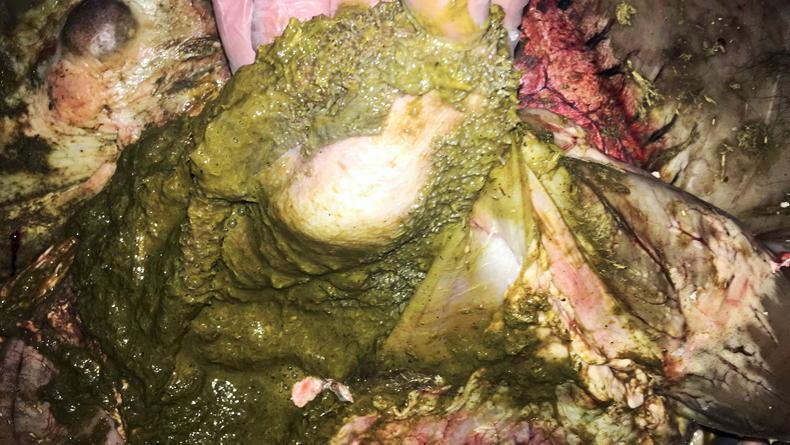
Summer scour syndrome is a nutritional and rumen development issue, not an infectious problem.
When to call your vet
The main risk periods for summer scour are during the first four to six weeks after turnout and during a dry summer, when the risk increases again in August or September following a burst of grass growth. Calves should be monitored closely for signs of diarrhoea and weight loss.
Weighing calves regularly during the grazing season is the most reliable early warning system.
A calf that is losing ground will show it on the scales before it looks visibly sick.
Call your vet if a calf has a temperature above 39.5°C, is very weak or has sunken eyes, is not responding to care within 24 hours, or is refusing several feeds in one day.
These are the thresholds from CalfCare guidance, and they are there for good reason. Early intervention changes outcomes. Waiting to see whether a calf comes right on its own is a gamble that does not usually pay off.
The bottom line
Summer scour syndrome is a genuine threat to calf health and farm profitability on Irish dairy farms every season. It is also, in large part, a preventable one.
The levers are practical and available to every farmer: gradual weaning with proper concentrate intake before removal of milk, to ensure good rumen development; a fibre-based transition period before turnout; careful choice of pasture in the first weeks at grass; and close monitoring of calves in the weeks that follow.
While research continues around this condition, to date the science tells us this is a nutritional condition, not an infectious one. The solution is not in a bottle or a syringe. It is in the management decisions made in the weeks around turnout.
Get those right, and summer scour syndrome, for most farms, most years, can be kept where it belongs: as something that happens to other people.
Ask any farmer that calves cows what the most stressful fortnight of their year looks like, and they will probably describe a stretch in January, February or March.
The cold, the busyness, the sleepless nights, all in the pursuit of safely delivering calves into the world, regardless of their destination. And they would be right. As a farmer and vet myself, I know the story all too well from both sides.
However, there is another period, quieter in its arrival, that catches many of even the best farmers off guard every single year, and it costs the Irish cattle sector millions before it is finished.
We call it summer scour syndrome, and it deserves a lot more attention than it gets.
Every summer, without fail, I hear some version of the same story.
A farmer has calves going backwards at grass. They are scouring, losing condition fast, not responding to treatment. They have done the obvious things and nothing is working.
More often than not, what they are dealing with is summer scour syndrome, and the reason it is catching them off guard is that it does not behave like the diseases most farmers know well.
Understanding what it is, and crucially what it is not, is the starting point for dealing with it.
The timing of this focus series is very important, given that many calves are at grass or about to be turned out to grass for the first time.
What we are actually talking about
Summer scour syndrome is characterised by scour (where common causes have been ruled out), rapid weight loss, lethargy, weakness and lack of rumination. In severe cases, calves can develop ulceration of the mouth, oesophagus or muzzle.
The condition progresses and it can be fatal. Critically, the calves affected are usually unresponsive to conventional treatments. The one thing that consistently works is removing them from grass until they recover.
That last point is telling, because it brings you directly to the cause. The one common factor in every confirmed case of summer scour syndrome is grazing diet.
It typically affects calves within a month of turnout to grass, or after a dry summer following a period of good grass growth, and up to 12 months of age. Not all calves in a group will be affected, and severity varies from farm to farm and year to year, which is part of what makes it difficult to spot the pattern.
It is worth being clear about what the science currently says: an infectious cause has not been identified. This is a nutritional and rumen development issue, not an infection. And that matters enormously for how you approach it.
Grass is part of the problem
Summer scour syndrome is more common where calves are grazing rich or lush pastures, typically those with crude protein above 20% and low fibre content, less than 40% per kilogramme of dry matter.
Calves are choosy pickers and selective grazers. They preferentially consume the top, leafier parts of the grass, the parts highest in nitrates and non-protein nitrogen. With an immature rumen, the young calf cannot handle large quantities of these compounds.
The suspected mechanism is an excessive build-up of ammonia in the rumen, along with an unstable pH that disrupts the rumen microbe population. The rumen simply is not ready for what it is being asked to digest. Think of it like calves wanting to dine out at the Michelin star restaurants all the time.
Reseeded paddocks, recently slurry-spread land and any pasture with very leafy covers are the highest risk environments. If your farm has a history of summer scour, those paddocks should be kept for older stock in the first months after turnout.
Do not delay, call the vet today
This is where farmers and vets sometimes lose time, and time matters with this condition.
Several other diseases can look similar: coccidiosis, high worm burden, mineral problems including molybdenum toxicity and copper issues, rumen acidosis, salmonellosis, and respiratory disease.
Your vet can distinguish between these, but doing so requires a proper diagnostic workup: clinical examination, faecal samples, grass trace element analysis, blood testing and assessing the response to treatment and supplementation.
Only when these common causes are ruled out can a diagnosis of summer scour syndrome be made with confidence.
Molybdenum deserves a specific mention. High molybdenum itself, not just the associated copper deficiency, can cause scour in calves at grass. If you are farming in a high-molybdenum area, it is worth discussing the mineral risk of your calf pastures with your vet before problems develop, not after. It can take a long time to get grass analysis results back from the lab and, as highlighted above, time is something we do not have a lot of.

If summer scour syndrome is suspected, affected calves must be removed from grass immediately.
Treatment is not linear
There is no single cure. That needs to be said plainly. Treatment options will vary and should be discussed with your vet.
What is non-negotiable is this: if summer scour syndrome is suspected, affected calves must be removed from grass immediately. The earlier you act, the greater the chance of recovery and the lower the chance of long-term issues arising.
In most outbreaks, only 10% to 20% of the calf group will be affected, so you are not necessarily looking at a whole-herd intervention.
Housed calves should be given good-quality forage, hay, silage or straw, along with good-quality calf concentrate and ad-lib access to water. Electrolytes may be required if calves are dehydrated.
After four to six weeks, if they have recovered sufficiently, they can be returned to pasture, but to pastures that are not lush, and with access to extra fibre and concentrate alongside.
Affected animals will be immunosuppressed, so your vet should check for concurrent disease, respiratory problems in particular, which would need treatment in their own right.
Prevention is the difference
The AHI CalfCare guidance is very clear on this, and it reflects what vets and farmers have learned through hard experience: prevention of summer scour syndrome begins well before turnout.
The timing of this focus by the Irish Farmers Journal is absolutely critical.
Weaning is the critical first link in the chain. Gradual weaning matters enormously. Both concentrates and water should be introduced in the first week of life, weaning should begin up to four weeks before milk is removed entirely, and calves should be eating at least 1.5kg of concentrate consistently for three consecutive days before they are fully weaned.
Rushing weaning, or weaning too early, sends calves to grass with a rumen that is not ready for the job, and that Michelin star food will cause a problem.
The 2026 AHI CalfCare Blueprint, which has been developed using the best advice and science courtesy of the CalfCare Technical Working Group, recommends that for farms with a history of summer scour, calves should be kept indoors on forage and concentrate for at least a week after weaning before any turnout to grass.
That buffer period gives the rumen a better chance of adapting and coping when turned out.
When turnout does happen, the quality of the pasture matters as much as the timing. Calves should graze stemmy, fibrous, stronger swards rather than very lush leafy covers.
Including an additional source of fibre at grass and strip grazing, which forces calves to eat both the leaf and the stem rather than just cherry-picking the top growth, is worth considering on farms with a history of the problem. Avoid recently reseeded paddocks and land that has had slurry or nitrogen applied recently.
Slower-growing, more mature pastures have less nitrogen and more fibre, which is what a young calf’s rumen needs.
After turnout, keep some concentrate going. Removing milk and transitioning to grass simultaneously, while withdrawing concentrate, is asking for trouble.
Colostrum: still the foundation
Farmers might be tired of hearing about this, but colostrum is the key. It really is the difference between a healthy calf and playing Russian roulette with the next generation of your herd.
No discussion of calf health, including summer scour syndrome, can fully separate itself from colostrum, because the immune status of a calf in its first grazing season is directly shaped by what happened in the first hours of its life.
The 1-2-3 rule: cleanly harvested and correctly stored colostrum from the first milking, fed within two hours of birth, at least three litres or 10% of bodyweight. A Brix refractometer reading of 22% or above confirms good quality colostrum. Antibody absorption by the gut peaks at birth and stops after 24 hours.
A calf that misses that window is a calf with a compromised start, and that compromise does not disappear when the calf goes to grass.

Summer scour syndrome is a nutritional and rumen development issue, not an infectious problem.
When to call your vet
The main risk periods for summer scour are during the first four to six weeks after turnout and during a dry summer, when the risk increases again in August or September following a burst of grass growth. Calves should be monitored closely for signs of diarrhoea and weight loss.
Weighing calves regularly during the grazing season is the most reliable early warning system.
A calf that is losing ground will show it on the scales before it looks visibly sick.
Call your vet if a calf has a temperature above 39.5°C, is very weak or has sunken eyes, is not responding to care within 24 hours, or is refusing several feeds in one day.
These are the thresholds from CalfCare guidance, and they are there for good reason. Early intervention changes outcomes. Waiting to see whether a calf comes right on its own is a gamble that does not usually pay off.
The bottom line
Summer scour syndrome is a genuine threat to calf health and farm profitability on Irish dairy farms every season. It is also, in large part, a preventable one.
The levers are practical and available to every farmer: gradual weaning with proper concentrate intake before removal of milk, to ensure good rumen development; a fibre-based transition period before turnout; careful choice of pasture in the first weeks at grass; and close monitoring of calves in the weeks that follow.
While research continues around this condition, to date the science tells us this is a nutritional condition, not an infectious one. The solution is not in a bottle or a syringe. It is in the management decisions made in the weeks around turnout.
Get those right, and summer scour syndrome, for most farms, most years, can be kept where it belongs: as something that happens to other people.
SHARING OPTIONS