



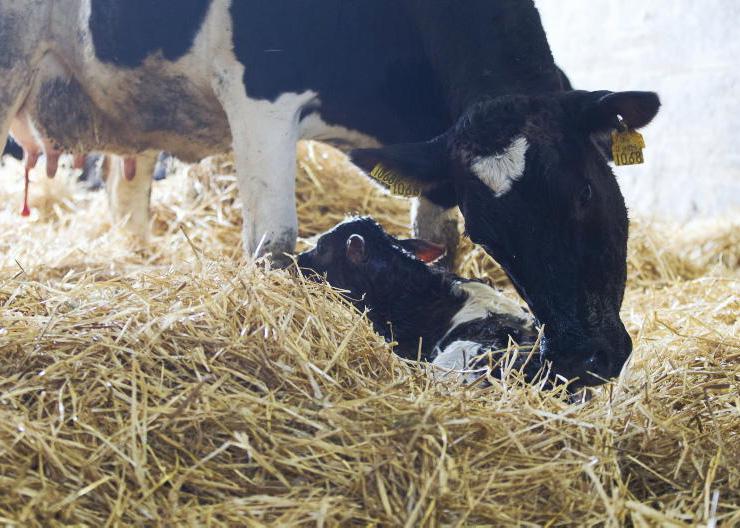
Animal Health Ireland’s plan to bring about a final push in the National Eradication Programme for Bovine Viral Diarrhoea (BVD) was launched in December 2025.
Termed Project BVD 2026, the plan will continue to major on the swift identification and removal of BVD-positive animals and then focus on a ramped-up programme on preventing re-occurrence or spread of the disease.
Farmers will be hoping that the plan brings a conclusion to an eradication programme entering its 14th year of mandatory BVD tissue testing.
The main elements of the project and a brief summary are as follows.
Pre-movement testing – herds which identify BVD-positive animals in 2026 will be faced with tougher movement restrictions.
According to AHI, these movement restrictions are aimed at suppressing BVD in the most at-risk herds while supporting farmers to be able to restart trading as quickly as possible.
Herds which identify BVD-positive animals already face strict restrictions once a BVD-positive or BVD-inconclusive animal is identified, with herds immediately restricted from moving animals in or out of the herd, while neighbouring herds are identified.
Up to now, movements from such herds were granted on a case-by-case basis by the relevant regional veterinary office for animals moving direct to their destination.
Such herds were also subject to whole herd testing.
Under the new restrictions immediate herd restriction will continue to apply along with whole herd testing.
Animals will no longer be able to be moved by permit and instead any animals that are required to be moved off farm will only be allowed to do so following a pre-movement test to ascertain BVD status until such a time that the herd is viewed as posing no risk of spreading the infection.
Tailored investigations for herds that are positive for more than one year.
A reservoir of disease in the environment is BVD’s biggest challenge.
The progress achieved in reducing BVD prevalence from 11,000 herds in 2013 to just over 200 herds now has been achieved by reducing the environmental risk.
Herds which are positive for more than one year go against this aim and increase the risk of the disease spreading to neighbouring herds and as such there will be a much greater spotlight on these.
Application of tracing tools in herd investigations to identify risks and act early.
Herd investigations are tricky to get to the route of the disease outbreak.
The new plan will witness the application of a more extensive suite of tracing tools in herd investigations with the aim of identifying disease early and acting early to get BVD animals moved out of herds.
Reinforced support for farmers and vets that are dealing with outbreaks to assist them in becoming disease-free as quickly as possible.
Swift removal of BVD-positive animals is paramount. The Department’s BVD Financial Support programme will continue in 2026 and is likely to be similar the programme in 2025.
The payments for each eligible beef calf removed to a knackery, abattoir or meat plant and recorded on the AIM system was as follows in 2025:
There is also financial support for vets in assisting them in herd investigations and herd health planning.
Develop and enhance training and resources to help farmers protect their herds from BVD and tools for vets working with at-risk herds.
Promote good biosecurity practices in herds at risk so they can minimise the risk of BVD introduction.
Communications campaigns around breakdowns, including upgraded neighbour notifications by SMS and letter. Targeted campaigns in at-risk areas and promoting the dissemination of resources on how to protect herds.



SHARING OPTIONS