Pesticide performance can be affected by a variety of factors such as water properties, droplet shape, size, spread and integrity, poor spray-to-leaf contact, poor surface penetration and many others.
One option growers use to help overcome these molecular, chemical and physical attributes is the inclusion of adjuvants.
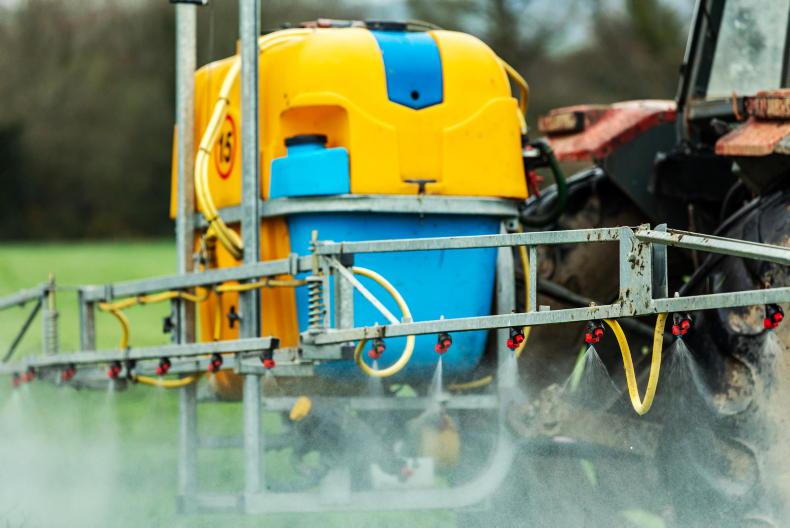
Adjuvants can perform a variety of tasks, but their primary job can be described as helping to optimise the efficacy a pesticide. Once the spray leaves the sprayer nozzle, growers can no longer control its fate. Therefore, any alterations to spray properties are done in the tank.
When and where
Different tasks require different adjuvants. Once the circumstances which require an adjuvant have been established, the most appropriate adjuvant can then be selected.
Most pesticide products contain some form of adjuvant, so growers should always check the label first. Some products may have specific recommendations on their labels to use one or more adjuvants.
It is important to understand that adjuvants do not belong everywhere or in every spray tank. However, in certain situations they have their place.
For example, the addition of a non-ionic wetter and/or sticking agent in a herbicide mixture could help increase the uptake of chemical for, say, mouse-eared chickweed, which has a hairy leaf surface.
Classification of adjuvants
You can’t choose the correct adjuvant without knowing how the key adjuvants work. The most useful classification of adjuvants is by chemical group, with the adjuvants divided into broad categories of oils, surfactants, sticking/deposition aids and penetration and translocation agents.
Another classification can be made on the basis of spray adjuvant function, but this can be confusing, as some adjuvants may have more than one function (for example, spreader and penetration aid).
Many standalone adjuvant products are available, but evaluation and trials data can be limited, as they do not require formal authorisation from Europe. Therefore, it is important to understand how each category works.
Adjuvants oils
Adjuvant oils assist pesticides to overcome natural leaf barriers to aid penetration. Up until 1995, the only significant adjuvant oils used in European agriculture were mineral-oil based products. Derived from petrochemicals, mineral oils were suspended in the mix in the form of small oil droplets. They were generally harsh on the plant cuticle, which helped pesticide penetration.
In the mid-1990s, the European adjuvant market had begun to use methylated seed oils as alternatives to mineral oils. These oils can be manufactured from renewable resources and to a consistent quality.
Inclusion rates are often lower than for mineral oils and their performance is better. As well as making finer spray droplets, they are good at spreading and pushing the active through the plant cuticle.
Surfactants
Surfactants (also called wetters) are compounds that lower the surface tension of a spray droplet. By doing this, surfactants, or surface-acting agents, allow gravity to collapse and flatten the conventional spherical spray droplet on the leaf surface.
This allows droplets to spread over a larger area, creating more pathways for penetration.
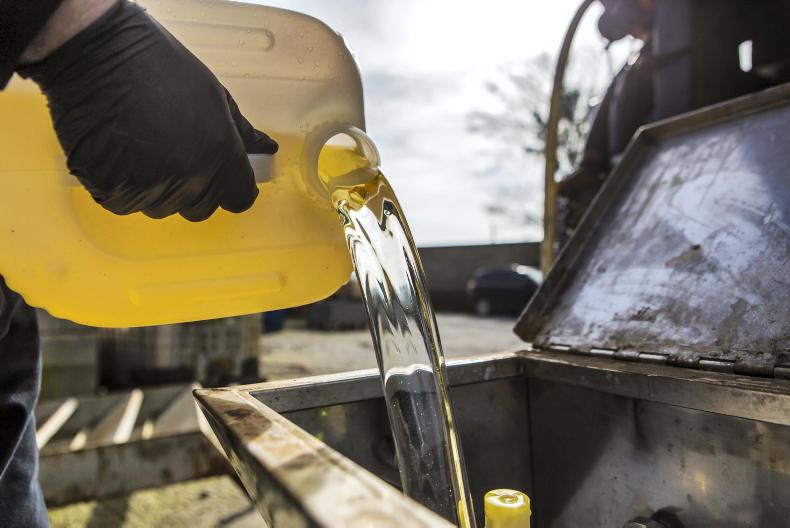
Any alterations to spray properties is done in the tank when using adjuvants.
They can also reduce the amount of bounce the droplet experiences when it hits the leaf surface, thus improving its deposition on the leaf surface. Surfactants generally work at the interfaces between the spray droplet, leaf surface and surrounding air.
While both anionic and cationic surfactants are available, the most commonly used surfactants are a non-ionic agents.
Non-ionic wetters
Non-ionic wetters are the simplest adjuvant types and act on the water by reducing surface tension and increasing the spreading properties once the droplet comes into contact with the target. They are particularly useful when the target has a waxy or hairy surface.
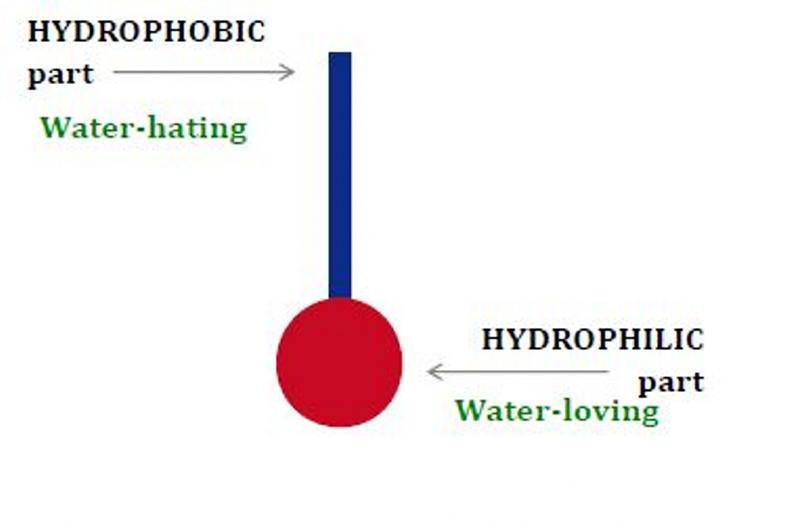
Non-ionic wetters have a hydrophilic (water loving) head group and a hydrophobic (water hating) tail.
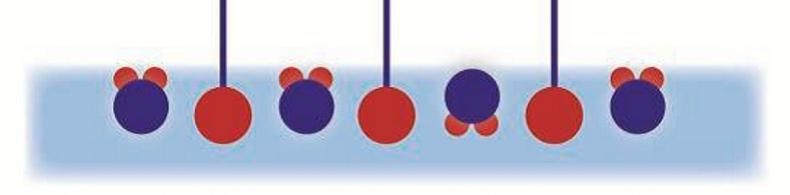
They work by pushing their way between the water molecules to prise them apart and weaken their electrical charge.
They consist of a hydrophilic (water-loving) head group and a hydrophobic (water-hating) tail, meaning they do not have an electric charge. They work by forcing their way between the water molecules, pushing them apart and weakening their electrical charge.
They reduce surface tension and increase spreading seven-fold to that of water alone. There is generally little risk of over-wetting and causing run-off, as surface tension reduction is limited. A wet or dewy leaf will not affect performance of this wetter greatly. Non-ionic wetters are commonly found in most pesticide formulations.
Organosilicone super-wetters
Organosilicones are a form of non-ionic wetter and are often referred to as super-wetters because they decrease the droplet surface tension significantly. Organosilicones greatly increase droplet spreading, by as much as 172 times that of water alone. They also serve to decrease droplet size, which may be more desirable for certain active ingredients.
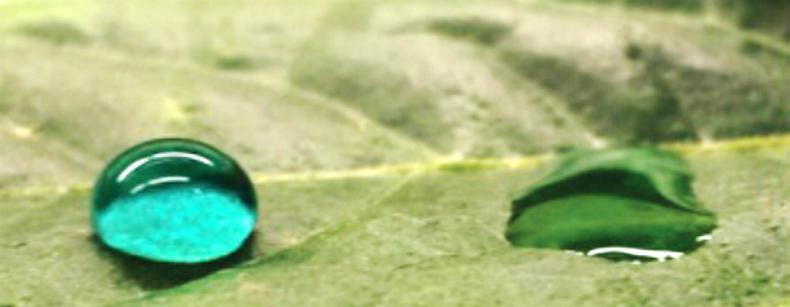
Organosilicones greatly increase droplet spreading, by as much as 172 times that of water alone.
The organosilicone molecule has a hammer-head shape and works by jamming itself between the water molecules to reduce their natural attraction and spread them further apart.
By dramatically reducing surface tension, this allows for greater coverage of large target plants, improves pesticide retention and allows for faster drying on the leaf surface. They work well with residual herbicides.
Acidified wetters
Acidified wetters are adjuvants that maintain or prolong a pesticide’s stability by modifying the spray solution’s final pH. They generally lower the pH. As water has little or no buffering capacity, a small amount of a pH adjuster can significantly alter the pH of the spray solution.
Stickers and deposition aids
A sticker is an adjuvant that increases the adhesion of the active ingredient to target surfaces. Sticking agents can decrease the amount of pesticide that washes off during rain.
There are three classes of stickers: latex-based, pinolene/terpene-based and pyrrolidones. Most stickers typically incorporate latex-based complex polymers.
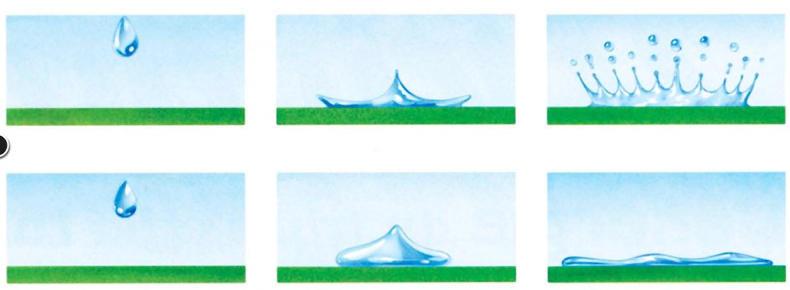
Latex based stickers help to minimise slash and bounce of the droplet.
This is the material used in house paint to form a uniform, waterproof layer. It sets under all conditions and can also minimise splash and bounce of the droplet.
Pyrrolidone products are another form of sticker. They contain an alkylpyrrolidone-based polymer, an alkylpyrrolidone (Agrimax, Banka) solvent and a petroleum solvent.
Other available actives used in sticking and deposition aids include pinolene/terpene-based products. These adjuvants require sunlight to set.
Penetrating and translocating
The final class of adjuvants being considered in this article are those which contain lecithin derivatives and have penetrating and translocating properties.
Lecithin is a fat that is found in many foods, including soya beans. Lecithin derivatives are obtained from the hydrogenation/hydroxylation of natural soya bean and then refined. They are used in specific non-ionic penetrating surfactant products.
Most of the performance benefits of lecithin come from the unique surface-active properties of phospholipids. As molecules, phospholipids contain hydrophobic and hydrophilic elements.
The hydrophobic portion has an attraction for fats and oils and the hydrophilic portion has an attraction for water. Because of these characteristics, these products work well with oil-soluble and water-soluble herbicides.
The adjuvants based on this chemistry assist in pesticide penetration without cuticle disruption and are not subject to the issues of sprayer pump shear degradation (loss of drift reduction function of spray solution following pump circulation).
Read more
From the tramlines: busy spring period about to commence
Farm safety: tillage farmer for a day
Pesticide performance can be affected by a variety of factors such as water properties, droplet shape, size, spread and integrity, poor spray-to-leaf contact, poor surface penetration and many others.
One option growers use to help overcome these molecular, chemical and physical attributes is the inclusion of adjuvants.
Adjuvants can perform a variety of tasks, but their primary job can be described as helping to optimise the efficacy a pesticide. Once the spray leaves the sprayer nozzle, growers can no longer control its fate. Therefore, any alterations to spray properties are done in the tank.
When and where
Different tasks require different adjuvants. Once the circumstances which require an adjuvant have been established, the most appropriate adjuvant can then be selected.
Most pesticide products contain some form of adjuvant, so growers should always check the label first. Some products may have specific recommendations on their labels to use one or more adjuvants.
It is important to understand that adjuvants do not belong everywhere or in every spray tank. However, in certain situations they have their place.
For example, the addition of a non-ionic wetter and/or sticking agent in a herbicide mixture could help increase the uptake of chemical for, say, mouse-eared chickweed, which has a hairy leaf surface.
Classification of adjuvants
You can’t choose the correct adjuvant without knowing how the key adjuvants work. The most useful classification of adjuvants is by chemical group, with the adjuvants divided into broad categories of oils, surfactants, sticking/deposition aids and penetration and translocation agents.
Another classification can be made on the basis of spray adjuvant function, but this can be confusing, as some adjuvants may have more than one function (for example, spreader and penetration aid).
Many standalone adjuvant products are available, but evaluation and trials data can be limited, as they do not require formal authorisation from Europe. Therefore, it is important to understand how each category works.
Adjuvants oils
Adjuvant oils assist pesticides to overcome natural leaf barriers to aid penetration. Up until 1995, the only significant adjuvant oils used in European agriculture were mineral-oil based products. Derived from petrochemicals, mineral oils were suspended in the mix in the form of small oil droplets. They were generally harsh on the plant cuticle, which helped pesticide penetration.
In the mid-1990s, the European adjuvant market had begun to use methylated seed oils as alternatives to mineral oils. These oils can be manufactured from renewable resources and to a consistent quality.
Inclusion rates are often lower than for mineral oils and their performance is better. As well as making finer spray droplets, they are good at spreading and pushing the active through the plant cuticle.
Surfactants
Surfactants (also called wetters) are compounds that lower the surface tension of a spray droplet. By doing this, surfactants, or surface-acting agents, allow gravity to collapse and flatten the conventional spherical spray droplet on the leaf surface.
This allows droplets to spread over a larger area, creating more pathways for penetration.
Any alterations to spray properties is done in the tank when using adjuvants.
They can also reduce the amount of bounce the droplet experiences when it hits the leaf surface, thus improving its deposition on the leaf surface. Surfactants generally work at the interfaces between the spray droplet, leaf surface and surrounding air.
While both anionic and cationic surfactants are available, the most commonly used surfactants are a non-ionic agents.
Non-ionic wetters
Non-ionic wetters are the simplest adjuvant types and act on the water by reducing surface tension and increasing the spreading properties once the droplet comes into contact with the target. They are particularly useful when the target has a waxy or hairy surface.
Non-ionic wetters have a hydrophilic (water loving) head group and a hydrophobic (water hating) tail.
They work by pushing their way between the water molecules to prise them apart and weaken their electrical charge.
They consist of a hydrophilic (water-loving) head group and a hydrophobic (water-hating) tail, meaning they do not have an electric charge. They work by forcing their way between the water molecules, pushing them apart and weakening their electrical charge.
They reduce surface tension and increase spreading seven-fold to that of water alone. There is generally little risk of over-wetting and causing run-off, as surface tension reduction is limited. A wet or dewy leaf will not affect performance of this wetter greatly. Non-ionic wetters are commonly found in most pesticide formulations.
Organosilicone super-wetters
Organosilicones are a form of non-ionic wetter and are often referred to as super-wetters because they decrease the droplet surface tension significantly. Organosilicones greatly increase droplet spreading, by as much as 172 times that of water alone. They also serve to decrease droplet size, which may be more desirable for certain active ingredients.
Organosilicones greatly increase droplet spreading, by as much as 172 times that of water alone.
The organosilicone molecule has a hammer-head shape and works by jamming itself between the water molecules to reduce their natural attraction and spread them further apart.
By dramatically reducing surface tension, this allows for greater coverage of large target plants, improves pesticide retention and allows for faster drying on the leaf surface. They work well with residual herbicides.
Acidified wetters
Acidified wetters are adjuvants that maintain or prolong a pesticide’s stability by modifying the spray solution’s final pH. They generally lower the pH. As water has little or no buffering capacity, a small amount of a pH adjuster can significantly alter the pH of the spray solution.
Stickers and deposition aids
A sticker is an adjuvant that increases the adhesion of the active ingredient to target surfaces. Sticking agents can decrease the amount of pesticide that washes off during rain.
There are three classes of stickers: latex-based, pinolene/terpene-based and pyrrolidones. Most stickers typically incorporate latex-based complex polymers.
Latex based stickers help to minimise slash and bounce of the droplet.
This is the material used in house paint to form a uniform, waterproof layer. It sets under all conditions and can also minimise splash and bounce of the droplet.
Pyrrolidone products are another form of sticker. They contain an alkylpyrrolidone-based polymer, an alkylpyrrolidone (Agrimax, Banka) solvent and a petroleum solvent.
Other available actives used in sticking and deposition aids include pinolene/terpene-based products. These adjuvants require sunlight to set.
Penetrating and translocating
The final class of adjuvants being considered in this article are those which contain lecithin derivatives and have penetrating and translocating properties.
Lecithin is a fat that is found in many foods, including soya beans. Lecithin derivatives are obtained from the hydrogenation/hydroxylation of natural soya bean and then refined. They are used in specific non-ionic penetrating surfactant products.
Most of the performance benefits of lecithin come from the unique surface-active properties of phospholipids. As molecules, phospholipids contain hydrophobic and hydrophilic elements.
The hydrophobic portion has an attraction for fats and oils and the hydrophilic portion has an attraction for water. Because of these characteristics, these products work well with oil-soluble and water-soluble herbicides.
The adjuvants based on this chemistry assist in pesticide penetration without cuticle disruption and are not subject to the issues of sprayer pump shear degradation (loss of drift reduction function of spray solution following pump circulation).
Read more
From the tramlines: busy spring period about to commence
Farm safety: tillage farmer for a day






SHARING OPTIONS