



Household electricity prices in Ireland are now among the most expensive in the EU, and more than double those in countries like Finland, France and Sweden.
Given that prices increased by 33% during the second half of last year, a lot of farmers are now looking at what solar systems could do to reduce energy costs on farms. On the average 100-cow dairy farm, electricity costs have increased from approximately €4,100 to almost €8,000 during the last five years, while the long-term outlook is for even higher prices in future.
As a result, some farmers have been looking at installing solar photovoltaic (PV) systems on farms to reduce their requirements for electricity, while also improving sustainability by reducing requirements for fossil fuels.
Dairy farms are very well-suited for solar PV, due to their consistent intensive electricity demand throughout the year. By harnessing solar energy, farms can reduce their reliance on the electricity grid, benefit from export tariffs for surplus power, and take advantage of Government grants and tax incentives to reduce upfront investment costs.
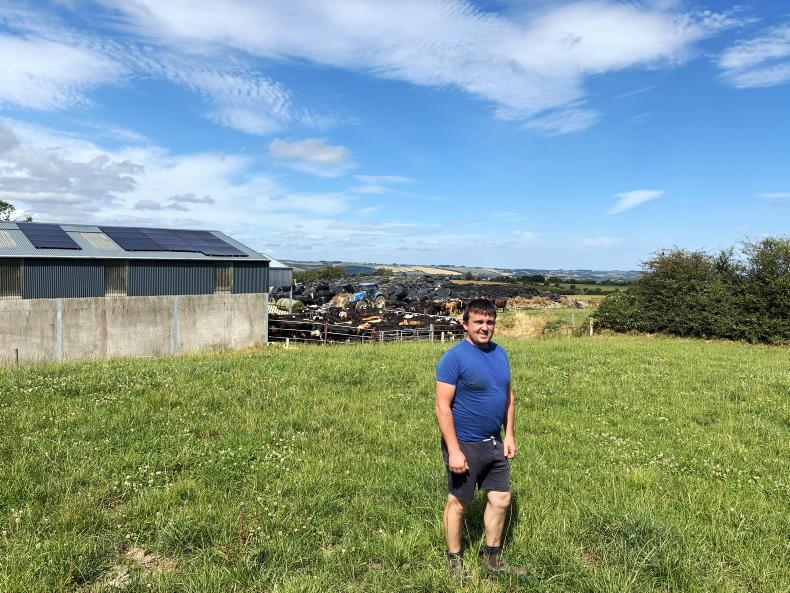
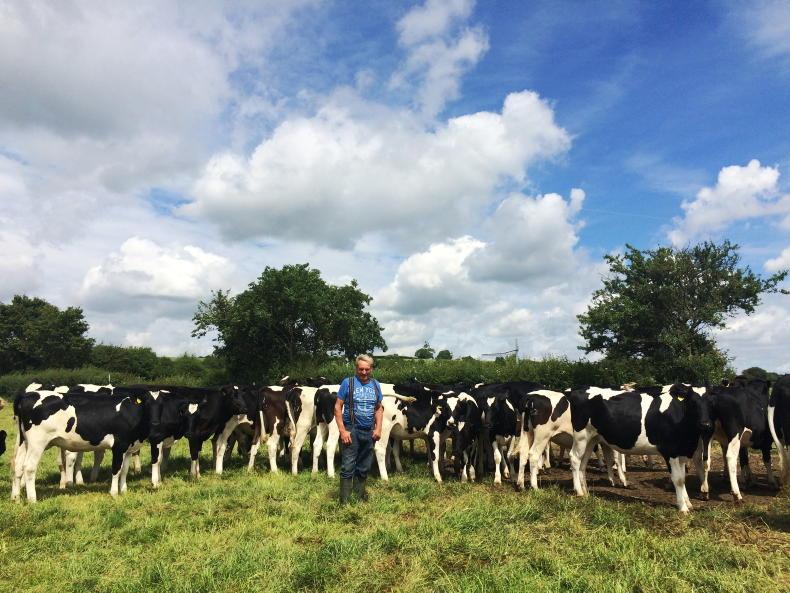
Fergal and Amy Coughlan milk 160 cows in Innishannon, Co Cork. In 2025, they invested in a new solar PV system for their farm.
While reviewing the farm financial performance with his discussion group, Fergal noticed that his ESB costs were tracking upwards from 1c to 1.4c/l.
Fergal began to shop around between energy providers, and this allowed him to reduce his annual bill by €2,000. Having made this initial saving, he decided to apply for a 60% TAMS grant and got quotes to put in a solar PV system to save cost.
System and installation
In August 2025, John Lowry from Home and Agri Energy came out to Fergal for a site visit and looked at past electricity usage. With John’s help, Amy and Fergal designed a PV system that would make the farm largely energy self-sufficient.
As morning milking was finished by 8am on night rate energy, a battery would be charged during the day to store solar energy for evening milking and milk cooling, with excess energy sold back to the grid.
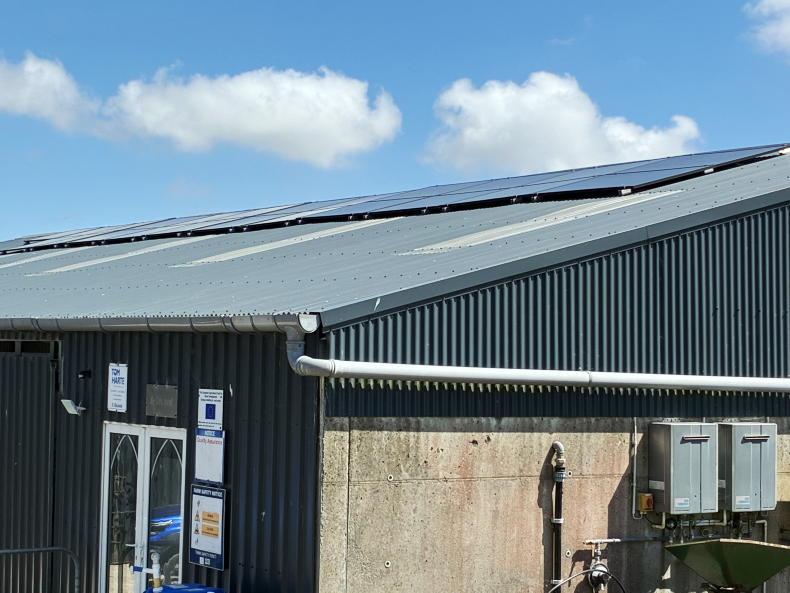
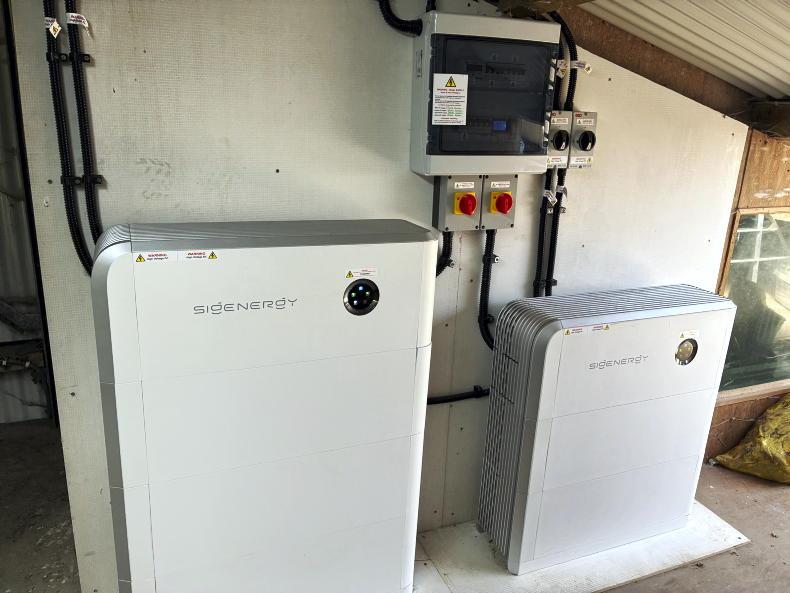
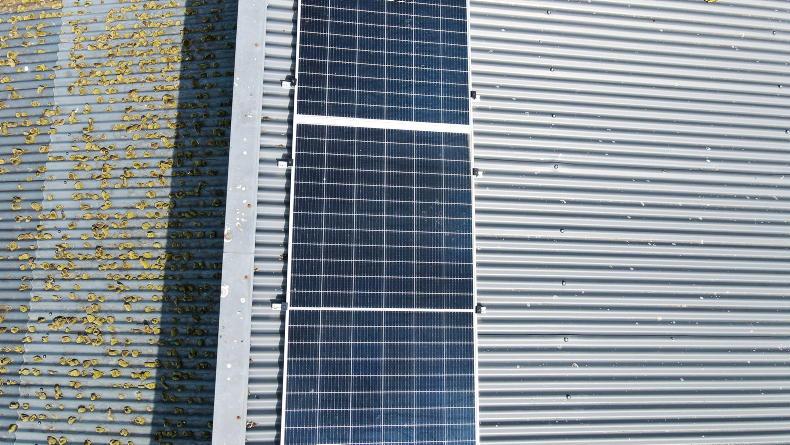
Home and Agri Energy applied on the Coughlans’ behalf for the grant, completed the NC7 certification required to export energy from the farm and installed the system in October of last year – a 32.4kW solar system with 72 solar panels, a 29kW sigenergy three-phase inverter and 45kW sigenergy batteries. The process was straightforward, with no planning permission required.
“A Home and Agri Energy electrician called to the site before the installation to check all the requirements and then eight lads showed up at 8am one morning and had the entire system installed and running before evening milking,” said Fergal.
The panels were put on the southeast-facing roof of the milking parlour and the inverters and batteries were installed in the parlour. The milking parlour shed was built to TAMS specification and had a new fuse board with additional space, so there were no complicating costs involved in the installation.
Costs and payback
Fergal was confident the project would deliver cost saving.
“With the 60% TAMS grant, the installation was a no brainer. We also got the VAT back on the purchase and used accelerated capital allowances to recoup more of the investment costs.” The breakdown of costs was as follows:
I asked Fergal what, if anything, he’d do differently and his answer was he would have done it a lot sooner. He expects his electricity costs on his e-profit monitor to be 0.1c/l or less for the full year.
He’s very happy with the system, and in the future he is likely to build on this system by having an electric tractor or loader in the yard, that can be fuelled by the system and thereby reducing diesel bills as well.
“Since putting in the system last year, I’m excited to see the electricity bill come in.” he said.
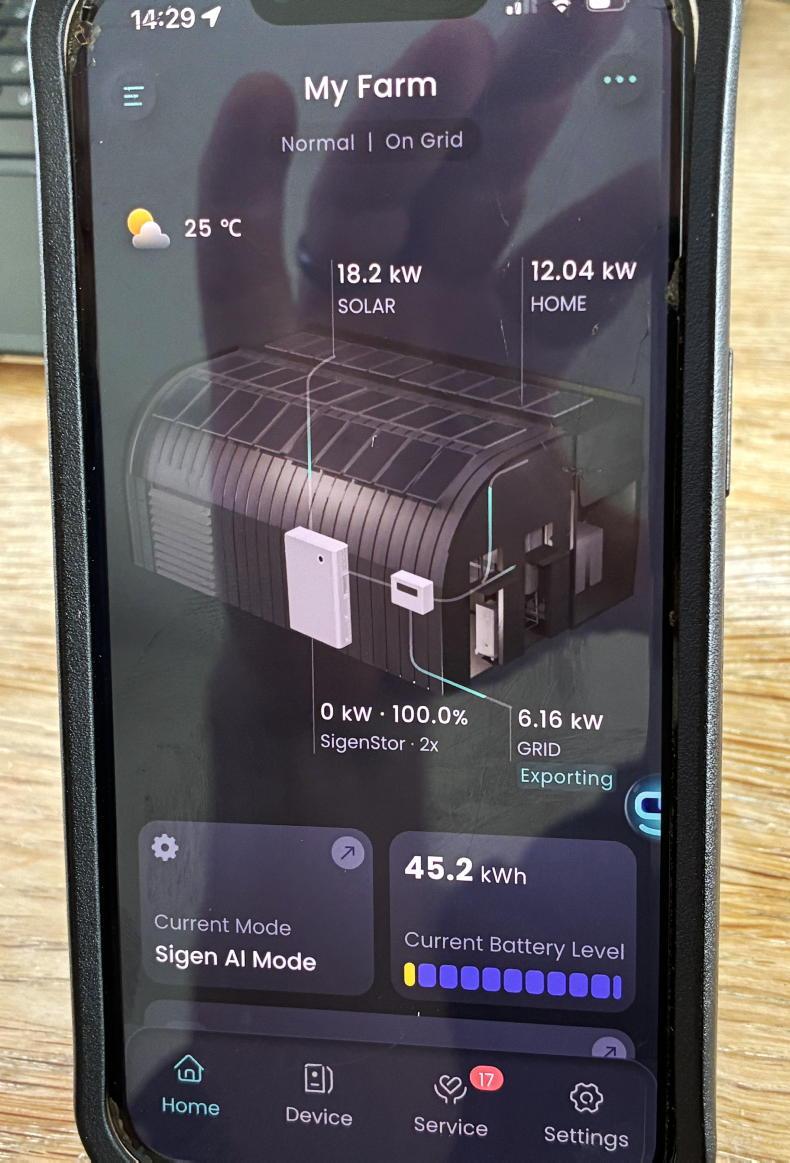
The system has worked perfectly so far and required no maintenance. The system is guaranteed for 10 years and comes with an app that allows Fergal to monitor how it is working.
The expected lifespan of the panels is 25 years, and around 14 years for the batteries. The batteries are expected to function at 70% capacity even after this period.
Comment
Innovative farmers like the Coughlans are using solar PV to reduce costs and dependence on fossil fuels on dairy farms, replacing 85% of electricity usage with solar energy. With the 60% TAMS grant, the return on investment from solar PV is excellent.
Even without the TAMS grants, an SEAI grant can be applied for which will reduce the cost by approximately €12,000, delivering a payback of six to seven years.
Common mistakes with solar
The size of the solar system to be installed depends on the farm’s Maximum Inverter Current (MIC) and the distance from the transformer is also important. Three phase electricity is more suited to solar as you can put in a bigger system.
You need a smart meter; otherwise, you have no accurate measure of exports. ESB has not rolled out smart meters for people with CT meters, so they only get a prediction of exports, which is usually underestimated. It’s essential to size the battery big enough to have enough storage to cover evening milking, removing the need for day-rate electricity for maximum benefit. It’s also better to oversize the system to provide enough export credits in summer to make up for the darker winter months.



SHARING OPTIONS