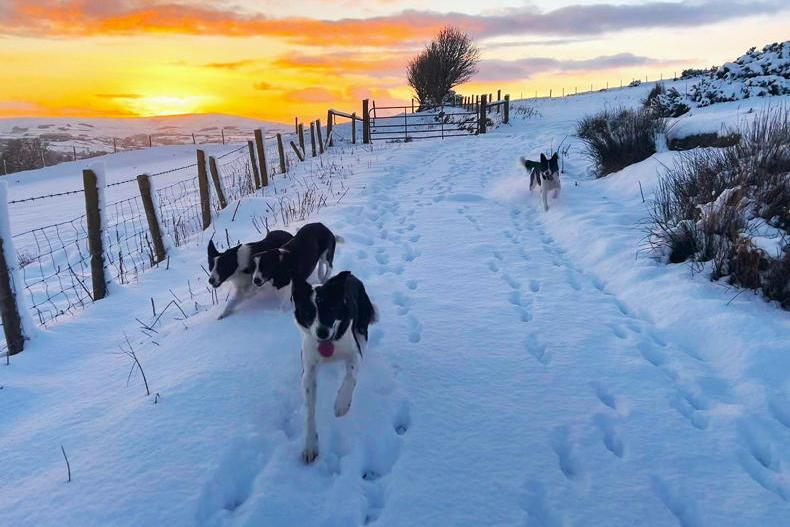
After such a hot and dry summer, it’s almost unimaginable that the weather in Ireland could swing to the other end of the scale in just a few short months. But with the clocks going back and the Halloween break now accounted for, we will soon be reminded, all too well, of the challenges extreme winter weather can pose.
Being prepared ahead of time is half the battle, however, and following some of these tips should go some way to helping you battle against the extremes.
Generators
Having a working generator that is capable of meeting your power requirements on the farm is a necessity for any farm or household in rural Ireland.
Storm Éowyn struck in January 2025 and power outages for the vast majority of rural Ireland. Having a power source for milking and cooling milk is probably one of the primary needs, though farms operating on a private well will also need power to pump water.
Lighting is also of benefit amid shorter working days, when we typically see the worst of the weather.
The first step is establishing your power requirement before purchasing a generator. For larger dairies, a PTO-driven generator may work well, though a larger, fixed diesel generator with a cut in, should mains power be lost overnight, can be the difference between a tank of milk being saved or scrapped. A qualified electrician should be employed to rig up your system for a generator, with a changeover switch installed to prevent power travelling further down the line.
Fuel
Diesel supplies will last many months without degrading, but petrol left in jerry cans – or in petrol tanks of quads, generators and so on – will only last approximately six weeks. Older fuel in these engines can cause blocked fuel lines or damage to carburettors.
Ensure that there is sufficient diesel at hand to keep a tractor or machinery in the yard going for at least a week, and keep petrol supplies fresh. When using petrol-powered machinery infrequently, it is best to allow the fuel to be burned off or the system drained before putting the machine away again in storage.
Insulation and anti-freeze
Water expands when it goes below 4°C, causing damage to any pumps or cooling systems in doing so. Think to yourself: what do I own that has water circulating through it?
Wash-down pumps in milking parlours are probably most at risk, so they need to be drained post-washing. Private wells serviced by a pump are also at risk, but we can’t drain those. A better option is to insulate the pump house itself, to keep the temperature inside above freezing.
An excellent option for pumps for wells and parlours is an infra-red lamp fitted with a thermal switch that will kick in once temperatures dip below the pre-set level.
Frost damage can also occur to pumps on slurry tankers and sprayers, so keep those in a shed and covered.
Tractors or other machinery that run a non-air-cooled cooling system will have coolant running through their radiators. Too often, if we are low on coolant, we can be guilty of topping up with water. This is extremely dangerous when it comes to the winter months, with frost damage wreaking havoc on radiators.
Drain these and replace with proper coolant that has anti-freeze properties.
Some farmers may also opt to fill the tyres of their tractor with water to give additional weight. An anti-freeze solution should also be used for this, as damage has been known to occur to tyres in extreme, freezing temperatures.
Food supplies
For cattle, sheep and equine farmers, having sufficient fodder in the yard is the most important factor to consider. Animals will cope with reduced levels of concentrates once their rumen is full. If buying in fodder, again ensure you have enough to hand to last at least a week, if not more.
Ideally, have a buffer of your own feed, should travel conditions to source feed be limited for longer than that timeframe.
The same goes for bedding supplies; there should be sufficient cubicle bedding or lime in the yard at all times to last at least a week.
Intensive poultry and pig units should ensure that there is sufficient feed to hand prior to any extreme weather events and around the Christmas holiday season.
Final fixes
It’s been a mild week this week, making it an ideal time to get those final fixes completed on farm buildings.
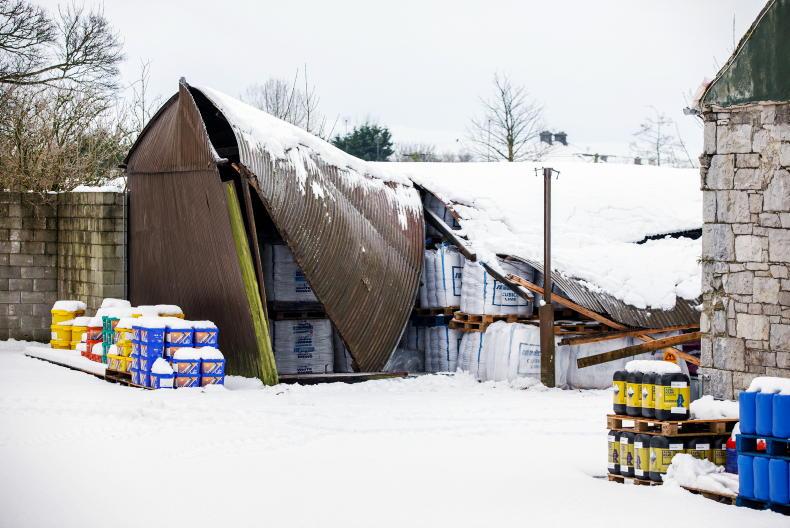
From the safety of an MEWP (cherry picker), inspect any roofs that you feel are at risk of sustaining damage in storms due to their age or loose sheeting. Repair as necessary. Skylights, due to their brittleness as they age, are most at risk of damage and should be replaced as required.
Covered ridge outlets or raised sheeting can be particularly prone to being ripped off roofs due to wind. You should, therefore, ensure they are securely fastened into purlins.
Look at trees around the yard and identify any at risk of falling.
A sensible option for many such cases is for them to be topped to remove excess weight. That can be done with a grab on an excavator.