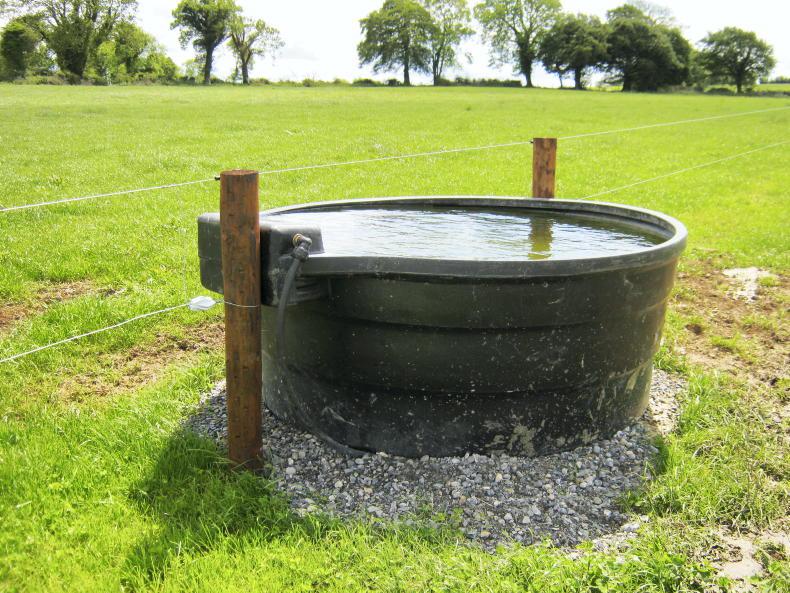
Lakes, rivers and streams should ideally be fenced off where possible to reduce the risk to both livestock and humans. \ Donal O' Leary
ADVERTISEMENT
Drownings generally account for 10% of all fatal farm accidents. The unfortunate thing about accidents with water and slurry is that they are often fatal; near misses are less common. Children and visitors to farms that are unaware of the risks are equally at risk of drowning as people who live and work on farms all day every day, with efforts extending to protecting all.
There are two key ways to prevent drowning: identify the risks and mitigate them as much as possible.
Identifying risks
ADVERTISEMENT
Slurry pits: poorly fenced or unfenced slurry stores (open tanks and lagoons) pose a significant risk to both people and livestock. Agitation points that are left open or unlocked also pose a risk.
Watercourses: Rivers, streams and ponds on farms can be deceptively dangerous, with hidden hazards and unpredictable currents. Farmers operating in hill areas where there are unfenced watercourses are particularly at risk.
Dipping tubs/footbaths: dipping tubs, be they in use or not, pose a risk to human life, particularly children due to their depth. Even footbaths with their shallow depth can be fatal to children. The chemicals used in both dipping tubs and footbaths can be potentially harmful to humans if skin contact or accidental ingestion occurs.
Mitigating risks
Slurry pits: ensure open slurry stores are properly fenced using non-climb netting and that any holes that may form through damage or wear and tear are properly repaired. Creating a tyre ladder in lagoons is also a good idea. Agitation points should be kept closed at all times when not in use and should ideally be locked to prevent access by unauthorised persons or children. TAMS aid is available for safety fencing and agitation points around uncovered slurry stores, as well as the installation or replacement of slats on existing stores.
Water courses: keep watercourses fenced off from livestock for safety and environmental reasons where at all possible. In times of heavy rain, keep livestock away from fields with open watercourses to reduce the risks to both them and you.
Dipping tubs and foothbaths: keep footbaths and dipping tubs drained when not in use. Where this is not achievable, a safety grid should be installed to prevent accidental entry. Dipping and footbath solutions should be properly disposed of.
Sheep dipping.

Register for free to read this story and our free stories.
This content is available to digital subscribers and loyalty code users only. Sign in to your account, use the code or subscribe to get unlimited access.
The reader loyalty code gives you full access to the site from when you enter it until the following Wednesday at 9pm. Find your unique code on the back page of Irish Country Living every week.
CODE ACCEPTED
You have full access to the site until next Wednesday at 9pm.
CODE NOT VALID
Please try again or contact support.
Drownings generally account for 10% of all fatal farm accidents. The unfortunate thing about accidents with water and slurry is that they are often fatal; near misses are less common. Children and visitors to farms that are unaware of the risks are equally at risk of drowning as people who live and work on farms all day every day, with efforts extending to protecting all.
There are two key ways to prevent drowning: identify the risks and mitigate them as much as possible.
Identifying risks
Slurry pits: poorly fenced or unfenced slurry stores (open tanks and lagoons) pose a significant risk to both people and livestock. Agitation points that are left open or unlocked also pose a risk.
Watercourses: Rivers, streams and ponds on farms can be deceptively dangerous, with hidden hazards and unpredictable currents. Farmers operating in hill areas where there are unfenced watercourses are particularly at risk.
Dipping tubs/footbaths: dipping tubs, be they in use or not, pose a risk to human life, particularly children due to their depth. Even footbaths with their shallow depth can be fatal to children. The chemicals used in both dipping tubs and footbaths can be potentially harmful to humans if skin contact or accidental ingestion occurs.
Mitigating risks
Slurry pits: ensure open slurry stores are properly fenced using non-climb netting and that any holes that may form through damage or wear and tear are properly repaired. Creating a tyre ladder in lagoons is also a good idea. Agitation points should be kept closed at all times when not in use and should ideally be locked to prevent access by unauthorised persons or children. TAMS aid is available for safety fencing and agitation points around uncovered slurry stores, as well as the installation or replacement of slats on existing stores.
Water courses: keep watercourses fenced off from livestock for safety and environmental reasons where at all possible. In times of heavy rain, keep livestock away from fields with open watercourses to reduce the risks to both them and you.
Dipping tubs and foothbaths: keep footbaths and dipping tubs drained when not in use. Where this is not achievable, a safety grid should be installed to prevent accidental entry. Dipping and footbath solutions should be properly disposed of.
If you would like to speak to a member of our team, please call us on 01-4199525.
Link sent to your email address
We have sent an email to your address. Please click on the link in this email to reset your password. If you can't find it in your inbox, please check your spam folder. If you can't find the email, please call us on 01-4199525.
ENTER YOUR LOYALTY CODE:
The reader loyalty code gives you full access to the site from when you enter it until the following Wednesday at 9pm. Find your unique code on the back page of Irish Country Living every week.
SHARING OPTIONS