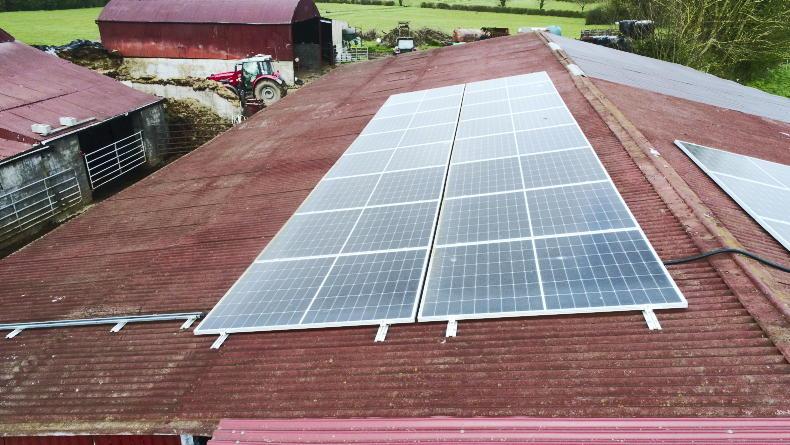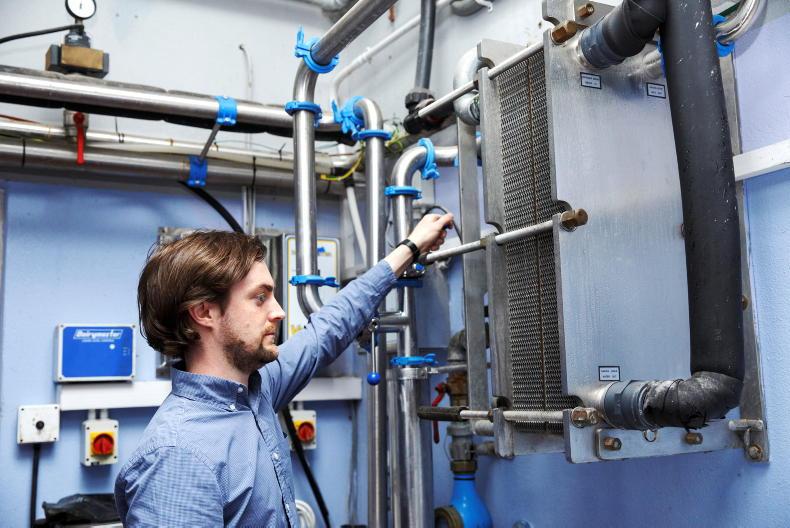
An increasing number of farmers are thinking about using ice-builder bulk tanks in conjunction with solar PV electricity generation to cool milk. The logic is simple, use the steady supply of electricity generated by the solar panels throughout the daylight hours to create ice and then use this ice to cool the milk in the bulk tank.
The popularity of ice-bank tanks has decreased dramatically over the last 20 years as direct expansion tanks were deemed to be more efficient and cheaper to buy.
Has the advent of solar changed the dynamics? To answer this, the Irish Farmers Journal asked Teagasc energy researcher John Upton for his thoughts on ice-bank bulk tanks.
First off, John says that ice-bank bulk tanks are far less energy efficient than direct expansion tanks. His research shows that an ice-bank uses 73% more energy than direct expansion to cool milk. As a result, he says that ice-bank tanks have 35% higher milk cooling costs than direct expansion.
Essentially, using an ice-bank to store electricity is a different question and in that regard, John pointed out that ice-bank would need to be looked at alongside other ways of storing electricity, such as batteries.
With TAMS III grant aid, the cost of a battery is significantly reduced. Using the example of an 8kWh battery costing €1,500 after the grant operating at 85% efficiency would mean it can store 6.8 kWh of electricity. The cost per usable kWh is therefore €176.
In comparison, an ice-bank bulk tank with a rated output of 90 kWh after a 40% grant is taken into account costs €15,000. Operating at 70% efficiency means there is 63kWh available which means the cost per usable kWh is €238, significantly more than the cost of grant-aided battery.
However, where no grant is available for battery storage, the costs do change with the ice-bank coming out significantly cheaper. With no grant, the cost of battery storage increases to €441 per usable kWh which shows the importance of the grant in terms of cost efficiencies.
The other thing to keep in mind is that there is only so much solar that can be diverted to the ice-bank.
A medium-sized solar system of 50 kWh will only produce about half of the electricity needed for the ice-bank if it has a rated requirement of 90kWh.
In terms of general energy savings, John says that farmers should focus on using night-rate electricity where possible, shop around for electricity prices and move contract if better offers come available, use a plate cooler and variable speed vacuum pumps.
Finally he advises that heat recovery units attached to direct expansion bulk tanks are a good way to reduce water heating costs.

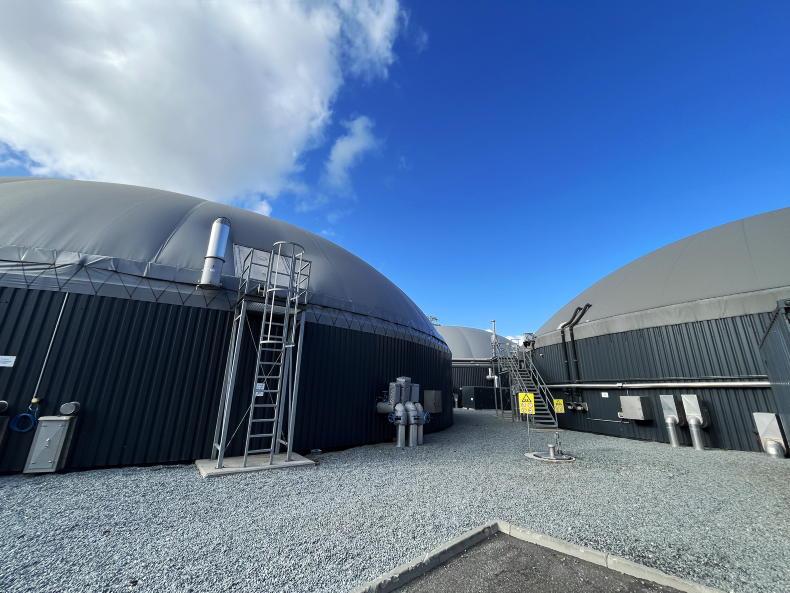
Most farmers have opted for direct expansion bulk tanks over the last two decades, due to lower purchase price and cheaper running costs.
An increasing number of farmers are thinking about using ice-builder bulk tanks in conjunction with solar PV electricity generation to cool milk. The logic is simple, use the steady supply of electricity generated by the solar panels throughout the daylight hours to create ice and then use this ice to cool the milk in the bulk tank.
The popularity of ice-bank tanks has decreased dramatically over the last 20 years as direct expansion tanks were deemed to be more efficient and cheaper to buy.
Has the advent of solar changed the dynamics? To answer this, the Irish Farmers Journal asked Teagasc energy researcher John Upton for his thoughts on ice-bank bulk tanks.
First off, John says that ice-bank bulk tanks are far less energy efficient than direct expansion tanks. His research shows that an ice-bank uses 73% more energy than direct expansion to cool milk. As a result, he says that ice-bank tanks have 35% higher milk cooling costs than direct expansion.
Essentially, using an ice-bank to store electricity is a different question and in that regard, John pointed out that ice-bank would need to be looked at alongside other ways of storing electricity, such as batteries.
With TAMS III grant aid, the cost of a battery is significantly reduced. Using the example of an 8kWh battery costing €1,500 after the grant operating at 85% efficiency would mean it can store 6.8 kWh of electricity. The cost per usable kWh is therefore €176.
In comparison, an ice-bank bulk tank with a rated output of 90 kWh after a 40% grant is taken into account costs €15,000. Operating at 70% efficiency means there is 63kWh available which means the cost per usable kWh is €238, significantly more than the cost of grant-aided battery.
However, where no grant is available for battery storage, the costs do change with the ice-bank coming out significantly cheaper. With no grant, the cost of battery storage increases to €441 per usable kWh which shows the importance of the grant in terms of cost efficiencies.
The other thing to keep in mind is that there is only so much solar that can be diverted to the ice-bank.
A medium-sized solar system of 50 kWh will only produce about half of the electricity needed for the ice-bank if it has a rated requirement of 90kWh.
In terms of general energy savings, John says that farmers should focus on using night-rate electricity where possible, shop around for electricity prices and move contract if better offers come available, use a plate cooler and variable speed vacuum pumps.
Finally he advises that heat recovery units attached to direct expansion bulk tanks are a good way to reduce water heating costs.

Most farmers have opted for direct expansion bulk tanks over the last two decades, due to lower purchase price and cheaper running costs.
SHARING OPTIONS