



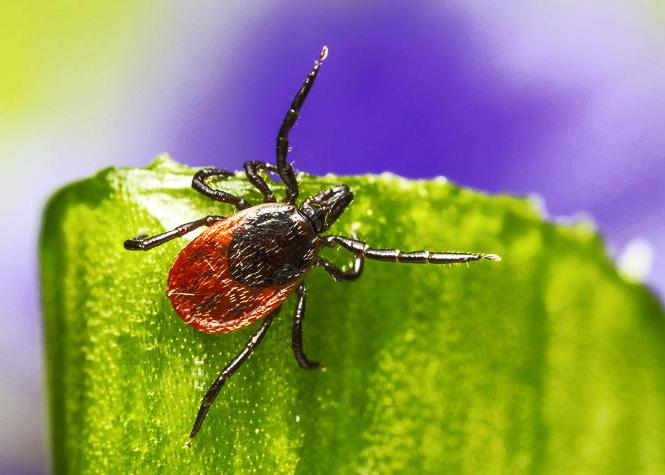
Wednesday 6 May 2026 was Tick Awareness Day and to mark the day the Health Services Executive (HSE) released a statement with advice on how to protect against ticks and the risk of Lyme disease. In recent years many farmers have highlighted that tick infestations appear to be increasing in severity with sheep grazing in hill and mountain areas in particular facing challenges earlier in the season.
The advice offered by the Health Protection Surveillance Centre (HPSC) warned that ticks are present everywhere in Ireland, including both urban and rural environments and are active from spring to autumn. It said the “tiny spider-like insects that feed on the blood of humans, animals and birds are more numerous and active in the summer months leading to cases of Lyme disease”.
Practical protection
Farmers working with sheep and navigating through high risk terrain should take steps to minimise the risk of bites.
The HSE advises the following precautions:
It said that while tick bites are most common in adults on the legs and arms, they are most likely in kids around the head and neck and can also be seen in warm and sweaty parts of the body.
The HSE explains that most cases of Lyme disease are very mild and many infected people do not have symptoms.
“The most common sign of infection is a skin rash (known as bullseye rash or erythema migrans). In a small number of cases however, the infection can be more severe, leading to serious nervous system, heart and joint disease. Anyone who develops a rash or other symptoms should visit their GP and explain that they have been bitten by a tick.”
In terms of removing ticks, the HSE says that a minority of ticks can carry Lyme disease adding that if a tick is removed within the first few hours, the risk of infection is very low.
“The entire tick, including its mouthparts which might break off, should be removed with tweezers by gripping it close to the skin.
“The skin where the tick was found should then be washed with soap and water and the area checked over the next few weeks for swelling or redness.”

Many farmers have areas of the farm where the environment sustains a tick population and as such presents a greater challenge. It is wise to tailor your external parasite control programme appropriately to provide protection at high risk periods.
The first symptom of tick-borne fever infection is a high fever in naïve livestock that have been moved to tick-infested pasture.
Fever typically develops within a week of exposure and lasts for two weeks.
Adults usually make an uneventful recovery and are resistant thereafter.
The exception to this is naïve pregnant animals introduced into endemic areas and a high risk of resultant abortion.
The disease can lead to significant disease prevalence and mortality in young lambs with this often caused by the fact young lambs cannot keep up with ewes.
The disease also causes immunosuppression making animals more susceptible to other diseases such as respiratory illnesses or other tick-borne diseases including tick pyaemia and louping ill.
Sheep in such habitats tend to develop immunity to disease but young lambs and naïve sheep which have been introduced to the environment face a high risk.
Louping ill is characterised by a nervous disposition in affected sheep due to the fact it causes neurological issues. The disease occurs with varying degrees of severity. Some animals exhibit symptoms such as fever, depression and lack of appetite but can recover quickly and are immune thereafter.
However, where the virus invades the brain and spinal cord, it can lead to muscle tremors, lack of coordination, animals circling, paralysis and death. Upwards of 50% of sheep which exhibit nervous disposition can die and sudden deaths can also be experienced.
Severe clinical signs can be seen in naive sheep or flocks moved into endemic areas (including purchase of replacements) though signs in animals that were always resident in the endemic area may be mild or subclinical. Control of disease unfortunately depends on the control of ticks. There was a vaccine on the market until 2017 but this was removed leaving farmers with no vaccination options.
The Moredun institute in Scotland is striving to secure production of a new vaccine with the National Sheep Association donating to fundraising efforts in December 2025 and highlighting the importance of commercially bringing the vaccine to market. These calls are being echoed elsewhere with the Irish Natura Hill Sheep Farmers Association recently raising awareness of the lack of a vaccine for farmers.
Significant issues can occur in young lambs aged from two to 12 weeks of age where tick pyaemia is present in the environment. This ailment is caused by a bacterium, staphylococcus aureus, which occurs naturally on the skin and nasal mucosa of the animal.
This bacterium gains access through the bite wound and gives rise to abscesses in various parts of the body and in turn causes severe lameness, paralysis of the backend, ill thrift and significant mortality. In some cases up to 30% of lambs in a group can be affected. Tick pyaemia will also lead to immunosuppression and an increased risk of other diseases that may be present at a low level becoming established.
As a tick progresses through its three stages of development, it needs to feed on blood on a host such as sheep, cattle, dogs, humans etc.
It is during this period that disease spreads, with a feeding period lasting anywhere from four to 14 days.
If animals are grazing areas with a very high tick infestation, anaemia or occasional blood loss can also occur.
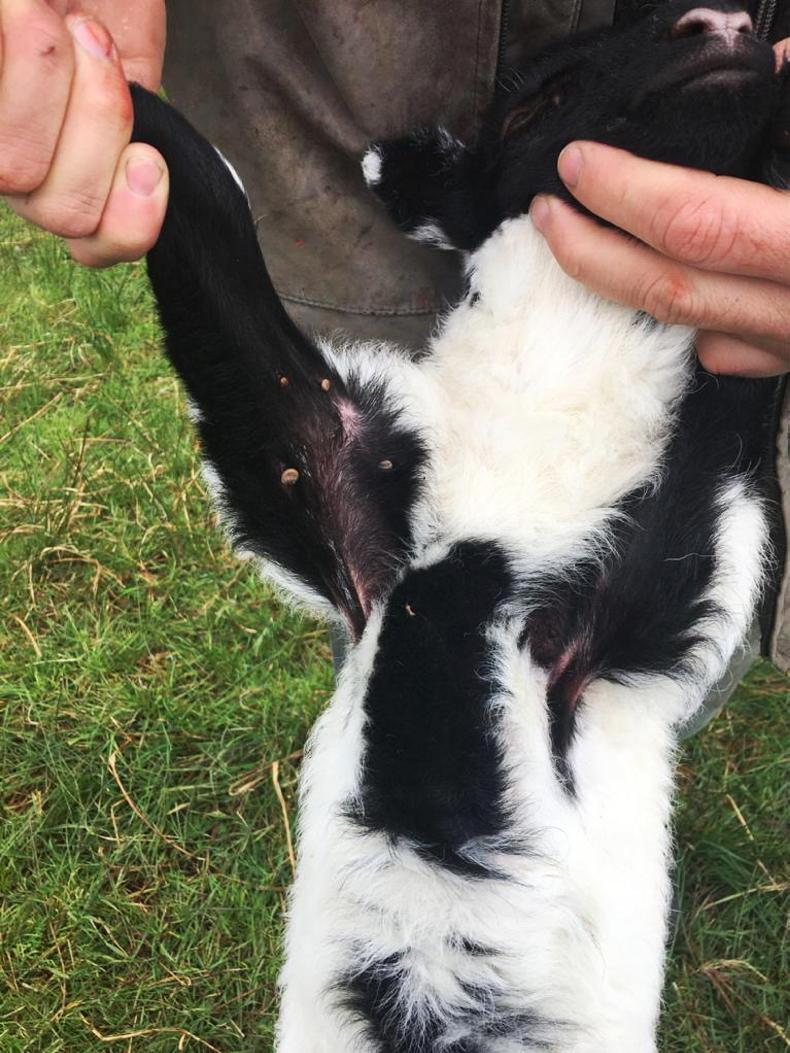
In such instances, ticks can be readily seen on the inner legs and belly region of lambs when turned over.
As such it is wise when flocking sheep to turn over a selection of animals to monitor the presence of ticks.



SHARING OPTIONS