Almost all the foliar diseases of wheat that we get in Ireland are driven by wet, rainy weather conditions. A quick look at the meteorological data from October to the present shows that if it didn’t rain from now until the end of September, the 2015/2016 growing season would still be above the 30-year average rainfall. So how does the insistent rain we had in late winter and early spring affect wheat disease control in mid-June?
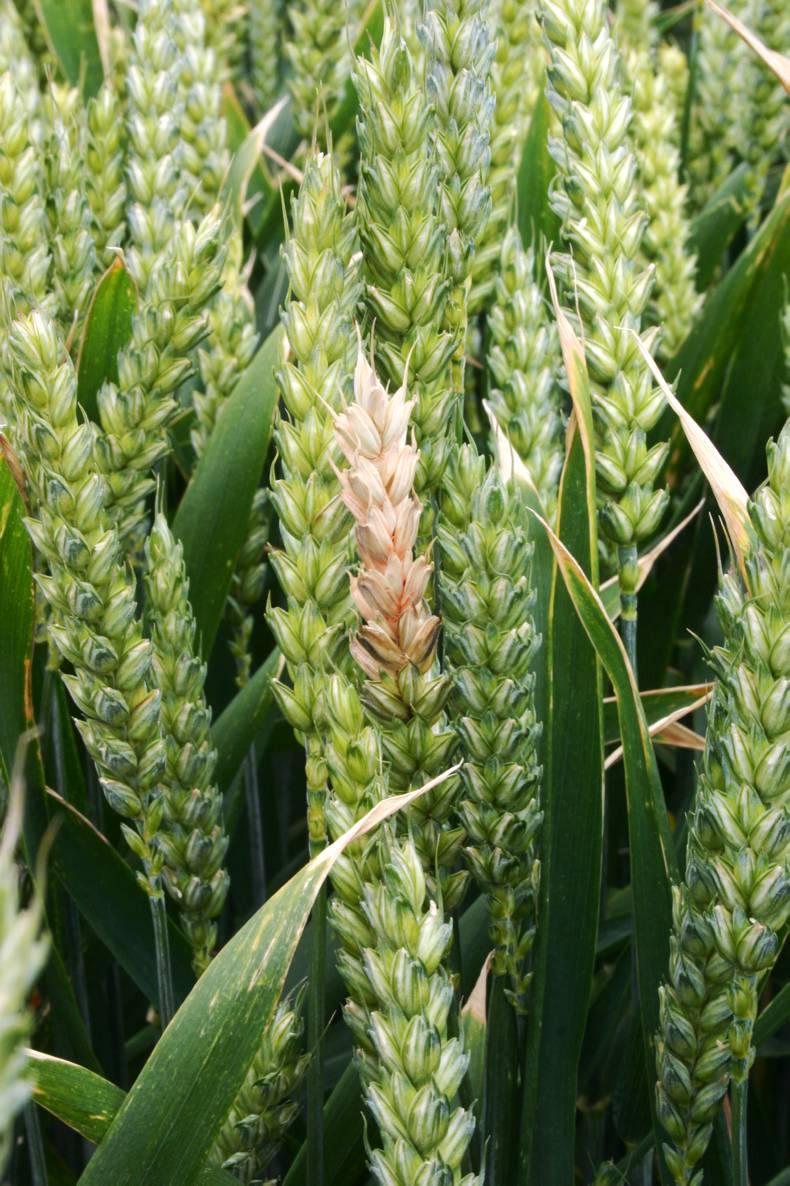
The major disease of wheat crops at this stage in the year is fusarium head blight (FHB), closely followed by septoria and other foliar diseases such as rusts. As FHB control is outlined elsewhere in this supplement, the following will deal mostly on foliar disease control.
What is needed from late season control programmes and what can realistically be achieved from such programmes? To answer this, we need to look at the diseases we are targeting and how they inflict yield losses.
Septoria is caused by a fungal pathogen that is unprecedented in terms of its ability to evolve and spread, as is evident in the development of resistance to different families of fungicides at local and international level.
The time at which infection occurs will have a dramatic effect on potential yield
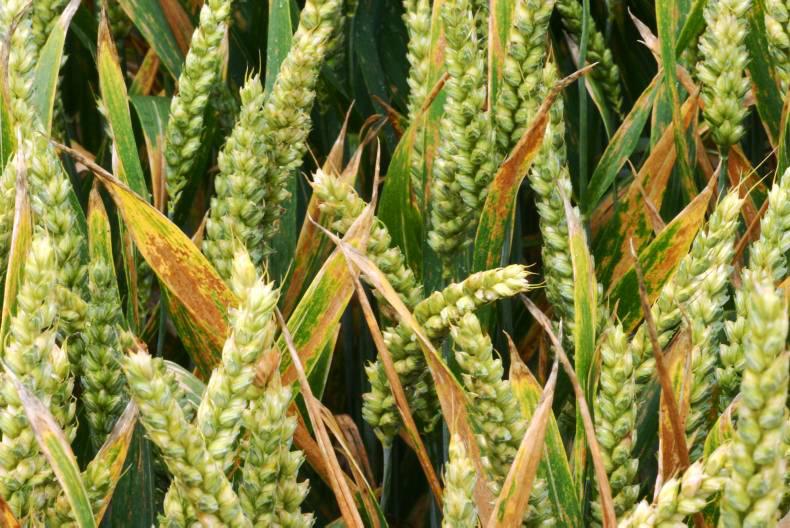
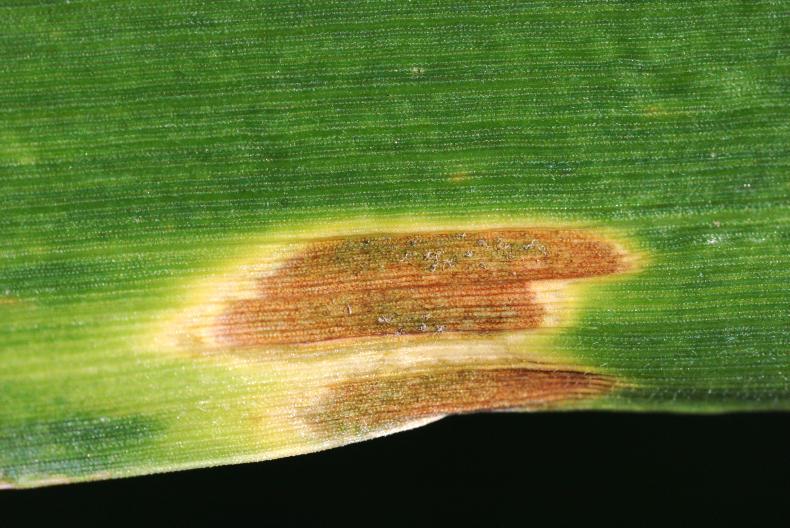
Following infection, it grows silently inside the plant until, all of a sudden, brown lesions start appearing, as if out of nowhere. The appearance of these lesions in mid-January, or even mid-March, is not a concern, as every wheat crop in Ireland will inevitability have them, some more than others.
The real problem arises when these lesions start appearing in the upper canopy (flag leaf and second leaf) in early summer post-flowering.
Their effect is twofold. Not only is the pathogen using the carbohydrates created by the plant, which otherwise would have been shipped to the ear, but by killing the leaf, it kills the machinery that creates those carbohydrates in the first place.
Undoubtedly it is the latter which has the most dramatic consequences on yield. Therefore, as the amount of septoria on the upper leaves increases, the potential yield of the crop decreases. To some extent, it is just that simple. However, the time at which infection occurs will have a dramatic effect on potential yield.
Infections which occur shortly after the flag leaf has emerged will be much more damaging than those which may occur two weeks after flowering. Hence, the earlier stem extension and the flag leaf fungicide applications have a huge influence on the success of any given septoria control programme.
Responding to local weather
The success of these applications is driven by the combination of timing and fungicide choice. Using the very best fungicide at the wrong timings or using the wrong fungicides at the correct timing will leave the crop vulnerable to infection.
While we have achieved great improvements in getting timings right in recent years, through crop dissections and leaf identification, actually getting into a crop to spray at any given time remains very weather-dependent.
Some flexibility can be achieved through fungicide choice. However, this is being constantly chipped away through the development of fungicide resistance.
Fungicides applied at both stem extension and flag leaf should have included strong protectants, such as an azole or SDHI mix (or azole mix where disease pressure was low at stem extension), along with a multisite.
These should have created a barrier against infection on leaf three, leaf two and the flag leaf. Under ideal conditions, this can be expected to last about four weeks, during which time spores will constantly be arriving on to the leaf (a quick look at the weather data again and numerous infection events are likely to have occurred in April and May).
Ideal control conditions would be the ability to get fungicides on to the crop prior to spores of the fungus arriving. But was this achieved in 2016?
In a lot of cases, conditions were generally good for both the T1 and T2 treatments and since the flag leaves have emerged, there has been a good dry spell, which has limited further infection events.
Resistance is still there, but…
However, it would be foolish to think that that’s the wheat sorted in terms of septoria control. There are unfortunately a number of issues still lurking, most notably the SDHI resistance detected both at the back end of the 2015 season and then again in early 2016. Although at extremely low levels, this will inevitability increase as the season continues.
What mutation emerges as dominant and what its consequences will be still remain as unanswered questions.
To provide some guidance for these questions, Teagasc applied typically recommended fungicide programmes to wheat trails a couple of weeks early in Meath, Carlow and Cork. The objective in doing this was to specifically determine if SDHI resistance had an immediate effect on the efficacy of control programmes.
To date, these programmes have been very effective, indicating that the initial round of disease control at farm level by the stem extension treatment is unlikely to have been compromised. This is a positive finding. It pushes back any loss in efficacy which may occur to a later date.
The recent dry spell which we experienced is also a very welcome addition. Even if some selection for SDHI resistance has occurred, most flag leaf sprays were made in protectant conditions, so the multisite component of the spray will be contributing quite a bit to control. So what is the best course of action now to see the season out?
The final hurdle
Firstly, the primary target of the final spray on wheat is protection against FHB. Therefore, fungicide actives that control Fusarium spp and Microdochium spp must be first in the tank. This quickly narrows the range of fungicides down to a select number of azoles, in particular prothioconazole.
Given that we expect long grain-filling periods under Irish conditions, the foliar disease control achieved by the T2 is not always sufficient and does need to be topped up.
Using an azole mixture, such as Prosaro (prothioconazole/tebuconazole), you maximise FHB control while topping up septoria control.
The advantage of having mixtures with different modes of action
With concerns surrounding azole resistance, questions are continually asked as to the value of adding a multisite in the final spray. The multisite will only protect against new infections, so if disease has already taken hold, although still in the latent phase, the multisite is limited in what it can do.
Given that the azole mixture will provide effective septoria protection for at least two to three weeks before any weakness may emerge – worst case scenario – this will be even longer under normal conditions and it may therefore see the season out.
Alternatively, if a prolonged grain-filling period occurs, and given the state of resistance to the azoles, the addition of a multisite may provide the extra protection to help see it out. From an anti-resistance point of view, having mixtures with different modes of action is always a plus.
However, they must firstly pay for their inclusion in the tank from a disease control perspective.
Read more
To read the full Sprays Focus Supplement, click here
Almost all the foliar diseases of wheat that we get in Ireland are driven by wet, rainy weather conditions. A quick look at the meteorological data from October to the present shows that if it didn’t rain from now until the end of September, the 2015/2016 growing season would still be above the 30-year average rainfall. So how does the insistent rain we had in late winter and early spring affect wheat disease control in mid-June?
The major disease of wheat crops at this stage in the year is fusarium head blight (FHB), closely followed by septoria and other foliar diseases such as rusts. As FHB control is outlined elsewhere in this supplement, the following will deal mostly on foliar disease control.
What is needed from late season control programmes and what can realistically be achieved from such programmes? To answer this, we need to look at the diseases we are targeting and how they inflict yield losses.
Septoria is caused by a fungal pathogen that is unprecedented in terms of its ability to evolve and spread, as is evident in the development of resistance to different families of fungicides at local and international level.
The time at which infection occurs will have a dramatic effect on potential yield
Following infection, it grows silently inside the plant until, all of a sudden, brown lesions start appearing, as if out of nowhere. The appearance of these lesions in mid-January, or even mid-March, is not a concern, as every wheat crop in Ireland will inevitability have them, some more than others.
The real problem arises when these lesions start appearing in the upper canopy (flag leaf and second leaf) in early summer post-flowering.
Their effect is twofold. Not only is the pathogen using the carbohydrates created by the plant, which otherwise would have been shipped to the ear, but by killing the leaf, it kills the machinery that creates those carbohydrates in the first place.
Undoubtedly it is the latter which has the most dramatic consequences on yield. Therefore, as the amount of septoria on the upper leaves increases, the potential yield of the crop decreases. To some extent, it is just that simple. However, the time at which infection occurs will have a dramatic effect on potential yield.
Infections which occur shortly after the flag leaf has emerged will be much more damaging than those which may occur two weeks after flowering. Hence, the earlier stem extension and the flag leaf fungicide applications have a huge influence on the success of any given septoria control programme.
Responding to local weather
The success of these applications is driven by the combination of timing and fungicide choice. Using the very best fungicide at the wrong timings or using the wrong fungicides at the correct timing will leave the crop vulnerable to infection.
While we have achieved great improvements in getting timings right in recent years, through crop dissections and leaf identification, actually getting into a crop to spray at any given time remains very weather-dependent.
Some flexibility can be achieved through fungicide choice. However, this is being constantly chipped away through the development of fungicide resistance.
Fungicides applied at both stem extension and flag leaf should have included strong protectants, such as an azole or SDHI mix (or azole mix where disease pressure was low at stem extension), along with a multisite.
These should have created a barrier against infection on leaf three, leaf two and the flag leaf. Under ideal conditions, this can be expected to last about four weeks, during which time spores will constantly be arriving on to the leaf (a quick look at the weather data again and numerous infection events are likely to have occurred in April and May).
Ideal control conditions would be the ability to get fungicides on to the crop prior to spores of the fungus arriving. But was this achieved in 2016?
In a lot of cases, conditions were generally good for both the T1 and T2 treatments and since the flag leaves have emerged, there has been a good dry spell, which has limited further infection events.
Resistance is still there, but…
However, it would be foolish to think that that’s the wheat sorted in terms of septoria control. There are unfortunately a number of issues still lurking, most notably the SDHI resistance detected both at the back end of the 2015 season and then again in early 2016. Although at extremely low levels, this will inevitability increase as the season continues.
What mutation emerges as dominant and what its consequences will be still remain as unanswered questions.
To provide some guidance for these questions, Teagasc applied typically recommended fungicide programmes to wheat trails a couple of weeks early in Meath, Carlow and Cork. The objective in doing this was to specifically determine if SDHI resistance had an immediate effect on the efficacy of control programmes.
To date, these programmes have been very effective, indicating that the initial round of disease control at farm level by the stem extension treatment is unlikely to have been compromised. This is a positive finding. It pushes back any loss in efficacy which may occur to a later date.
The recent dry spell which we experienced is also a very welcome addition. Even if some selection for SDHI resistance has occurred, most flag leaf sprays were made in protectant conditions, so the multisite component of the spray will be contributing quite a bit to control. So what is the best course of action now to see the season out?
The final hurdle
Firstly, the primary target of the final spray on wheat is protection against FHB. Therefore, fungicide actives that control Fusarium spp and Microdochium spp must be first in the tank. This quickly narrows the range of fungicides down to a select number of azoles, in particular prothioconazole.
Given that we expect long grain-filling periods under Irish conditions, the foliar disease control achieved by the T2 is not always sufficient and does need to be topped up.
Using an azole mixture, such as Prosaro (prothioconazole/tebuconazole), you maximise FHB control while topping up septoria control.
The advantage of having mixtures with different modes of action
With concerns surrounding azole resistance, questions are continually asked as to the value of adding a multisite in the final spray. The multisite will only protect against new infections, so if disease has already taken hold, although still in the latent phase, the multisite is limited in what it can do.
Given that the azole mixture will provide effective septoria protection for at least two to three weeks before any weakness may emerge – worst case scenario – this will be even longer under normal conditions and it may therefore see the season out.
Alternatively, if a prolonged grain-filling period occurs, and given the state of resistance to the azoles, the addition of a multisite may provide the extra protection to help see it out. From an anti-resistance point of view, having mixtures with different modes of action is always a plus.
However, they must firstly pay for their inclusion in the tank from a disease control perspective.
Read more
To read the full Sprays Focus Supplement, click here






SHARING OPTIONS