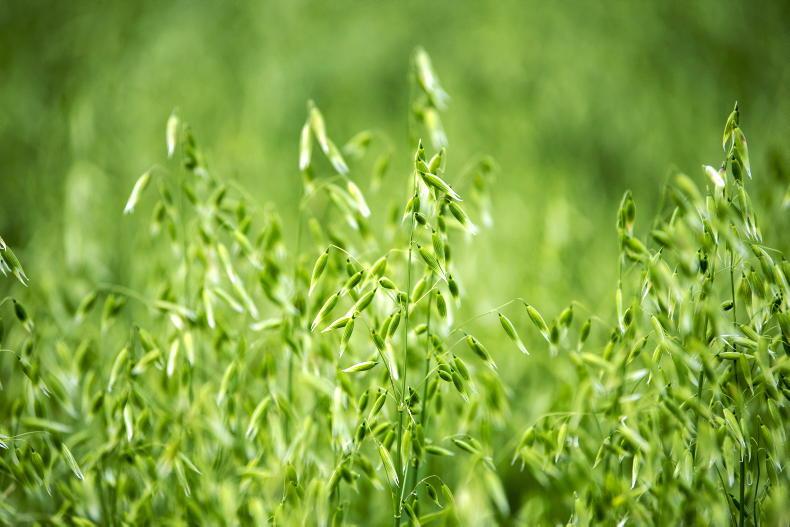
It was a wet day on Thursday last for a Teagasc spring crop walk on Tom Beausang’s farm. A yellow rainfall warning was well under way, but the farmers present were happy with how crops were looking.
Despite the late start to spring and the prolonged wet weather, they were up to date on crop management, had spring crops planted and – although afraid to say it – were glad of a drop of rain for spring barley.
Aphicide
Spring barley was the next job on the list for most in attendance. Crops in the area had the third leaf emerging and were at the ideal time for an aphicide.
A lot of cover crops were planted last year and the green bridge from these crops increases the risk of barley yellow dwarf virus, as it provided a home for aphids. Teagasc’s Ciarán Collins recommended an aphicide application at the two- to four-leaf stage.
Ciarán noted that there was no significant difference between one aphicide application and two applications, so only one application should be applied.
He also commented that pyrethroid resistance in grain aphids appears to have stabilised.
Ciarán also noted that the resistance to pyrethroids is in the grain aphid and aphicides still tackle the bird cherry-oat aphid, which also spreads virus.
Teagasc research shows that March-sown spring barley that is not treated with aphicide generally has virus symptoms on 0-2% of the leaves (average 0.85%), while April-sown crops have symptoms on 0-36% of the tillers (average 5.9%).
Local agronomist with Denn’s, Kevin Looby, said there is some virus in winter cereals and that it is very obvious where fields are sprayed and not sprayed.
Virus is present in fields that did not receive an aphicide or, in some cases, where half a field was sprayed.
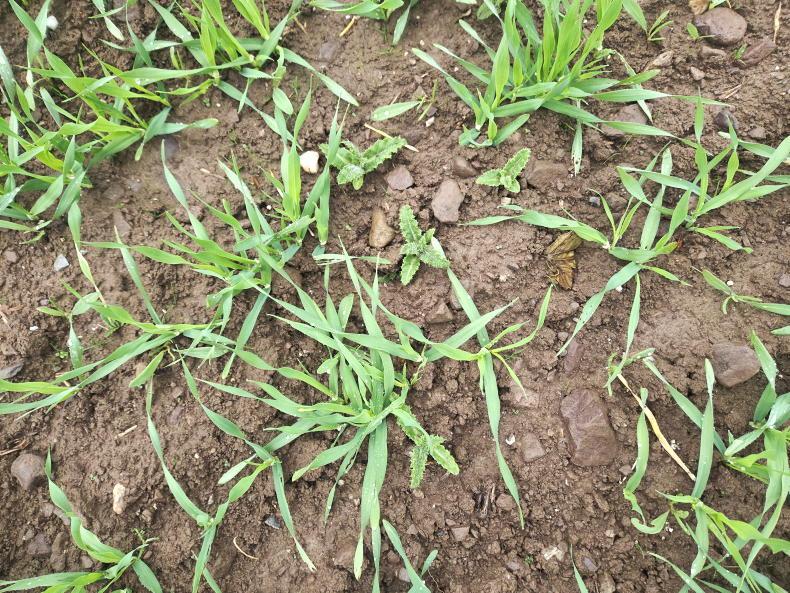
Thistles coming up in spring barley last week on Tom Beausang's farm last week.
Herbicides
Back to spring barley and herbicide was going to be applied with the aphicide. A flush of weeds should emerge after the rain, making it an ideal time to apply just ahead of tillering. Sulphonyl urea products are needed at 75-100% rate.
There was discussion around whether to put the wild oat herbicide in the tank with the other products and the general consensus was to do this, as the crops would be too covered in later on. Canary grass is not a big issue in the area, so early application suits.
There was a warning on rates. As covered in last week’s paper, resistance to broad-leaved weed herbicides is increasing and so rates need to be watched. If farmers suspect resistance, they should get their weeds tested for resistance. In the field, they should target weeds early and apply appropriate rates.
Teagasc recommends Fluroxypyr at 0.75l/ha for resistant chickweed and 1l/ha of Galaxy for resistant chickweed or resistant corn marigold. However, these products may need to be topped up. For example, 80g/ha of clopyralid may not be enough to control corn marigold.
There was talk about pre-emergence sprays for annual meadow grass control and while the time has past for that now, moisture was seen as an issue and their ability to work in drier conditions.
Axial Pro needs to be applied at 0.6l/ha for wild oats and 0.82l/ha for canary grass. If using Foxtrot, it needs to be applied on its own at a rate of 0.8l/ha. Advice was to keep water rates up and apply with a fine nozzle for better coverage. This is important for control and to prevent resistance build up from poor control.
Staying with grass weeds growers at the walk were keen to get a graminicide out on spring beans. Crops were up and healthy. Where growers suspected resistance to wild oat herbicides in cereal crops, they commented that they might move to Stratos Ultra rather than Falcon for grass weed control. That spray will go in another week or so. It was agreed there was no point waiting. Notching wasn’t a major concern.
Fungicide on spring barley
Unless your variety is very susceptible to disease then the fungicide should be targeted at early to mid-tillering and be made up of prothioconazole and a strobilurin, so Proline and Comet or Navura and Comet.
Winter barley
Winter barley crops started to show their awns last week. Awns emerging is the ideal time to spray fungicide for ramularia control. However, most farmers prefer to leave it a bit later. This is easier done where a middle spray has been applied and where Folpet has been applied around GS 37-39 with growth regulator.
This year is a high-risk year for ramularia. Crops are generally good, but there was stress from weather and temperatures, with scorch and BYDV present as well.
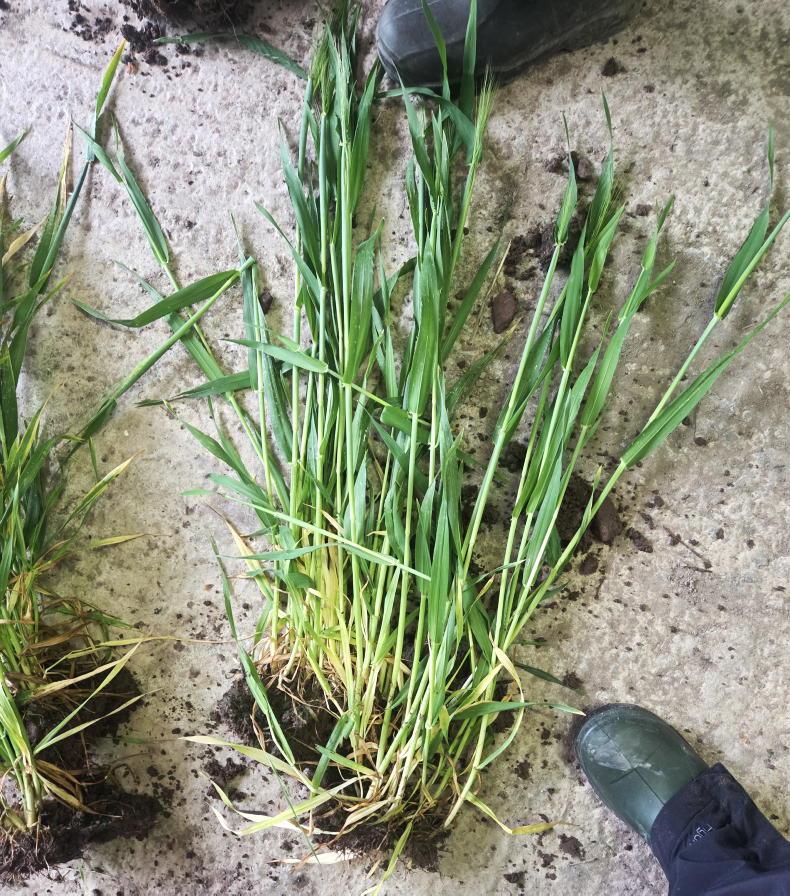
Orcade winter barley with awns out.
Folpet it the first thing in the tank anyway. Teagasc recommends 1.5l/ha. After this, you need an Azole, along with an SDHI. Products like Macfare Xpro and Balaya plus Imperis are ideal. Good crops need a good final fungicide.
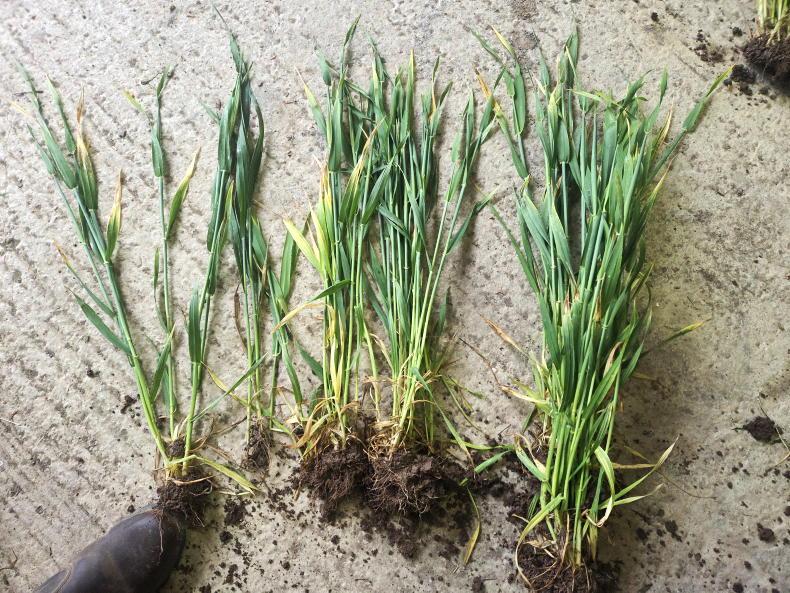
Joyau winter barley with some BYDV.
Winter wheat
Many farmers across the country are delighted with how the T1 fungicide on winter wheat worked out this season. Kevin Looby said there is great potential in winter wheat. T1s generally went on in the area from Wednesday 22 April to 29 April. He said rust didn’t take off and it was great to put the spray on clean.
While there is septoria in the base of some crops it should be kept at bay for now. He warned growers to have enough growth regulator on Champion and KWS Equipe.
Ciarán Collins had brought a crop of LG Rebellion. It was sown on 20 October, but it’s a forward variety. The flag leaf was emerging. It had been sprayed the weekend previous and the septoria was contained on leaf four.
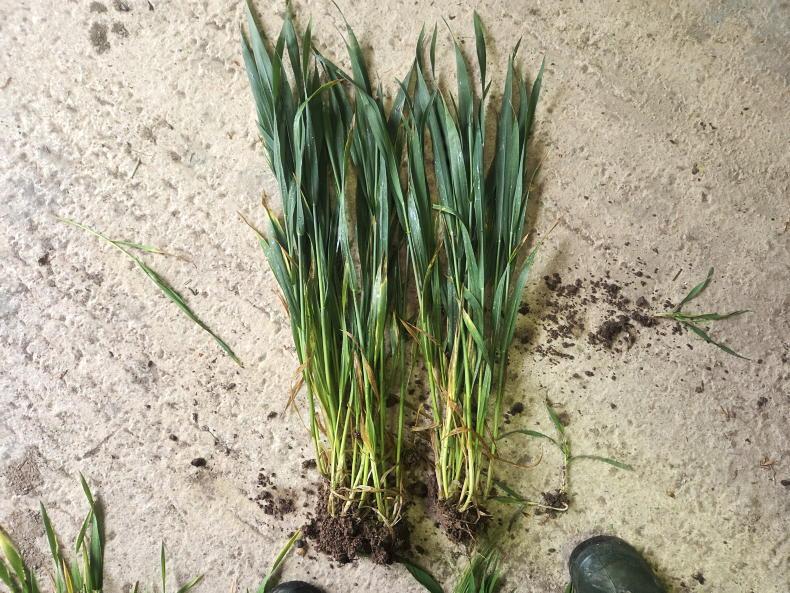
LG Rebellion winter wheat sown on 20 October with the flag leaf emerging was very clean.
Winter oats
Winter oats were reported very clean in the area with very little mildew. Another growth regulator may be needed and there was a consensus that Elatus Era would be a good final spray, especially for rust control, where it hasn’t been used in the programme already.
It was a wet day on Thursday last for a Teagasc spring crop walk on Tom Beausang’s farm. A yellow rainfall warning was well under way, but the farmers present were happy with how crops were looking.
Despite the late start to spring and the prolonged wet weather, they were up to date on crop management, had spring crops planted and – although afraid to say it – were glad of a drop of rain for spring barley.
Aphicide
Spring barley was the next job on the list for most in attendance. Crops in the area had the third leaf emerging and were at the ideal time for an aphicide.
A lot of cover crops were planted last year and the green bridge from these crops increases the risk of barley yellow dwarf virus, as it provided a home for aphids. Teagasc’s Ciarán Collins recommended an aphicide application at the two- to four-leaf stage.
Ciarán noted that there was no significant difference between one aphicide application and two applications, so only one application should be applied.
He also commented that pyrethroid resistance in grain aphids appears to have stabilised.
Ciarán also noted that the resistance to pyrethroids is in the grain aphid and aphicides still tackle the bird cherry-oat aphid, which also spreads virus.
Teagasc research shows that March-sown spring barley that is not treated with aphicide generally has virus symptoms on 0-2% of the leaves (average 0.85%), while April-sown crops have symptoms on 0-36% of the tillers (average 5.9%).
Local agronomist with Denn’s, Kevin Looby, said there is some virus in winter cereals and that it is very obvious where fields are sprayed and not sprayed.
Virus is present in fields that did not receive an aphicide or, in some cases, where half a field was sprayed.

Thistles coming up in spring barley last week on Tom Beausang's farm last week.
Herbicides
Back to spring barley and herbicide was going to be applied with the aphicide. A flush of weeds should emerge after the rain, making it an ideal time to apply just ahead of tillering. Sulphonyl urea products are needed at 75-100% rate.
There was discussion around whether to put the wild oat herbicide in the tank with the other products and the general consensus was to do this, as the crops would be too covered in later on. Canary grass is not a big issue in the area, so early application suits.
There was a warning on rates. As covered in last week’s paper, resistance to broad-leaved weed herbicides is increasing and so rates need to be watched. If farmers suspect resistance, they should get their weeds tested for resistance. In the field, they should target weeds early and apply appropriate rates.
Teagasc recommends Fluroxypyr at 0.75l/ha for resistant chickweed and 1l/ha of Galaxy for resistant chickweed or resistant corn marigold. However, these products may need to be topped up. For example, 80g/ha of clopyralid may not be enough to control corn marigold.
There was talk about pre-emergence sprays for annual meadow grass control and while the time has past for that now, moisture was seen as an issue and their ability to work in drier conditions.
Axial Pro needs to be applied at 0.6l/ha for wild oats and 0.82l/ha for canary grass. If using Foxtrot, it needs to be applied on its own at a rate of 0.8l/ha. Advice was to keep water rates up and apply with a fine nozzle for better coverage. This is important for control and to prevent resistance build up from poor control.
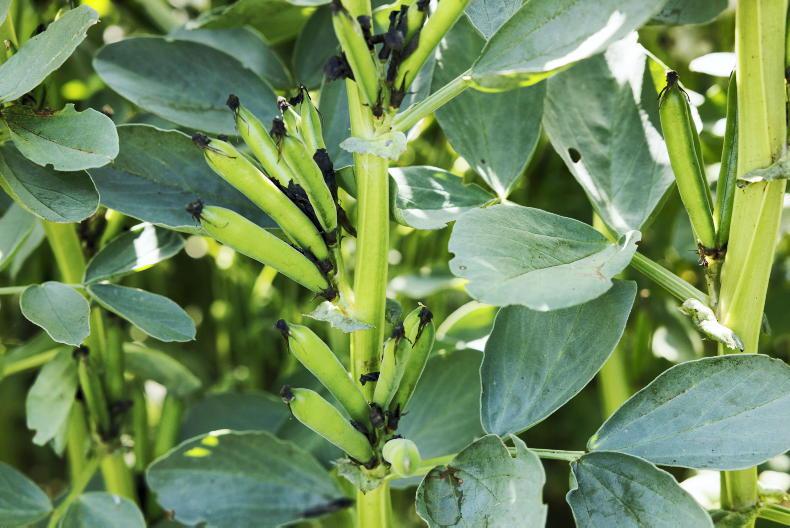
Staying with grass weeds growers at the walk were keen to get a graminicide out on spring beans. Crops were up and healthy. Where growers suspected resistance to wild oat herbicides in cereal crops, they commented that they might move to Stratos Ultra rather than Falcon for grass weed control. That spray will go in another week or so. It was agreed there was no point waiting. Notching wasn’t a major concern.
Fungicide on spring barley
Unless your variety is very susceptible to disease then the fungicide should be targeted at early to mid-tillering and be made up of prothioconazole and a strobilurin, so Proline and Comet or Navura and Comet.
Winter barley
Winter barley crops started to show their awns last week. Awns emerging is the ideal time to spray fungicide for ramularia control. However, most farmers prefer to leave it a bit later. This is easier done where a middle spray has been applied and where Folpet has been applied around GS 37-39 with growth regulator.
This year is a high-risk year for ramularia. Crops are generally good, but there was stress from weather and temperatures, with scorch and BYDV present as well.

Orcade winter barley with awns out.
Folpet it the first thing in the tank anyway. Teagasc recommends 1.5l/ha. After this, you need an Azole, along with an SDHI. Products like Macfare Xpro and Balaya plus Imperis are ideal. Good crops need a good final fungicide.

Joyau winter barley with some BYDV.
Winter wheat
Many farmers across the country are delighted with how the T1 fungicide on winter wheat worked out this season. Kevin Looby said there is great potential in winter wheat. T1s generally went on in the area from Wednesday 22 April to 29 April. He said rust didn’t take off and it was great to put the spray on clean.
While there is septoria in the base of some crops it should be kept at bay for now. He warned growers to have enough growth regulator on Champion and KWS Equipe.
Ciarán Collins had brought a crop of LG Rebellion. It was sown on 20 October, but it’s a forward variety. The flag leaf was emerging. It had been sprayed the weekend previous and the septoria was contained on leaf four.

LG Rebellion winter wheat sown on 20 October with the flag leaf emerging was very clean.
Winter oats
Winter oats were reported very clean in the area with very little mildew. Another growth regulator may be needed and there was a consensus that Elatus Era would be a good final spray, especially for rust control, where it hasn’t been used in the programme already.
SHARING OPTIONS