



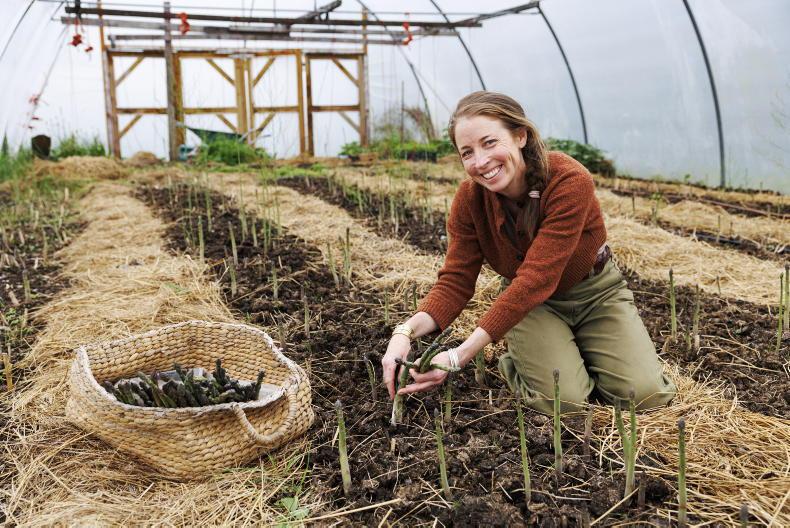
For food lovers, eating seasonally is a joy and a privilege. It means accessing the best fruits and vegetables when they are at their peak. In Ireland, accessing locally grown produce is even more of a privilege because, as a result of our soil and unique climate, our fruits and veggies are not just delicious, but nutrient-dense.
Of course, there are numerous logistical and environmental challenges associated with vegetable production. Crops can be wiped out by weather events, disease or drought. Increased costs of operation – fuel, fertiliser, electricity – and a high dependence on manual labour brings additional challenges to an already-challenged sector. Add a generous dose of consumer apathy (shoppers happy to buy cheaper, imported vegetables), and you can understand why so many Irish commercial vegetable farms have ceased operations.
Anyone who dabbles in ‘growing their own’ will appreciate the logistics required to produce vegetables and fruit on a commercial scale, and the physical effort which goes into farming and harvesting vegetables. But extreme satisfaction can also be found in this work, and to produce a seasonal wonder each year, at scale, is a celebration in itself – just ask any grower of Irish asparagus.
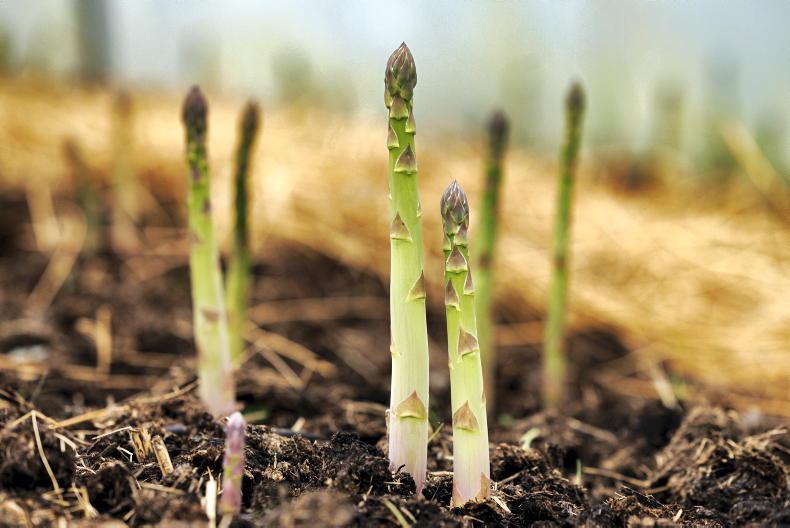
If growing vegetables requires patience, asparagus must be the ultimate test. This vegetable takes a notoriously long time to mature (five to seven years, on average). Once established, though, it can be harvested for up to 20 years without replanting. Asparagus season is short, from approximately March to May, but it is also one of the earliest crops of the year and a welcome spark of fresh, green goodness after a winter of potatoes, carrots and parsnips.
There are currently no large-scale asparagus growing operations in Ireland despite market demand within Irish food service. Colin Jephson, who owns and operates Ardkeen Quality Food Store in Co Waterford, says he would love to sell local asparagus but has been unable to source it for a number of years. Asparagus prefers well-drained, neutral (or slightly acidic) soils and does well in sheltered, sunny locations. It will grow in most areas, but some Irish regions are not naturally suited to it.
“When we did have it, it was quite expensive and sales were limited,” he adds. “I guess that is why growers are reluctant to grow it; that, and the fact that the season is very short.”
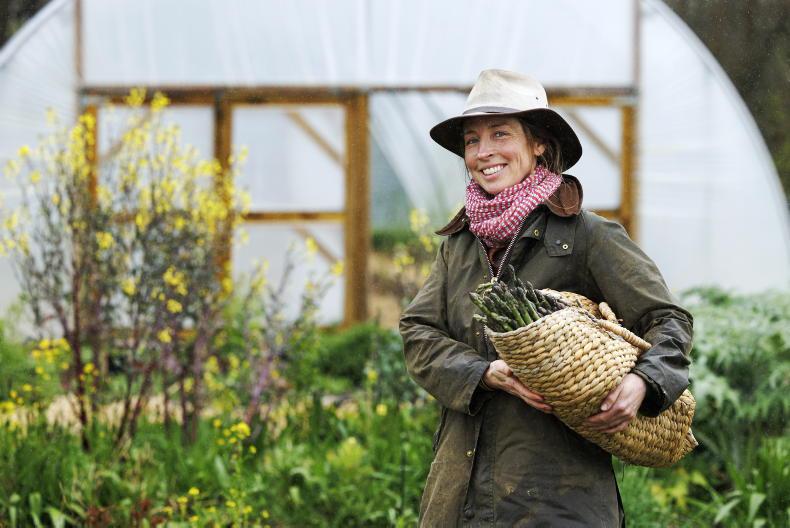
The grower: Alyanya Massey
For growers, asparagus is a labour of love. This might be why Alyanya Massey and her partner, Steve Park, in Ballydehob, west Cork, sell their organic asparagus under their brand, Grá Farm. They have been growing asparagus for many years and can confirm that, while demand is high, it is costly to produce and expensive to purchase (in some shops, it can cost up to €9 per bunch).
“It is the best of the best,” Alyanya says. “If you get local asparagus within 24 hours of it being picked, it is magnificent – so sweet, tender and full of flavour.
“At the same time,” she adds, “it is expensive, especially when the cheap stuff from Peru is €1.50. But these are two different products – different in ecological value and in nutrient-density.”
Alyanya and Steve have been living, growing and raising their four children on their 3.5ac plot for the past 15 years. In addition to growing asparagus and other vegetables, Alyanya is a yoga instructor and Steve works in film production. The pair credit west Cork grower Tim York as being among the first in Ireland to grow and sell asparagus (he started in the 1980s), and it was with his guidance that they started their own journey in organic market gardening.
“Neither of us had training in horticulture,” she recalls. “I had grown vegetables with my mum and Steve learned a lot from working with Tim. Our acreage offered plenty of sun and Tim said, ‘You should grow asparagus – you will get good money for it and the restaurants want it.’ He helped us set up and we had [established] asparagus crowns sent over from England. We had a meitheal and planted all the crowns in one day. They were three years old when they were planted, about a foot in circumference and that was 13 or 14 years ago. We’ve been harvesting for the past 10 or 11 years.”
At first, Alyanya and Steve sold their asparagus to restaurants in Dublin, Cork and Galway. Today, they mostly sell locally in independent shops and in Field’s SuperValu in Skibbereen.
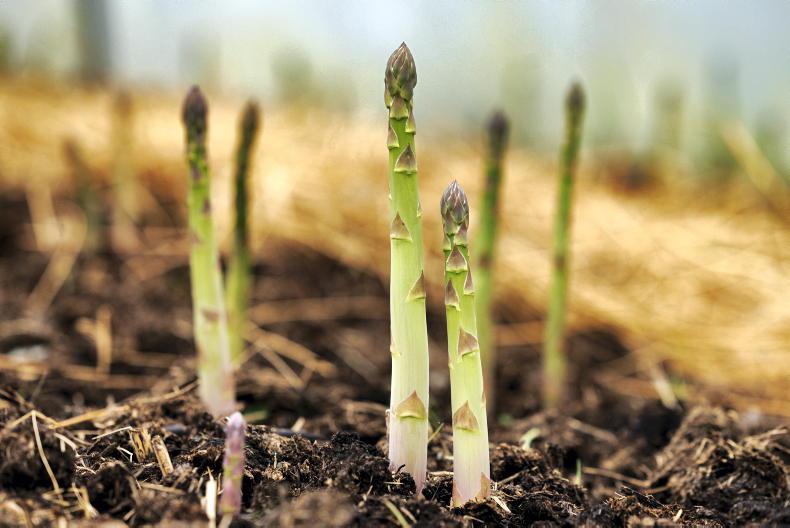
The demand for seasonal Irish asparagus remains high and Alyanya says if she grew 100 times more than what she currently does, she could easily sell it. But as a small market farmer, the work is labour intensive. Their asparagus is grown under cover in polytunnels, which elongates the season slightly and produces more tender, sweeter spears.
Managing three full polytunnels is more than enough to keep Alyanya busy, as Steve is often away with work.
“I wouldn’t want to solely be making a living from this,” she says, laughing. “I do have help, historically we have always taken on WWOOFers [willing workers on organic farms] but this year we have someone working with me two days per week.
“In organic gardening, the labour is intense with mulching, weeding and the manure – it is a lot of work. You have to have a passion for it. To me, organic gardening is for the health of the planet and ourselves. It’s important to feed my family really good food and to be able to stay home with my kids.
“They sow seeds with me, they’re learning how to compost and cook from scratch – all of these things are critically important to me.”
The chef: Alain Morice
While Alyanya’s asparagus is flying off the shelves in west Cork, in Westport, Co Mayo, Alain Morice celebrates spring each year with a plethora of asparagus-driven dishes at his restaurant, Savoir Fare. He sources asparagus from grower Tommy Conroy, in nearby Kilsallagh, who starts supplying him with small amounts from mid-March.
“Tommy was a carpenter by trade and decided to do something else, so he started growing fruit and vegetables but not the things you would expect,” Alain says. “He grows apricots, peaches, cherries, wasabi – weird and wonderful things.”
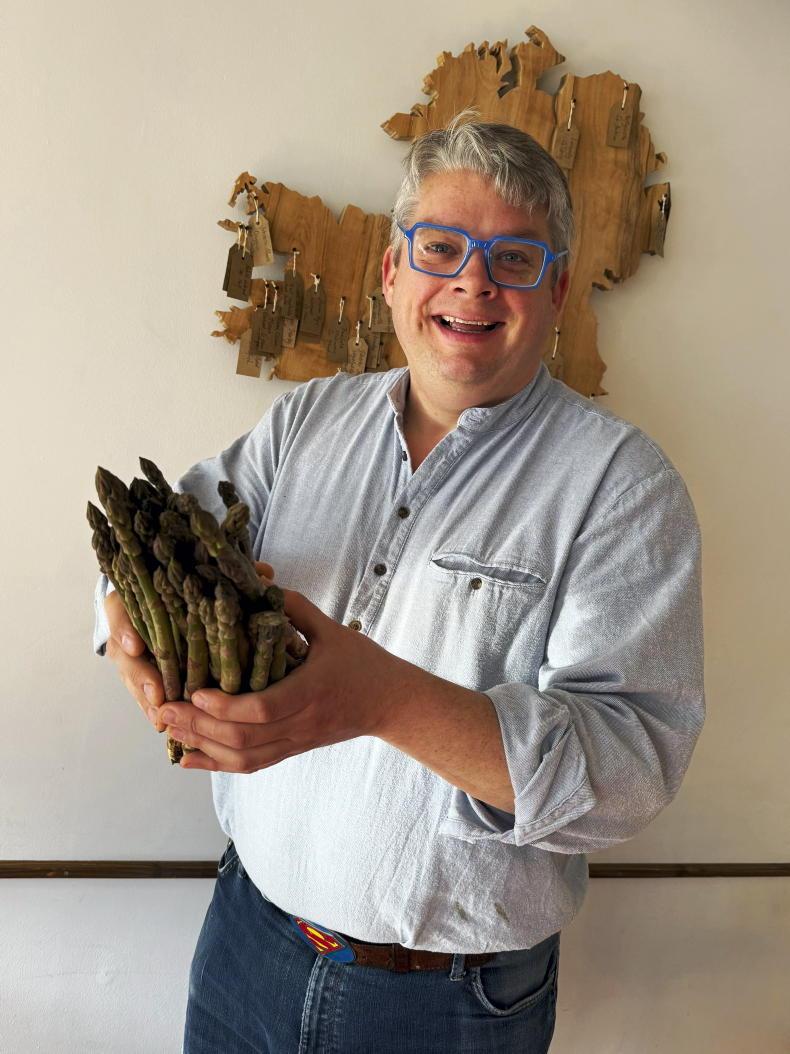
As a business, Savoir Fare is a bit of Alain on a plate. A nod to his mixed French and Irish background, the food served at this well-loved eatery is as locally sourced as possible, making use of Tommy’s produce but also the produce of nearby Glasraí Farm (whose asparagus comes later in the season, extending Alain’s access well into the month of June) in addition to local meats (like Andarl Farm pork) and Gleann Buí dairy.
He takes whatever asparagus is available, which isn’t usually a lot, but it is always well-used and appreciated.
“On any given week, I might have around 20 portions to sell, so not huge quantities,” he says. “But asparagus season is hugely exciting. That asparagus you see in the supermarket? There is no resemblance to the local, seasonal asparagus available to us. They were picked that morning and on your plate by lunchtime.”
Alain was raised in both Mayo and France and, on both sides, his family has deep roots in hospitality. Originally, he trained in front of house management and wine, but when he and his wife, Nuria, opened Savoir Fare, he turned his hand to creating French-inspired foods made with Irish ingredients.
“I knew nothing else,” he says. “Growing up, the people in close proximity to me were all in food. When our first child was born, my partner and I decided Westport would be a great place to raise a family. It’s been seven years in business now and when we opened, I said I’d do the cooking myself. I do the prep and my sister runs the kitchen during service, while I’m out front. We’re firm believers in Irish ingredients and food with a sense of place.”
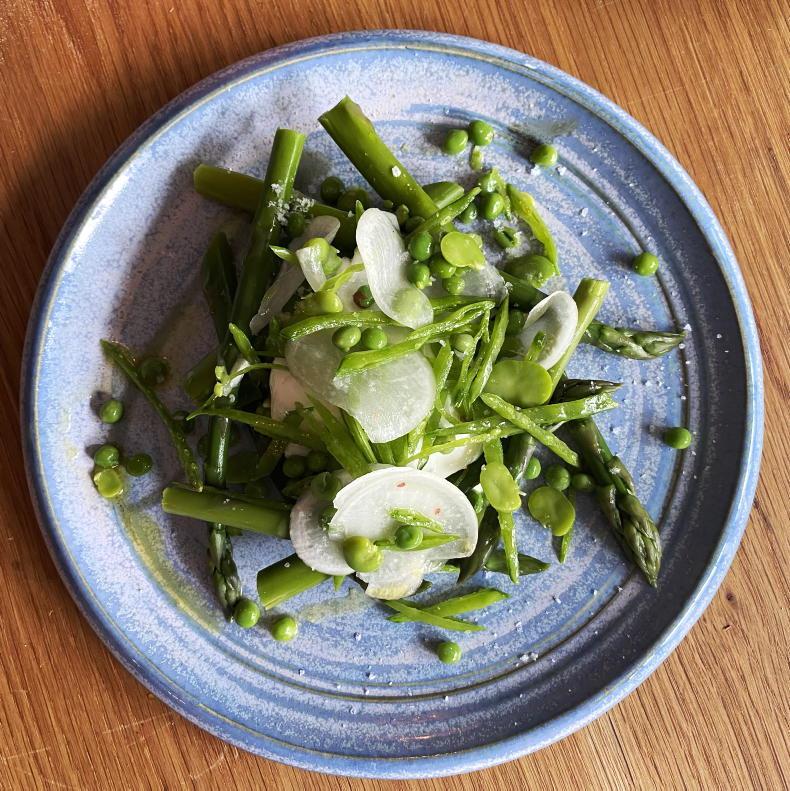
Alain says as happy as he is to see Irish asparagus come into season, by June he is sick of it – and this is part of what seasonal eating is all about: saying goodbye to one ingredient’s peak while looking forward to ushering in the next.
“But the excitement comes back each year,” he says, smiling. “When the earlier spring crops aren’t quite ready it’s so nice to have our local asparagus, which coincides with the wild garlic and Gleann Buí’s milk coming back into season. There are so many things you can do with these ingredients – you know the old saying: what grows together, goes together.”
See Grá Farm on Instagram @gra_farm and Savoir Fare on Instagram
@savoir_fare




SHARING OPTIONS