Daisy Cottage Farm is found at the end of a meandering lane in the shadow of the beautifully dramatic landscape of the Wicklow Mountains
As you drive in, you’re greeted by a pack of fluffy, stone-faced alpacas and some friendly wiry-haired pigs. The cottage is painted sunshine yellow and the front patio is covered in potted plants, comfy furniture and outdoor décor. This happy home is where Lorraine Aspill resides.
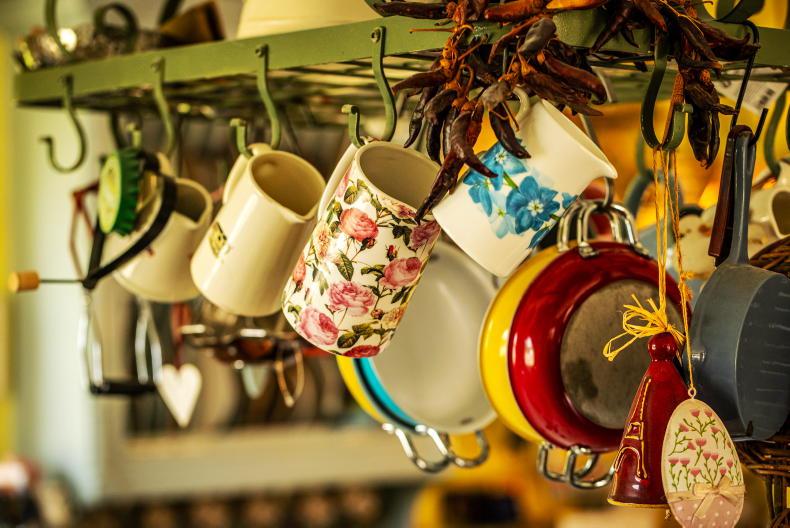
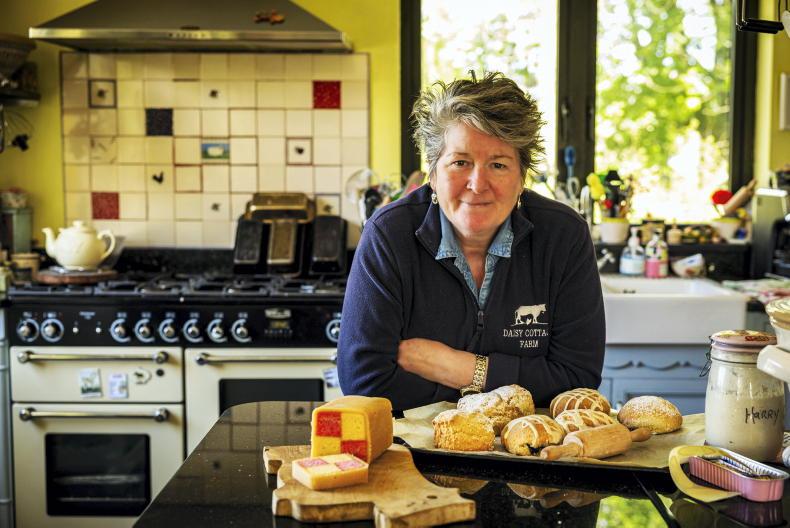
Lorraine’s kitchen can only be described as pure Irish country. There is an entire collection of Nicholas Mosse crockery on display while pieces of art and family photos adorn every other available surface. Her kitchen table is cluttered in that cosy way which reminds you that this is a real, lived-in home. It’s where her grandson plays and ‘helps’ as she makes scones and treats to sell in the honesty hut at the end of the drive.
It’s also where she welcomes visitors from all regions and walks of life for cookery demos and butter-making workshops. Lorraine’s straightforward personality is perfect for this kind of work. She endears guests with her warm hospitality, sharp wit and keen sense of humour. As we chat, she serves up lemon and blueberry scones with hot cups of tea.
“My grandmother was from Dublin and, oh my God, she was a great cook,” she recalls. “My father was restaurant manager of the old Hibernian Hotel and Jury’s Hotel and, eventually, we moved down here when he got a job at Kilkea Castle. I had two uncles, both passed now, but they were both chefs. My mother used to work as a restaurant supervisor and won four All-Ireland medals for camogie, she played for Dublin [Parnells]. I remember going to see her play in Croke Park at one of the finals. They used to break at half time and you got a wedge of orange. She smuggled over a bit of orange for each of us and we thought it was the best thing. She used to say to us: ‘Don’t shout come on, mammy, shout come on, Ann.’ But we would shout, ‘Come on mammy Ann,’ every time she got the ball.”
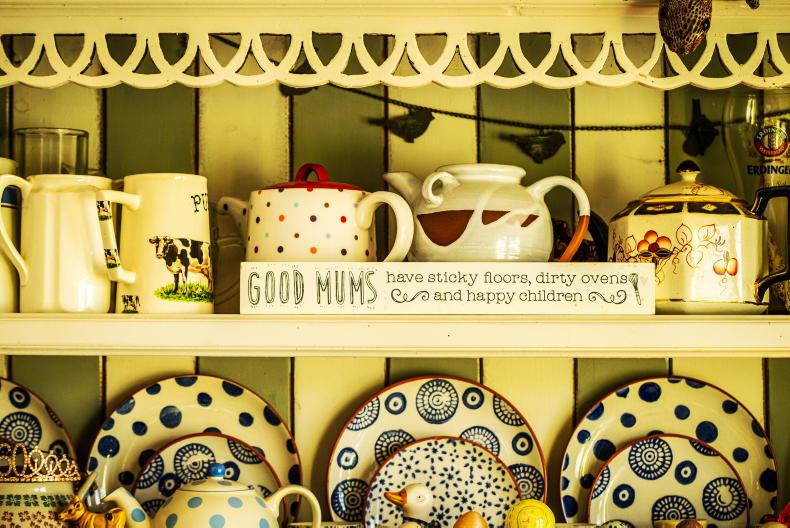
Lorraine's kitchen is a welcoming haven, chock full of earthenware crockery, artwork, family photos and hot cups of tea. \ Philip Doyle
Special occasions
You can see the pride in Lorraine’s eyes as she recounts her mother’s former athletic glory. Now, her mum lives down the lane and is another regular at Daisy Cottage Farm’s kitchen table. One day, Lorraine was looking to test a new recipe. Her mother suggested something Lorraine’s grandmother used to bake: the classic Battenberg cake. This cake wasn’t an everyday occurrence in the household – it was only brought out on the most special of occasions, and memories of it are richly preserved in Lorraine’s mind.
“We had friends who would come over from England to visit – the McDermott’s,” she says. “My grandparents lived in Clontarf and you could see the old ferry coming in from their upstairs window. We’d be watching for the ferry and when we caught sight of it, we’d give Grandad the nod to go collect the McDermotts.
“The table would be set and the Battenberg would be out and we weren’t allowed any of it,” she adds, laughing. “And now, as children, we mightn’t have enjoyed it. Our grandmother would have had other goodies [for us], but the Battenberg was for the McDermotts. We used to have another visitor, Mrs Smith, who lived beside my grandparents. She would come every Thursday for her dinner, but she wasn’t a posh visitor, so we had apple tart and custard or tapioca pudding for dessert.”
Lorraine says the Battenberg was a favourite of both her grandmother and her mother, but when she first tried to replicate the cake of her youth, she struggled.
“I thought, ‘This is not going to get the better of me,’” she says. “I was making gluten-free bakes one day and I thought I’d try it out as a gluten-free cake. It turned out really well. So much so, I now make it as a gluten-free option and it’s one of my bestsellers. When my daughter, Amy, got married four years ago, I made it for her wedding cake.”
Considering Lorraine is a seasoned baker and she initially faced challenges, one can assume the Battenberg is a tricky cake. She says the key to success – with cakes in general – is not to rush the process.
“If you’re in a rush, forget it,” she says. “I make the two slabs of sponge the night before and let them sit overnight, so they’re nice and cool. They will fall apart if you don’t let them sit. Measuring is the other thing; I have a ruler to measure the width of each slice before sandwiching them together.
“I like to use sieved apricot jam to sandwich the cake pieces together,” she continues. “Some people prefer raspberry jam, but I always remember the Battenberg with apricot. I tried to use store-bought marzipan once, but I threw it to one side because it wasn’t pliable enough. I make my own.
“I put the cake trimmings in the fridge. Then, I grate them and add them to pear and almond or cherry and almond scones. When you bite into them you get a lovely little pocket of almond.”

Lorraine's famous Battenberg cake is based on a recipe her grandmother used to make when "posh" company was visiting her Clontarf home.\ Philip Doyle
Lorraine’s gluten-free Battenberg cake
Makes 2 cakes
Ingredients
450g gluten-free self-raising flour100g ground almonds450g caster sugar450g butter, softened8 eggs1 tsp almond extract A few drops of red food colouringFor the marzipan:
400g ground almonds200g icing sugar, plus extra for rolling2 eggs, lightly beaten1 tsp almond extractTo assemble:
Apricot jam, heated and sieved
To Lorraine, nothing is more important than family, good food and warm hospitality. \ Philip Doyle
Method
1 Preheat the oven for 170°C. Line two 7-inch square cake tins with parchment paper and set aside.
2 In two separate bowls, measure out the gluten-free flour and ground almonds. Set aside.
3 In another bowl, preferably the bowl of a stand mixer, add the butter and caster sugar. Using a hand mixer or the paddle attachment, cream together until light and fluffy, for about 5 minutes.
4 Add in 1 egg followed by 2 heaping spoons of flour and mix. Continue this until all the eggs and flour have been used. Using a spatula, fold in the ground almonds and the almond extract.
5 Divide the cake batter in half and colour one half with the red food colouring. Place the batter into the two prepared tins and bake for approximately 20 minutes. Test with a skewer, it should come out clean when the cakes are baked.
6 Let the cakes cool for 20 minutes in the tins, then carefully remove them and cool completely. Wrap in cling film and let stand at room temperature overnight.
7 Make your almond paste: in a bowl, combine the ground almonds and icing sugar. Make a well in the centre of the mixture and add half the beaten egg and almond extract. Mix into a paste which isn’t too sticky, adding a bit more egg as needed until you reach the right consistency.
8 Warm the apricot jam in a saucepan and then put the mixture through a fine sieve to catch any bits of fruit. Set aside until ready to use.
9 Trim the sides of the cakes, removing all outside crusts. Place the plain sponge on a clean work surface and spread the top with the apricot jam. Place the pink sponge directly on top and press the cakes together firmly.
10 Using a ruler, trim each of the edges again. Cut the cakes into 1.2 inch strips and assemble them with the colours opposite each other, again using the apricot jam as a glue. You want a cake which is rectangular but with the insides composed of 2 plain squares and 2 pink.
11 Set the cakes aside and dust lightly with icing sugar. Using a rolling pin, roll out the almond paste into a rectangular shape wide enough to enrobe each of the cakes. Trim the edges, then brush one side of the almond paste with apricot jam and place the cake on top. Wrap the almond paste around the cake away from you in a rolling motion using a little icing sugar on your hand, if sticking.
12 Trim off the ends of the Battenberg, put the kettle on and enjoy a slice with a cup of tea.

Lorraine makes her Battenberg cake with gluten-free self-raising flour, which pairs perfectly with the ground almonds. The cake is moist, beautifully flavoured by the almonds and not too sweet.\ Philip Doyle
Read more
Taste Tradition: a life of family, farming and hospitality
Veronica Molloy stirring up the season
Daisy Cottage Farm is found at the end of a meandering lane in the shadow of the beautifully dramatic landscape of the Wicklow Mountains
As you drive in, you’re greeted by a pack of fluffy, stone-faced alpacas and some friendly wiry-haired pigs. The cottage is painted sunshine yellow and the front patio is covered in potted plants, comfy furniture and outdoor décor. This happy home is where Lorraine Aspill resides.
Lorraine’s kitchen can only be described as pure Irish country. There is an entire collection of Nicholas Mosse crockery on display while pieces of art and family photos adorn every other available surface. Her kitchen table is cluttered in that cosy way which reminds you that this is a real, lived-in home. It’s where her grandson plays and ‘helps’ as she makes scones and treats to sell in the honesty hut at the end of the drive.
It’s also where she welcomes visitors from all regions and walks of life for cookery demos and butter-making workshops. Lorraine’s straightforward personality is perfect for this kind of work. She endears guests with her warm hospitality, sharp wit and keen sense of humour. As we chat, she serves up lemon and blueberry scones with hot cups of tea.
“My grandmother was from Dublin and, oh my God, she was a great cook,” she recalls. “My father was restaurant manager of the old Hibernian Hotel and Jury’s Hotel and, eventually, we moved down here when he got a job at Kilkea Castle. I had two uncles, both passed now, but they were both chefs. My mother used to work as a restaurant supervisor and won four All-Ireland medals for camogie, she played for Dublin [Parnells]. I remember going to see her play in Croke Park at one of the finals. They used to break at half time and you got a wedge of orange. She smuggled over a bit of orange for each of us and we thought it was the best thing. She used to say to us: ‘Don’t shout come on, mammy, shout come on, Ann.’ But we would shout, ‘Come on mammy Ann,’ every time she got the ball.”

Lorraine's kitchen is a welcoming haven, chock full of earthenware crockery, artwork, family photos and hot cups of tea. \ Philip Doyle
Special occasions
You can see the pride in Lorraine’s eyes as she recounts her mother’s former athletic glory. Now, her mum lives down the lane and is another regular at Daisy Cottage Farm’s kitchen table. One day, Lorraine was looking to test a new recipe. Her mother suggested something Lorraine’s grandmother used to bake: the classic Battenberg cake. This cake wasn’t an everyday occurrence in the household – it was only brought out on the most special of occasions, and memories of it are richly preserved in Lorraine’s mind.
“We had friends who would come over from England to visit – the McDermott’s,” she says. “My grandparents lived in Clontarf and you could see the old ferry coming in from their upstairs window. We’d be watching for the ferry and when we caught sight of it, we’d give Grandad the nod to go collect the McDermotts.
“The table would be set and the Battenberg would be out and we weren’t allowed any of it,” she adds, laughing. “And now, as children, we mightn’t have enjoyed it. Our grandmother would have had other goodies [for us], but the Battenberg was for the McDermotts. We used to have another visitor, Mrs Smith, who lived beside my grandparents. She would come every Thursday for her dinner, but she wasn’t a posh visitor, so we had apple tart and custard or tapioca pudding for dessert.”
Lorraine says the Battenberg was a favourite of both her grandmother and her mother, but when she first tried to replicate the cake of her youth, she struggled.
“I thought, ‘This is not going to get the better of me,’” she says. “I was making gluten-free bakes one day and I thought I’d try it out as a gluten-free cake. It turned out really well. So much so, I now make it as a gluten-free option and it’s one of my bestsellers. When my daughter, Amy, got married four years ago, I made it for her wedding cake.”
Considering Lorraine is a seasoned baker and she initially faced challenges, one can assume the Battenberg is a tricky cake. She says the key to success – with cakes in general – is not to rush the process.
“If you’re in a rush, forget it,” she says. “I make the two slabs of sponge the night before and let them sit overnight, so they’re nice and cool. They will fall apart if you don’t let them sit. Measuring is the other thing; I have a ruler to measure the width of each slice before sandwiching them together.
“I like to use sieved apricot jam to sandwich the cake pieces together,” she continues. “Some people prefer raspberry jam, but I always remember the Battenberg with apricot. I tried to use store-bought marzipan once, but I threw it to one side because it wasn’t pliable enough. I make my own.
“I put the cake trimmings in the fridge. Then, I grate them and add them to pear and almond or cherry and almond scones. When you bite into them you get a lovely little pocket of almond.”

Lorraine's famous Battenberg cake is based on a recipe her grandmother used to make when "posh" company was visiting her Clontarf home.\ Philip Doyle
Lorraine’s gluten-free Battenberg cake
Makes 2 cakes
Ingredients
450g gluten-free self-raising flour100g ground almonds450g caster sugar450g butter, softened8 eggs1 tsp almond extract A few drops of red food colouringFor the marzipan:
400g ground almonds200g icing sugar, plus extra for rolling2 eggs, lightly beaten1 tsp almond extractTo assemble:
Apricot jam, heated and sieved
To Lorraine, nothing is more important than family, good food and warm hospitality. \ Philip Doyle
Method
1 Preheat the oven for 170°C. Line two 7-inch square cake tins with parchment paper and set aside.
2 In two separate bowls, measure out the gluten-free flour and ground almonds. Set aside.
3 In another bowl, preferably the bowl of a stand mixer, add the butter and caster sugar. Using a hand mixer or the paddle attachment, cream together until light and fluffy, for about 5 minutes.
4 Add in 1 egg followed by 2 heaping spoons of flour and mix. Continue this until all the eggs and flour have been used. Using a spatula, fold in the ground almonds and the almond extract.
5 Divide the cake batter in half and colour one half with the red food colouring. Place the batter into the two prepared tins and bake for approximately 20 minutes. Test with a skewer, it should come out clean when the cakes are baked.
6 Let the cakes cool for 20 minutes in the tins, then carefully remove them and cool completely. Wrap in cling film and let stand at room temperature overnight.
7 Make your almond paste: in a bowl, combine the ground almonds and icing sugar. Make a well in the centre of the mixture and add half the beaten egg and almond extract. Mix into a paste which isn’t too sticky, adding a bit more egg as needed until you reach the right consistency.
8 Warm the apricot jam in a saucepan and then put the mixture through a fine sieve to catch any bits of fruit. Set aside until ready to use.
9 Trim the sides of the cakes, removing all outside crusts. Place the plain sponge on a clean work surface and spread the top with the apricot jam. Place the pink sponge directly on top and press the cakes together firmly.
10 Using a ruler, trim each of the edges again. Cut the cakes into 1.2 inch strips and assemble them with the colours opposite each other, again using the apricot jam as a glue. You want a cake which is rectangular but with the insides composed of 2 plain squares and 2 pink.
11 Set the cakes aside and dust lightly with icing sugar. Using a rolling pin, roll out the almond paste into a rectangular shape wide enough to enrobe each of the cakes. Trim the edges, then brush one side of the almond paste with apricot jam and place the cake on top. Wrap the almond paste around the cake away from you in a rolling motion using a little icing sugar on your hand, if sticking.
12 Trim off the ends of the Battenberg, put the kettle on and enjoy a slice with a cup of tea.
Lorraine makes her Battenberg cake with gluten-free self-raising flour, which pairs perfectly with the ground almonds. The cake is moist, beautifully flavoured by the almonds and not too sweet.\ Philip Doyle
Read more
Taste Tradition: a life of family, farming and hospitality
Veronica Molloy stirring up the season
SHARING OPTIONS