



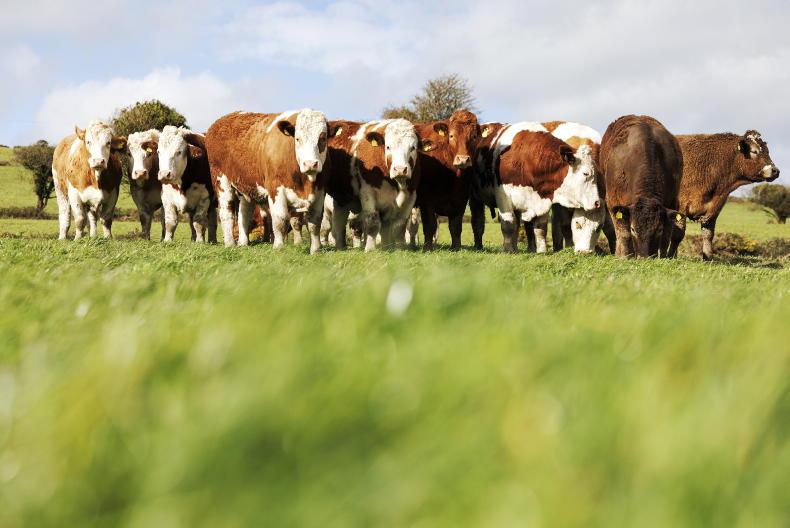
The past week has really seen growth take off across all farms, as some sunshine and warmer conditions have caused soil temperatures to be 2°c higher than normal for the time of year.
It’s a welcome reprieve for many who were struggling with grass covers. The beauty about this time of the year is that a few solid days of good weather can turn the tides regarding grass supply.
As growth increases, it’s important to be mindful of the covers that stock are entering. Ideally, target leafy covers of 1,300-1,400kg DM/ha that will provide the highest energy without compromising on intake.
Covers below 1,100-1,200 can result in cattle not being able to fill themselves enough, while covers over 1,500kg will be lower in energy and harder to graze out.
With higher grass growth rates come higher weed growth rates, so these will have to be addressed soon if they haven’t been already.
Where you are controlling weeds with a waxy cuticle, such as broad leaf docks or rushes, use of a binding agent is recommended to include alongside the herbicide to increase the kill rate.
Mark Maxwell – Ballinagore, Co Westmeath
It’s been a long spring but grass growth has kicked off the past two weeks. All the cattle are out grazing except for the remaining cows due to calve.
Grazing ground received slurry at the beginning of the year while also receiving a bag of TerraCAN + S/acre.
The recent good weather should relieve some pressure regarding grass growth and grazing conditions. As with the high stocking rate on the farm, it’s currently proving difficult to keep grass ahead of the cattle while also minimizing excessive poaching.
The bit of heat in the ground the past few days is putting the fertiliser that was spread into action, and it can be seen within the paddocks that it is helping to drive grass growth.
System Suckler to finishing
Soil Type Variable
Farm cover (kg/DM/ha) 352
Growth (kg/DM/ha/day) 16
Demand (kg/DM/ha/day) 52
Ger McSweeney – Millstreet, Co Cork
The ground has remained cold up until recent days, with the good weather warming up the soil and its effects can be seen by improved grass growth.
Some cows and calves are still housed as we fortunately have a good reserve of silage, but I will get them turned out in the coming week, with paddocks having been grazed in early spring.
I’m currently on my second rotation, with the paddocks receiving 23 units of protected urea along with watery slurry.
I was able to graze half my silage ground. It had received 2,000gal/acre of slurry and it was then spread with a bag of protected urea/acre.
I used 18-6-12 to top this up where it was required.
System Suckler to beef
Soil Type Variable
Farm cover (kg/DM/ha) 675
Growth (kg/DM/ha/day) 39
Demand (kg/DM/ha/day) 43
Ken Gill – Clonbullogue, Co Offaly
All the cattle are out over a week now. Grazed ground has been mucked but not severely poached, so it will recover.
This year I have started grazing differently and it has proven successful, with the animals being grouped and allowing the weanlings into paddocks first, then the heavier stock followed by the cows.
Silage ground received 2,500gal/acre of slurry and we hope to start first cut the last week of May. Being an organic farm, red clover has proven very successful with our cattle.
It is excellent winter feeding for young stock and allows us to utilise the slurry. We are currently preparing paddocks to be reseeded this week.
System Suckler to finishing
Soil Type Variable
Farm cover (kg/DM/ha) 703
Growth (kg/DM/ha/day) 35
Demand (kg/DM/ha/day) 34





SHARING OPTIONS