



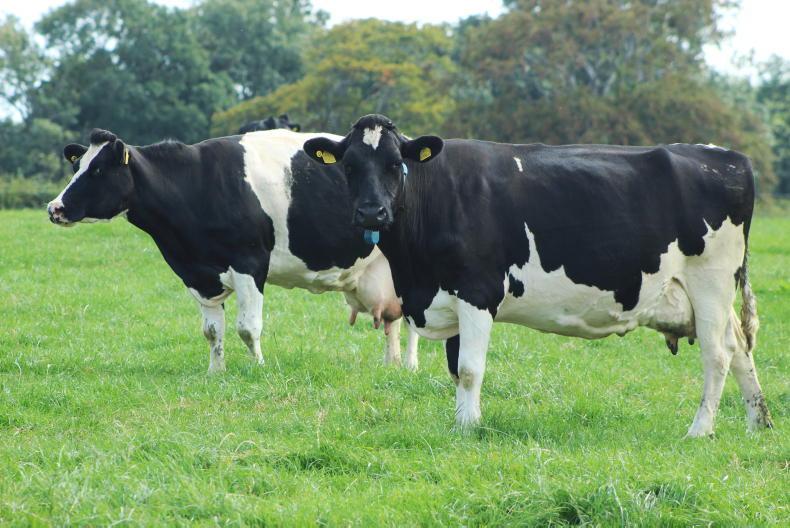
This column seems to focus as much on the weather as it does on grass over the past few weeks, but with weather extremes like we’ve been having, it is understandable. Last week saw some areas receive up to five times their normal rainfall and some minor flooding happened as a result.
Soil moisture deficits would indicate that ground conditions are worse than they are, though farmers in the northwest and west are seeing the pigtails and reels come back out on heavy farms, as wet weather management makes a return.
It’s almost unimaginable this could happen, but farmers should try and limit damage where possible. Grazing the driest paddocks or allocating 12-hour strips should act as a solution for now.
The recent grazing conditions will be a good indicator of which paddocks need improvements in infrastructure, ie spur roads, water troughs moved, before the autumn rotation begins. When given a chance, try to complete these tasks.
Dry farms have soaked up rain well, though even they now require some sunshine to get second-cut grass in. Unfortunately, the week ahead is extremely variable and there will be a lot of smash-and-grab efforts where silage is concerned.
Farm cover seems to be building on a lot of farms, as growth exceeds demand. While it might be a hard instruction to give if weather isn’t playing ball, it is best to try get poorer-quality swards baled or topped off before we start to look at grazing heavier swards in August.
Swardwatch
Shane Horgan, Carrignavar, Co Cork
We’ve had a great kick in growth recently with the heat and moisture, so we have taken a lot of ground out for silage. Our first-cut was complete on 26 May, and we plan to get a second cut complete in the next 10 days to two weeks. Four paddocks went in along with the first cut, with two more paddocks earmarked for mowing now, but we have done no other correction besides this. The wetter paddocks on the farm are getting a bit sticky, but the majority are fine. We are following cows with 25 units of protected urea on grass swards, with the clover swards receiving 2,500 gallons/acre of parlour washings.
Stocking Rate (cows/ha): 4.5
Growth Rate (kg/day): 55
Average Farm Cover (kg/cow): 187
Yield (l/cow): 19
Fat %: 4.6
Protein%: 3.58
Milk Solids (kg/cow): 1.69
Concentrates: 2
Donal Patton, Teagasc Ballyhaise, Co Cavan
We had a lot of rain over the weekend, but grazing conditions are still okay for now, though lower-lying paddocks are starting to get tricky to graze. All ground is now back in to play for grazing, with the April reseeds for our trials work having been out of the wedge since then. Growth is steady and we would even expect to see it rising in the next few weeks, so we will likely be taking out surpluses again.
As of now, 20% of the platform requires quality correction before autumn. We have 10 weeks of breeding complete, and we will continue for the next two weeks.
Stocking Rate (cows/ha): 2.74
Growth Rate (kg/day): 51
Average Farm Cover (kg/cow): 212
Yield (l/cow): 20.5
Fat %: 4.59
Protein%: 3.46
Milk Solids (kg/cow): 1.7
Concentrates: 3
Peter Mongey, Slane, Co Meath
We’re reseeding some paddocks this week. They have just been grazed and we will stitch in a mix of perennial grasses, 2kg of white clover and a kilo of red. We hope to be at our second-cut silage in the next day or so as well.
A half bag of protected urea was blanket-spread on the farm last week and we’ve seen a massive kick in growth from this. We did not spread in the drought for close to five weeks.
Good-quality grass is ahead of cows now, with nearly everything having been baled or topped, with protein taking a good jump as a result.
Stocking Rate (cows/ha): 3.2
Growth Rate (kg/day): 71
Average Farm Cover (kg/cow): 175
Yield (l/cow): 25.14
Fat %: 4.53
Protein%: 3.77
Milk Solids (kg/cow): 2.15
Concentrates: 2



SHARING OPTIONS