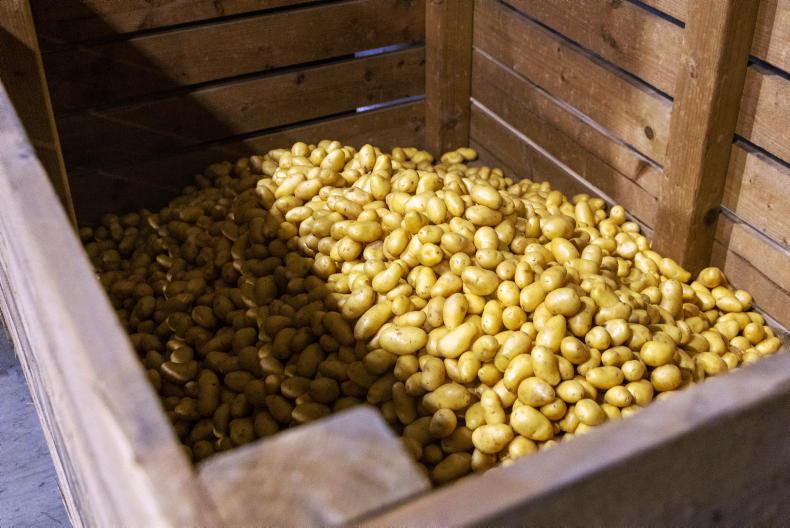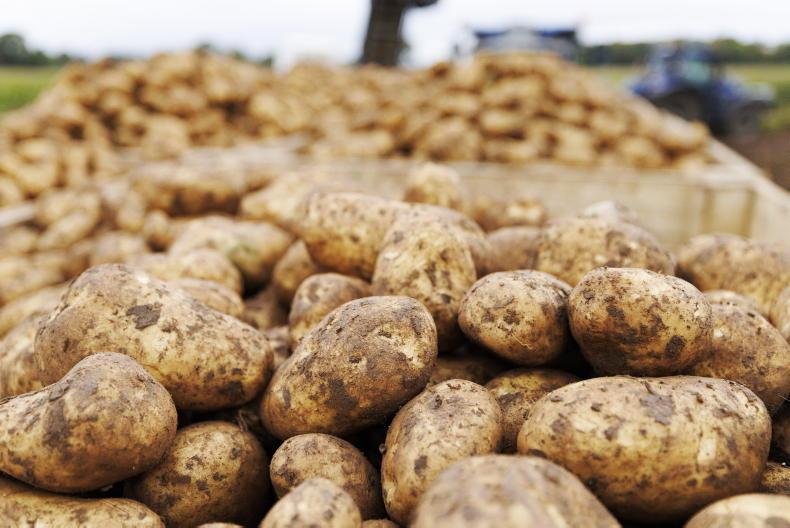
A landmark court decision will see rates extended to storage buildings that protect and maintain potatoes and onions.
There are fears among farmers that it could extend to other buildings storing farm produce.
The case in question took place in the High Court recently between Castlecor Potato Company and Tailte Éireann, who are the agency that carry out valuations for rates.
Rates had been applied on storage housing at Castlecor’s main yard in Cork. Castlecor appealed this to the Valuation Tribunal, who found in their favour.
However, that tribunal accepted a request from Tailte Éireann to have the matter considered by the High Court. There, Justice Miriam O’Regan reversed the decision of the Valuation Tribunal, meaning Castlecor are again liable for rates on the buildings they store their potatoes and onions in.
The case hinged on whether storage could be deemed as processing. Referring to the decision of the valuation tribunal, Justice O’Regan stated:
“The Tribunal found that all that is happening is that the potatoes and onions are stored at a correct temperature before they are dispatched for sale which cannot be separated from and is an integral component in the operation of growing, harvesting and selling potatoes with temperature controlled storage being to prevent deterioration that does not make it 'processing'."
Justice Regan also determined that the fact that potatoes and onions grown on lands “not attached” to the buildings in question was a relevant issue.
Costs were awarded to Tailte Éireann, who are an amalgamation of the Property Registration Office, the Valuation Office and the Ordnance Survey.
Consequences
IFA potato committee chair Jason O’Leary says the outcome of the High Court case will have devastating consequences for potato growers. “Rates being applied to buildings that simply store potatoes in a way that maintains them in good condition for sale will add massive cost to a business that is already high-cost and low-margin.”
IFA president Francie Gorman warned that the implications of the decision could reach wider than just potato, vegetable and fruit growers. “A dairy farmer’s milk-cooling facilities, buildings used to store grain harvested from separate land parcels, or other essential agricultural production and storage facilities could face similar uncertainty” he said.
“IFA has been actively engaged on this issue and have previously raised concerns at Ministerial level about the potential consequences for farmers of any farm buildings becoming liable for commercial rates" he added.