The Irish Farmers' Association (IFA) has reported a surplus after tax of €1.8m in its financial accounts for the year end to 31 March 2022, down by almost €1.27m on the previous year.
The increase in the value of IFA investments, understood to be mainly FBD shares, was €1,559,534.
The IFA reported total consolidated assets of some €16.4m including financial investments and others assets at the end of the financial year.
Membership and IFA Telecom
The IFA took in almost €9.5m in membership fees, up from almost €9.2m the previous year.
The IFA received €5.7m for its broadband and phone service sales, IFA Telecom, which was down slightly from €5.8m the previous year.
Overall, Ireland’s largest farming organisation reported income of €15,717,873 in the 12 months to the end of March, up from €15,726,958 over the 12 months to the end of March 2021.
Expenditure
On expenditure, the IFA spent €5.08m in total staff costs, up from €4.96m the previous year.
It doubled its communications spend from €264,465 to €482,786, while, separately, it spent €340,194 on public relations, up from €151,866.
The association spent some €390,433 on membership recruitment and €395,176 on membership promotion.
The IFA’s Brussels office, aimed at protecting Irish farmers’ interests in Europe, cost the association €477,327.
In total, the IFA spent some €15.19m up to 31 March 2022.
Salaries
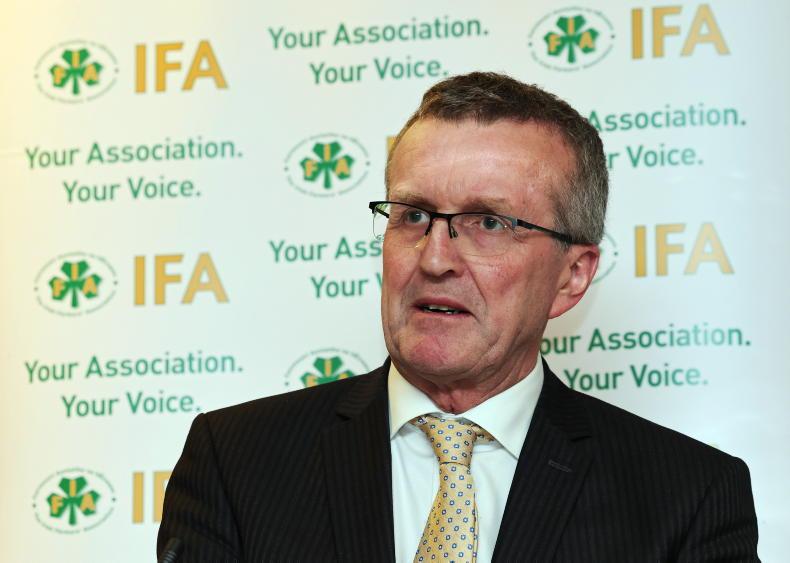
The presidential salary for Tim Cullinan was agreed to be €139,836, although only €54,591 was paid from IFA accounts.
The remainder of the president’s salary is paid through directors’ fees from outside bodies, for positions traditionally held by the IFA president such as FBD and Bord Bia.
Deputy president Brian Rushe’s salary is €40,785, but, again, only €16,280 was paid from IFA accounts, with the remainder coming from director’s fees.
Director general Damian McDonald was paid a combined salary and pension contribution of €221,964, up from €213,152.
The cost of labour replacement for members of the national council amounted to €97,260 for the year.
Post-COVID impact
IFA national treasurer Martin Stapleton said the return of many activities that were restricted during COVID-19 is reflected in the IFA’s expenditure.
“It is difficult to draw comparisons from one year to the next due to the impact of COVID-19 on our activities. The next financial year to March 2023 will reflect a full return to normal activities.
“We have also considerable inflationary pressure in the system, like everybody in the economy. This will pose challenges in terms of managing our resources for next year, and the years ahead,” he said.
Stapleton said his farm organisation is “fortunate to have reasonable reserves”, which have been built up over the years.
“The reality is that in order to go toe to toe with major political institutions such as the EU, our own State and well-resourced global businesses, we need to maintain a strong balance sheet,” he said.