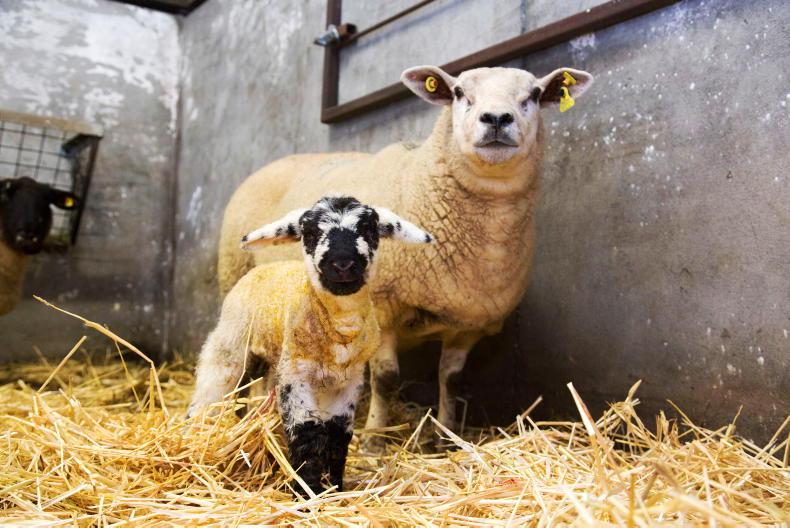
The last year was one of the most challenging in recent times for sheep producers.
Escalating input costs were the main concern but significant weather events including a relatively late spring, a prolonged period of drought, which hit farmers in the east, southeast and midlands hardest, and torrential rainfall in November and December also had a major influence on production systems.
With the normal grass growth curve derailed and farmers not in a position to purchase fertiliser and concentrates to compensate, lamb performance suffered for many. This gave rise to reports of significant challenges in finishing lambs with a poor kill-out and lambs presented was an inadequate or suboptimum fat cover two factors under the spotlight.
System review
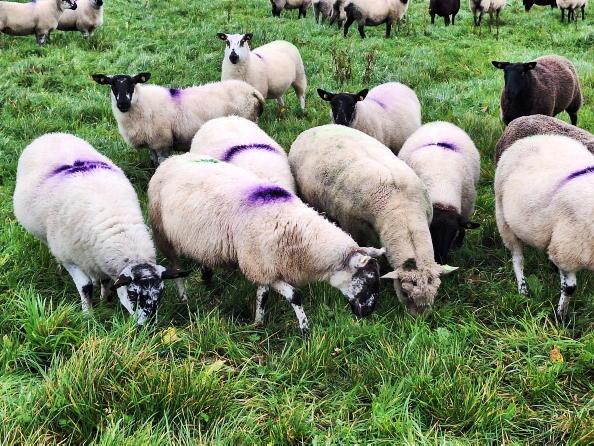
Some farmers who faced particular challenges in finishing ram lambs are said to be reviewing their system and questioning if leaving lambs entire or switching back to castrating is the best option.
There is no hard and fast rule and the decision will be strongly influenced by on-farm factors and taking the experience of previous years into account.
Decisions should also take into account research on lamb castration and the planned route to market.
Looking at research first, trials conducted by Tim Keady and Seamus Hanrahan in Teagasc Mellows Campus, Athenry, show considerable performance benefits from leaving lambs entire.
One such study undertaken to investigate the effect of castrating male lambs on subsequent performance and carcase characteristics included 157 all-male litters in a mid-season, grass-based production system.
In each of the male litters one lamb was selected at random shortly after birth and castrated, while its sibling was left entire.
Trial results
The effect of lamb castration is summarised in Table 1 for the key performance parameters of interest. Leaving lambs entire increased weaning weight by 1.8kg which, in turn reduced age to slaughter by about 16 days.
The research estimates that the reduced age to slaughter obtained from leaving lambs entire is similar to the response obtained from feeding 17kg concentrates per lamb prior to slaughter.
Entire male lambs recorded poorer slaughter performance in terms of killout with lambs achieving a 1% lower killout. Of particular interest in the context of difficulties in achieving a desired fat cover, castrated lambs recorded a higher fat cover.
The fat cover of lambs left entire was still perfectly adequate but it should be noted that to achieve such a fat cover grazing management needs to be good.
Where grass quality is poor or limiting, the differential in the ability of ram lambs to lay down a satisfactory level of fat cover relative to castrates will be inferior.
Marketing and additional factors
There are also numerous other factors that should be included in any review of the production system.
The Islamic religious festivals of Ramadan (22 March to 20 April) and Eid al-Adha (28 June) have a preference for ram lambs while the domestic butcher trade is for wether lambs and factories do not differentiate.
The influence of lamb castration on the store lamb trade differs significantly. When it comes to good-quality lowland or continental breeds, there is generally a preference for castrates. In terms of crossbred or hill lambs destined for intensive finishing systems, the preference in recent years has been firmly in favour of entire ram lambs, although in 2022 demand was poor irrespective of gender due to costs.
A heavy weighting should be given in any decision to previous experience.
If 2022 was a particularly challenging year to finish ram lambs and can be primarily linked to higher input costs, then the reality is that while variable costs may ease back as the season progresses they will still remain above normal levels.
Attention should also be paid to any significant changes such as moving away from offering concentrate supplementation, significant changes in the flock breeding programme or improvements in the quality of forage available/grazing infrastructure.
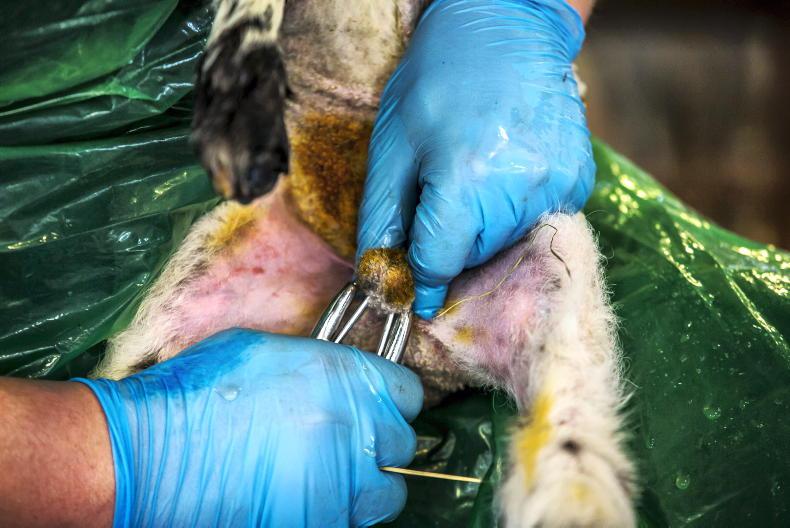
The method of castration in Irish and UK flocks is via rubber ring castration or use of a burdizzo.
There are strict veterinary rules that need to be adhered to on both accounts.
Rubber ring castration, or other methods which also restrict blood flow to the scrotum, can only take place without an anaesthetic during the first week of life.
Some vets recommend administering anti-inflammatory pain relief and trials are taking place in the UK regarding the application of a rubber ring with a specialised applicator that also administers an anti-inflammatory.
Some farmers using the equipment at farm level highlight that a positive outcome from these investigations could extend the window to undertake rubber ring castration, which would be especially beneficial to outdoor lambing flocks.
The burdizzo method of castration can only be carried out up to three months of age and thereafter castration can only be carried out by a veterinary practitioner.
The process of rubber ring castration is relatively straightforward and with experience can be carried out with ease and quickly. The following steps are a good guide to follow.