Farmers have a deep connection to family, history and the land – but few have a link to the past in the way that Edward Guinness, 4th Earl of Iveagh does.
Enjoying the gentle summer breeze in St Patrick’s Park, in Dublin city centre while pictures are being shot for Irish Country Living, Lord Iveagh – who is happy to be called Ned – is animated as he looks to the iconic red-brick building that is The Iveagh Trust, of which he is a board member. Demonstrative of the Guinness family’s famous philanthropic legacy, its mission is to deliver quality and affordable housing in thriving communities.
The soundtrack to our conversation is the peel of the bells at St Patrick’s Cathedral, which he says, “was a restoration passion project of my great-great-grandfather Edward Cecil Guinness completed in 1904”.
And if that wasn’t enough of a treat for the senses, a short walk away you’ll smell malting barley – the distinctive scent of Dublin that leads you to the taste sensation that is a pint of Guinness at St James’s Gate. It was Ned’s great-great-great-great-great grandfather Arthur Guinness who secured that famous 9,000-year lease, creating what is now one of the most iconic brands in the world.
While it’s clear Ned feels at home in the city centre – less than a 20-minute drive from his former childhood home in Farmleigh Estate on the edge of the Phoenix Park – he has spent most of his adult life at Elveden Estate, a 22,500ac Suffolk estate in the UK.
“It was originally bought as a recreational investment when the family floated Guinness. But it was Rupert Guinness who was focused on agriculture. At the time, he faced a lot of challenges, especially with rationing and scarcity during World War II so he converted it into a beef and dairy operation. In the early 80s, my late father sold the milk quota and we went into sugar beet – of which we had 46,000 tonnes of the ATQ Quota [UK Autonomous Tariff Quota].”
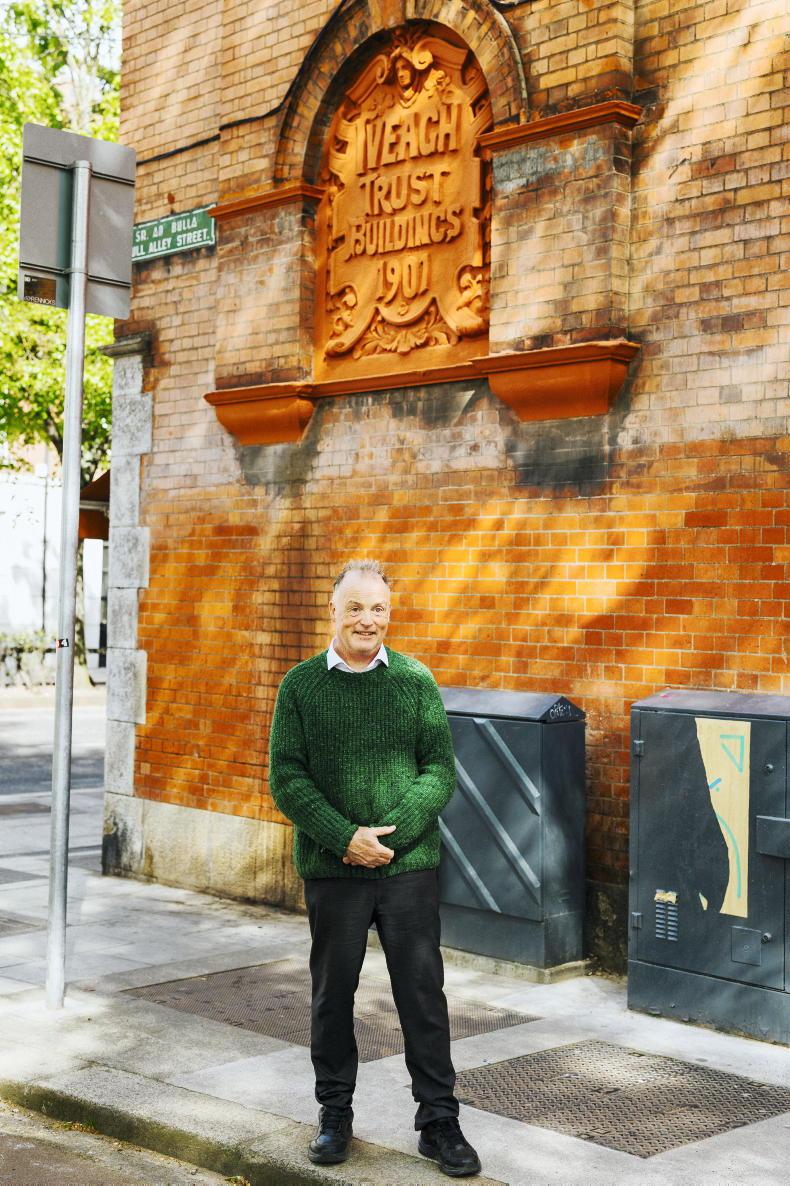
Lord Iveagh Edward Guinness in St Patrick's Cathedral, Co Dublin. \ Tom Clarke
While Ned grew up in Dublin, he was educated in the UK and so it was Elveden where he found comfort when his father died. “I was in my early 20s when my dad died, and the farm was really important to me at that point. I was an agricultural college student and I also had a seat in the House of Lords at that time. So there was more things going on in the UK for me.
“My father loved farming. At Farmleigh, we had an indoor farrowing unit for pigs where I have fond memories of.” There is also a family farm in Meath, “and he loved going to the shows in the RDS and later Tullamore”.
But at Elveden, the focus was arable farming, something Ned has progressed significantly. Next week, global leaders will gather in Ireland for the 14th Nuffield Triennail and Ned will be discussing his farming career at the Nuffield Ireland Agri-Summit.
“From sugar beet, we went into cereals and then started experimenting with onions and potatoes in the mid-eighties, which we discovered we could grow pretty well. So we re-oriented ourselves, put more investment into irrigation. We now have about 140km of ring main around the land supplying all the water.
“Potatoes are supplied to retail multiples and processors [under the brand ‘The Garden of Elveden’] and we’ve got an onion marketing business. Regrettably in my view, we don’t brand our onions in the UK but we grow really good red and brown onions as well as carrots and parsnips. We also have a long-standing relationship with Diageo and we supply malt and barley for their scotch whiskey.”
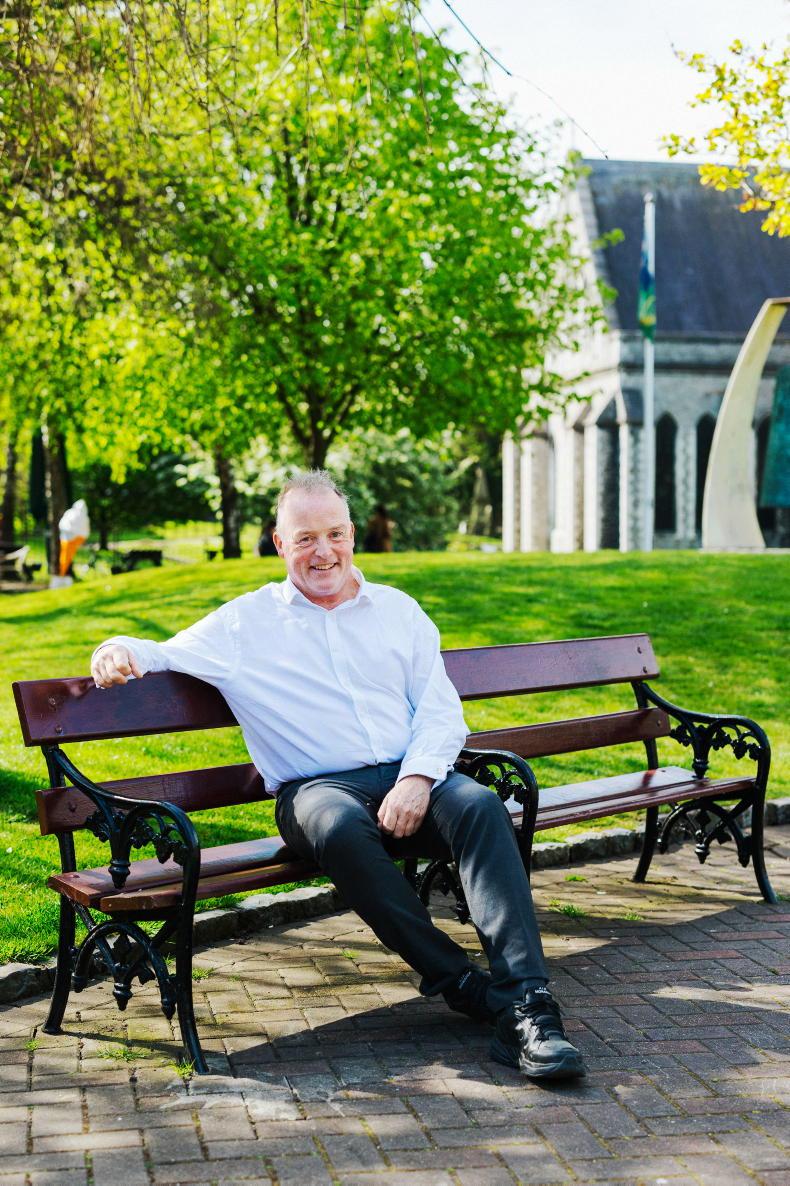
Lord Iveagh Edward Guinness in St Patrick's Cathedral, Co Dublin. \ Tom Clarke
Farming is a tough game though – one which became ever tougher for UK farmers following Brexit. “I didn’t welcome Brexit,” says Ned, frankly. “Personally, I think it’s hideous. I believe UK farmers have really suffered. I mean there isn’t a farmer in the land who hasn’t been drastically impacted financially by exiting the CAP.”
With many UK farmers reporting they are losing money, Ned says margins are very tight.
“We’ve built our third reservoir, which is the best part of 25ac. We’re busy feeding our crops from the winter-abstracted water that we now need because the summers are dry. If you add the capital involved – the pipework, reservoirs, machinery – that we have committed to the farm, we’re talking a very low margin. It’s not just about cash, it’s about commitment.”
Speaking about the family farm in Co Meath, he says, “For years, we were beef finishing – Dad was one of the earliest importers of Charlois. Then we started growing wheat and barley but this year is significant as it is our last season of cereals.”
Ned says the decision to become a solar farm is part of the evolution of the land.“The nation needs more of a power supply. We switch on the lights, and presume it will just come on but we need more energy. Saying that, it can be tough being a farmer and getting a 35-year contract helps you sleep at night. It is good land, but its not like it is irreversible. Should another generation feel it’s not relevant, it can go back into agriculture.”
It seems Ned always has a project on the go, but his recent passion was writing Guinness: A Family Succession with historian Antonio Hart. Released last September, coinciding with the Netflix series House of Guinness, Ned says it was a book he had wanted to write for a long time but the TV release, “kind of spurred me on”.
“The focus is on the first four generations of my family who were brewers and to humanise the humans was absolutely the intent – the real lives rather than some lens that was unreal. In the book, I make the point that there was an awful lot of luck as well as very good judgement. The family was blessed with good health and long lives and producing children that were capable enough to bring the business forward in different ways. And deal with governments, politics and religious movements, all of which impacted the trading position, all of which had to be navigated.”
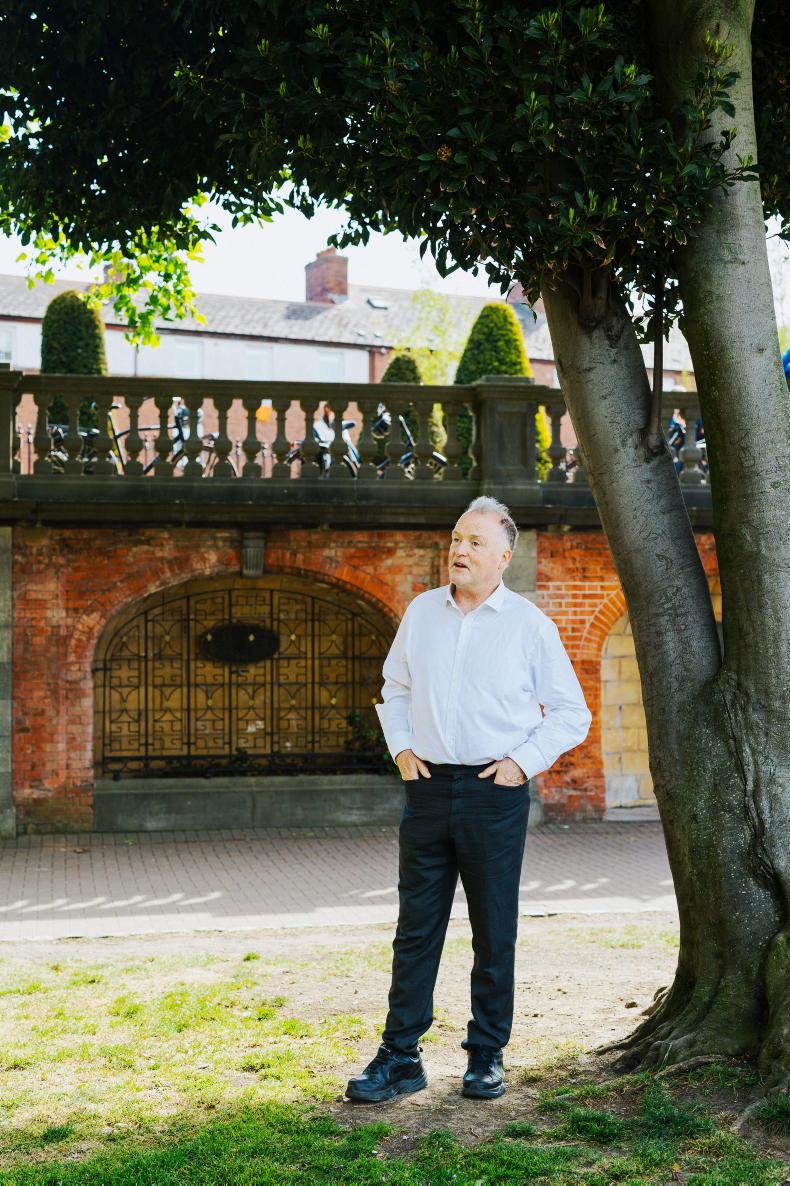
Lord Iveagh Edward Guinness in St Patrick's Cathedral, Co Dublin. \ Tom Clarke
Speaking about the Netflix series, Ned says that television narrows the story down further. “The challenge of growing a business and the mundanity of living doesn’t make for good drama. So the dramatic scenes, some of them I would contest as being true, frankly.”
When asked if he thought it was a good representation of the family story, after a pause, he raises his eyebrow and says, “I try to be diplomatic”. Smiling he continues, “I was privileged to attend the premier. When I watched it at home though, my black labrador stood on the remote control and switched it off two episodes in, so I took that as a sign not to watch the remainder.”
Apart from being a father, a farmer and an author, there is another title that Ned holds dear – being a publican. “Arthur Guinness was a publican, alongside being a brewer so I’m quite proud of the tradition. We have two pubs – the Guinness Arms and Elveden Inn. We also brew our own Elveden Ale and I like to think we serve some of best Guinness you’ll find east of the Irish Sea. Look, I will say Guinness is good for you. Diageo can’t say that but I can,” he says, with a laugh. “I don’t feel bad or unhealthy having a pint of Guinness which I do regularly.”
Lord Iveagh will be in conversation with broadcaster Seán O’Rourke at the upcoming Nuffield Ireland Agri-Summit on the 22 May in Killashee House Hotel, Naas, Co Kildare. Tickets are €175 and are expected to sell quickly. To register your place, visit www.nuffield2026.com
Farmers have a deep connection to family, history and the land – but few have a link to the past in the way that Edward Guinness, 4th Earl of Iveagh does.
Enjoying the gentle summer breeze in St Patrick’s Park, in Dublin city centre while pictures are being shot for Irish Country Living, Lord Iveagh – who is happy to be called Ned – is animated as he looks to the iconic red-brick building that is The Iveagh Trust, of which he is a board member. Demonstrative of the Guinness family’s famous philanthropic legacy, its mission is to deliver quality and affordable housing in thriving communities.
The soundtrack to our conversation is the peel of the bells at St Patrick’s Cathedral, which he says, “was a restoration passion project of my great-great-grandfather Edward Cecil Guinness completed in 1904”.
And if that wasn’t enough of a treat for the senses, a short walk away you’ll smell malting barley – the distinctive scent of Dublin that leads you to the taste sensation that is a pint of Guinness at St James’s Gate. It was Ned’s great-great-great-great-great grandfather Arthur Guinness who secured that famous 9,000-year lease, creating what is now one of the most iconic brands in the world.
While it’s clear Ned feels at home in the city centre – less than a 20-minute drive from his former childhood home in Farmleigh Estate on the edge of the Phoenix Park – he has spent most of his adult life at Elveden Estate, a 22,500ac Suffolk estate in the UK.
“It was originally bought as a recreational investment when the family floated Guinness. But it was Rupert Guinness who was focused on agriculture. At the time, he faced a lot of challenges, especially with rationing and scarcity during World War II so he converted it into a beef and dairy operation. In the early 80s, my late father sold the milk quota and we went into sugar beet – of which we had 46,000 tonnes of the ATQ Quota [UK Autonomous Tariff Quota].”

Lord Iveagh Edward Guinness in St Patrick's Cathedral, Co Dublin. \ Tom Clarke
While Ned grew up in Dublin, he was educated in the UK and so it was Elveden where he found comfort when his father died. “I was in my early 20s when my dad died, and the farm was really important to me at that point. I was an agricultural college student and I also had a seat in the House of Lords at that time. So there was more things going on in the UK for me.
“My father loved farming. At Farmleigh, we had an indoor farrowing unit for pigs where I have fond memories of.” There is also a family farm in Meath, “and he loved going to the shows in the RDS and later Tullamore”.
But at Elveden, the focus was arable farming, something Ned has progressed significantly. Next week, global leaders will gather in Ireland for the 14th Nuffield Triennail and Ned will be discussing his farming career at the Nuffield Ireland Agri-Summit.
“From sugar beet, we went into cereals and then started experimenting with onions and potatoes in the mid-eighties, which we discovered we could grow pretty well. So we re-oriented ourselves, put more investment into irrigation. We now have about 140km of ring main around the land supplying all the water.
“Potatoes are supplied to retail multiples and processors [under the brand ‘The Garden of Elveden’] and we’ve got an onion marketing business. Regrettably in my view, we don’t brand our onions in the UK but we grow really good red and brown onions as well as carrots and parsnips. We also have a long-standing relationship with Diageo and we supply malt and barley for their scotch whiskey.”

Lord Iveagh Edward Guinness in St Patrick's Cathedral, Co Dublin. \ Tom Clarke
Farming is a tough game though – one which became ever tougher for UK farmers following Brexit. “I didn’t welcome Brexit,” says Ned, frankly. “Personally, I think it’s hideous. I believe UK farmers have really suffered. I mean there isn’t a farmer in the land who hasn’t been drastically impacted financially by exiting the CAP.”
With many UK farmers reporting they are losing money, Ned says margins are very tight.
“We’ve built our third reservoir, which is the best part of 25ac. We’re busy feeding our crops from the winter-abstracted water that we now need because the summers are dry. If you add the capital involved – the pipework, reservoirs, machinery – that we have committed to the farm, we’re talking a very low margin. It’s not just about cash, it’s about commitment.”
Speaking about the family farm in Co Meath, he says, “For years, we were beef finishing – Dad was one of the earliest importers of Charlois. Then we started growing wheat and barley but this year is significant as it is our last season of cereals.”
Ned says the decision to become a solar farm is part of the evolution of the land.“The nation needs more of a power supply. We switch on the lights, and presume it will just come on but we need more energy. Saying that, it can be tough being a farmer and getting a 35-year contract helps you sleep at night. It is good land, but its not like it is irreversible. Should another generation feel it’s not relevant, it can go back into agriculture.”
It seems Ned always has a project on the go, but his recent passion was writing Guinness: A Family Succession with historian Antonio Hart. Released last September, coinciding with the Netflix series House of Guinness, Ned says it was a book he had wanted to write for a long time but the TV release, “kind of spurred me on”.
“The focus is on the first four generations of my family who were brewers and to humanise the humans was absolutely the intent – the real lives rather than some lens that was unreal. In the book, I make the point that there was an awful lot of luck as well as very good judgement. The family was blessed with good health and long lives and producing children that were capable enough to bring the business forward in different ways. And deal with governments, politics and religious movements, all of which impacted the trading position, all of which had to be navigated.”

Lord Iveagh Edward Guinness in St Patrick's Cathedral, Co Dublin. \ Tom Clarke
Speaking about the Netflix series, Ned says that television narrows the story down further. “The challenge of growing a business and the mundanity of living doesn’t make for good drama. So the dramatic scenes, some of them I would contest as being true, frankly.”
When asked if he thought it was a good representation of the family story, after a pause, he raises his eyebrow and says, “I try to be diplomatic”. Smiling he continues, “I was privileged to attend the premier. When I watched it at home though, my black labrador stood on the remote control and switched it off two episodes in, so I took that as a sign not to watch the remainder.”
Apart from being a father, a farmer and an author, there is another title that Ned holds dear – being a publican. “Arthur Guinness was a publican, alongside being a brewer so I’m quite proud of the tradition. We have two pubs – the Guinness Arms and Elveden Inn. We also brew our own Elveden Ale and I like to think we serve some of best Guinness you’ll find east of the Irish Sea. Look, I will say Guinness is good for you. Diageo can’t say that but I can,” he says, with a laugh. “I don’t feel bad or unhealthy having a pint of Guinness which I do regularly.”
Lord Iveagh will be in conversation with broadcaster Seán O’Rourke at the upcoming Nuffield Ireland Agri-Summit on the 22 May in Killashee House Hotel, Naas, Co Kildare. Tickets are €175 and are expected to sell quickly. To register your place, visit www.nuffield2026.com
SHARING OPTIONS