Much depends on your location. If you are living in some of the milder areas of the south and coastal counties, the plants will suffer fewer setbacks than if you lived inland or in a frosty area. In that case, bottlebrush might not be for you, but it can be grown in a pot and taken into a greenhouse. Twice in the last decade, in 2010 and this year, bottlebrushes were damaged or killed. They are particularly vulnerable to an extended period of cold, when the cambium growth layer just under the bark is killed. The bark is thin and does not offer much insulation. Even well-established bushes can be killed.
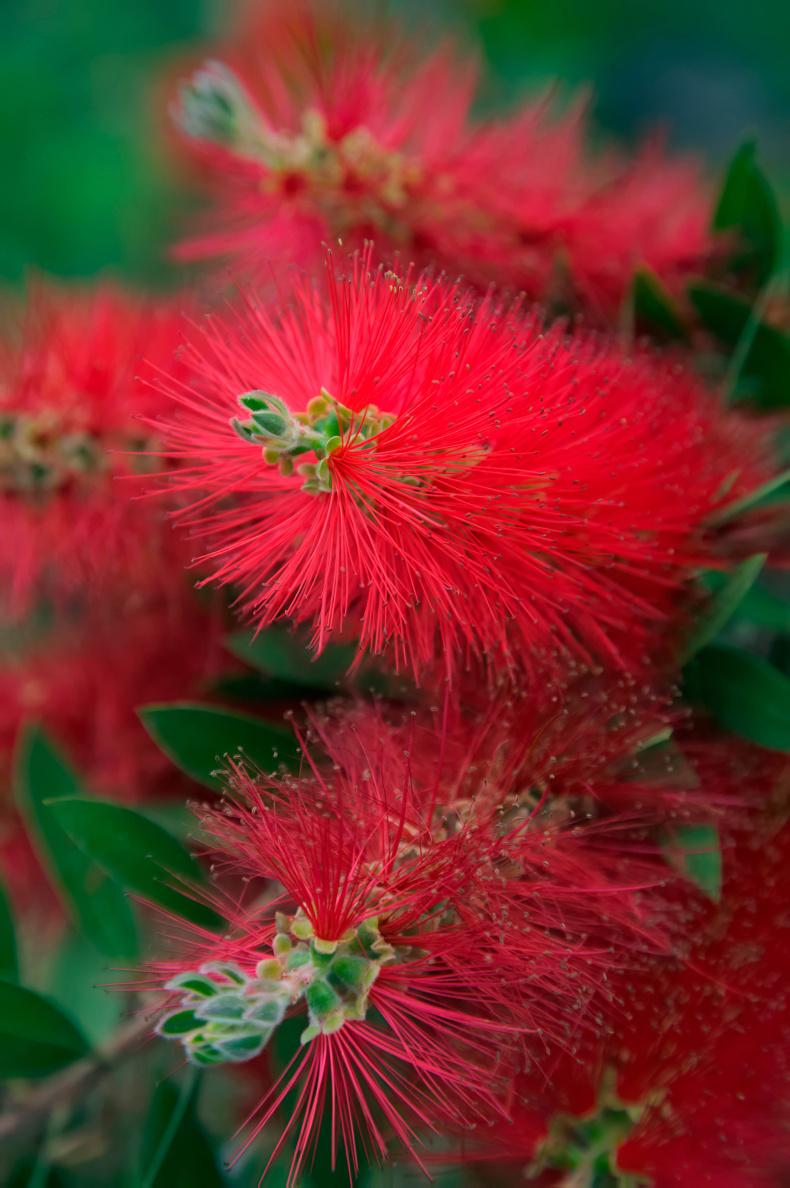
However, having struck that cautionary note, there are few shrubs to rival a bottlebrush in full flower. It is such a good plant that it should be planted again. It is very fast-growing and quickly makes a bush of medium to large size, so it does not take very long to make an impact again. The bottlebrush is aptly named, as the flowers have a very distinctive shape. Each bottlebrush flower is composed of rows of small flowers, with tiny petals and very conspicuous, long, slender stamens. These give the flowers a spiky appearance and cylindrical shape.
The plant is evergreen with narrow leaves, quite tough and leathery. Some of these might fall after a cold winter and give the plant a more sparse appearance than usual. The bush is normally rounded and often has drooping stems, especially when laden with flower spikes in early summer and into mid-summer.
The bottlebrushes are native to the more humid parts of Australia. The most commonly planted kind is the crimson bottlebrush, Callistemon citrinus, known as Splendens, which has bright crimson flowers and silky pinkish new shoots. This is a very lovely plant that comes into flower while still small, often purchased in-flower, and flowers well each year.
There are also white, yellow, pink and mauve forms, belonging to various species, but these are rarely seen in this country, though they are grown in countries with a warmer climate. Sometimes they are seen here too, though not very often.
The white bottlebrush, a greenish white in colour, Callistemon salignus, is sometimes seen in Ireland, as are the pale-yellow flowers of Callistemon pallidus. But these are only worth growing in mild areas, not far from the coast. Mauve Mist is the most likely of the unusual mauve kinds to appear. Callistemon is part of the myrtle family, which includes myrtle, Chilean myrtle, leptospermum and eucalyptus, none of which are reliably hardy, but all appear to some extent in gardens.
Bottlebrush looks great on a sunny day and it has become luxurious looking in the hot weather. Choose a sheltered spot in well-drained soil and in full sunshine. It resists frost better when grown in dry soil as it reacts badly to soil that is wet in winter – the roots can rot if waterlogged. If your soil tends to be wet plant this shrub on a raised mound. The bush, being quite large and with relatively bare lower parts, is best planted in the middle of a border where the lower stems can be screened with border flowers, reaching to about 90cm. As the plant can be quite scraggly and awkward in appearance when it gets older, it is a good idea to shorten back a few branches each year after flowering has finished from a fairly early stage. These shoots sprout again and the new shoots help to better furnish the plant.
Magnificent roses
The hot, dry weather that is causing difficulty for many garden plants gave roses a great boost. The rose varieties grown here are derived from species that originated in countries with warm, sunny summers. In a dull, wet summer roses struggle with dampness and quite often the buds fail to open and rot. The bushes also become badly affected by blackspot disease which causes defoliation and in turn halts or at least reduces flowering.
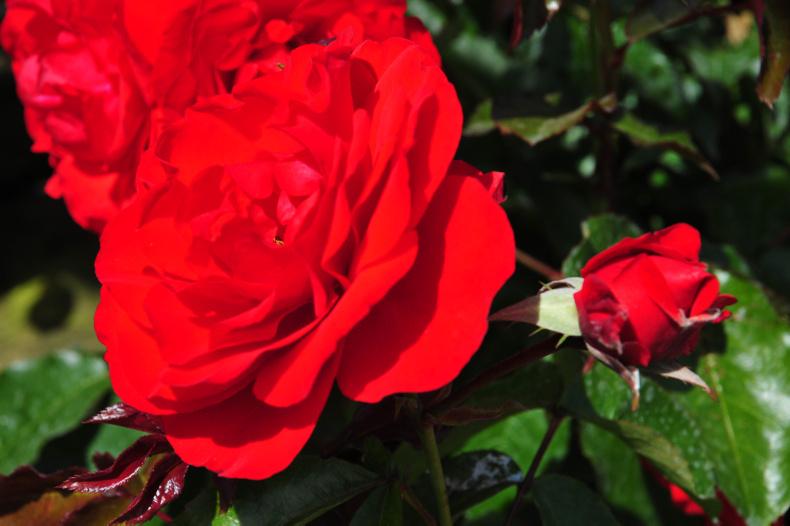
The hot, dry weather that is causing difficulty for many garden plants gave roses a great boost.
But in a sunny summer it could not be more different, roses revel in the bright light and heat. Unless newly planted, roses are deep rooted and can access moisture. But a mulch of well-rotted garden compost would help to maintain growth and flowering.
Fruit and vegetables
Mulch helps to retain moisture in the soil around fruit and vegetables. Use water at minimum level and train plants to make do with less. Target water accurately to where it is needed. If there is some rain, make repeat sowings of vegetables such as lettuce, spinach and other leaf veg.
Flowers
Many perennial plants have wilted or lost their flowers. Do not be in a rush to cut back and tidy up because plants can determine which parts can be retained successfully and parts that winter can supply moisture and nutrients for a time. Continue watering with household waste water.
Trees, shrubs and roses
The end of July is the time to clip hedges, if this has not already been done. Leaving them later makes clipping more difficult. Clipping in strong sunlight can cause burning of the leaves. Roses can be mulched to retain moisture, but do not feed until a fair amount of rain has fallen.
Greenhouse and house plants
Keep up watering and feeding of greenhouse plants, using as much household waste water as possible. Plants can be gradually trained to need less and they often flower better as a result. Watch plants growing in pots especially carefully, because they can dry out rapidly in hot weather.
Lawns
Most lawns are burned brown to some extent. On soil over gravel they are completely brown and although some areas have had some rain, not nearly enough. There is nothing to do but wait until the grass recovers. Indeed, the regrowth might be better furnished with wild flowers than before.
Much depends on your location. If you are living in some of the milder areas of the south and coastal counties, the plants will suffer fewer setbacks than if you lived inland or in a frosty area. In that case, bottlebrush might not be for you, but it can be grown in a pot and taken into a greenhouse. Twice in the last decade, in 2010 and this year, bottlebrushes were damaged or killed. They are particularly vulnerable to an extended period of cold, when the cambium growth layer just under the bark is killed. The bark is thin and does not offer much insulation. Even well-established bushes can be killed.
However, having struck that cautionary note, there are few shrubs to rival a bottlebrush in full flower. It is such a good plant that it should be planted again. It is very fast-growing and quickly makes a bush of medium to large size, so it does not take very long to make an impact again. The bottlebrush is aptly named, as the flowers have a very distinctive shape. Each bottlebrush flower is composed of rows of small flowers, with tiny petals and very conspicuous, long, slender stamens. These give the flowers a spiky appearance and cylindrical shape.
The plant is evergreen with narrow leaves, quite tough and leathery. Some of these might fall after a cold winter and give the plant a more sparse appearance than usual. The bush is normally rounded and often has drooping stems, especially when laden with flower spikes in early summer and into mid-summer.
The bottlebrushes are native to the more humid parts of Australia. The most commonly planted kind is the crimson bottlebrush, Callistemon citrinus, known as Splendens, which has bright crimson flowers and silky pinkish new shoots. This is a very lovely plant that comes into flower while still small, often purchased in-flower, and flowers well each year.
There are also white, yellow, pink and mauve forms, belonging to various species, but these are rarely seen in this country, though they are grown in countries with a warmer climate. Sometimes they are seen here too, though not very often.
The white bottlebrush, a greenish white in colour, Callistemon salignus, is sometimes seen in Ireland, as are the pale-yellow flowers of Callistemon pallidus. But these are only worth growing in mild areas, not far from the coast. Mauve Mist is the most likely of the unusual mauve kinds to appear. Callistemon is part of the myrtle family, which includes myrtle, Chilean myrtle, leptospermum and eucalyptus, none of which are reliably hardy, but all appear to some extent in gardens.
Bottlebrush looks great on a sunny day and it has become luxurious looking in the hot weather. Choose a sheltered spot in well-drained soil and in full sunshine. It resists frost better when grown in dry soil as it reacts badly to soil that is wet in winter – the roots can rot if waterlogged. If your soil tends to be wet plant this shrub on a raised mound. The bush, being quite large and with relatively bare lower parts, is best planted in the middle of a border where the lower stems can be screened with border flowers, reaching to about 90cm. As the plant can be quite scraggly and awkward in appearance when it gets older, it is a good idea to shorten back a few branches each year after flowering has finished from a fairly early stage. These shoots sprout again and the new shoots help to better furnish the plant.
Magnificent roses
The hot, dry weather that is causing difficulty for many garden plants gave roses a great boost. The rose varieties grown here are derived from species that originated in countries with warm, sunny summers. In a dull, wet summer roses struggle with dampness and quite often the buds fail to open and rot. The bushes also become badly affected by blackspot disease which causes defoliation and in turn halts or at least reduces flowering.
The hot, dry weather that is causing difficulty for many garden plants gave roses a great boost.
But in a sunny summer it could not be more different, roses revel in the bright light and heat. Unless newly planted, roses are deep rooted and can access moisture. But a mulch of well-rotted garden compost would help to maintain growth and flowering.
Fruit and vegetables
Mulch helps to retain moisture in the soil around fruit and vegetables. Use water at minimum level and train plants to make do with less. Target water accurately to where it is needed. If there is some rain, make repeat sowings of vegetables such as lettuce, spinach and other leaf veg.
Flowers
Many perennial plants have wilted or lost their flowers. Do not be in a rush to cut back and tidy up because plants can determine which parts can be retained successfully and parts that winter can supply moisture and nutrients for a time. Continue watering with household waste water.
Trees, shrubs and roses
The end of July is the time to clip hedges, if this has not already been done. Leaving them later makes clipping more difficult. Clipping in strong sunlight can cause burning of the leaves. Roses can be mulched to retain moisture, but do not feed until a fair amount of rain has fallen.
Greenhouse and house plants
Keep up watering and feeding of greenhouse plants, using as much household waste water as possible. Plants can be gradually trained to need less and they often flower better as a result. Watch plants growing in pots especially carefully, because they can dry out rapidly in hot weather.
Lawns
Most lawns are burned brown to some extent. On soil over gravel they are completely brown and although some areas have had some rain, not nearly enough. There is nothing to do but wait until the grass recovers. Indeed, the regrowth might be better furnished with wild flowers than before.







SHARING OPTIONS