



Some of our native plants make very good garden flowers. Think of foxgloves, bluebells, purple loosestrife, woodbine and heather. Yarrow, or achillea, is another of this decorative group. Although people might not know it by name, many will be familiar with yarrow growing in rough grass and road verges.
Yarrow has silver-green leaves, with fine woolly hairs. The leaves are divided into narrow, individual segments and that explains the millefolium (thousand-leaves) part of yarrow’s botanical name, which is Achillea millefolium. Milfoil is another name for it, which also refers to this aspect of the plant.
At this time of year, yarrow produces tight, flat heads of small daisy-type flowers.
The flowers are normally a dusty off-white, but sometimes plants with pinkish flowers can be seen by the roadside and the seaside, growing in dry soil amid the grasses behind the dunes.
Over the centuries, gardeners and plant breeders have selected forms of this plant from the wild population and bred from them until the highly-coloured garden varieties have been developed. Some of these have been crossed with a yellow-flowered species to widen the range of colours.
The garden sorts are very pretty in an understated way, retaining some of their wildness and the colours having some of the soft shades of the wild flowers, not least because the flower colours tend to fade as they age.
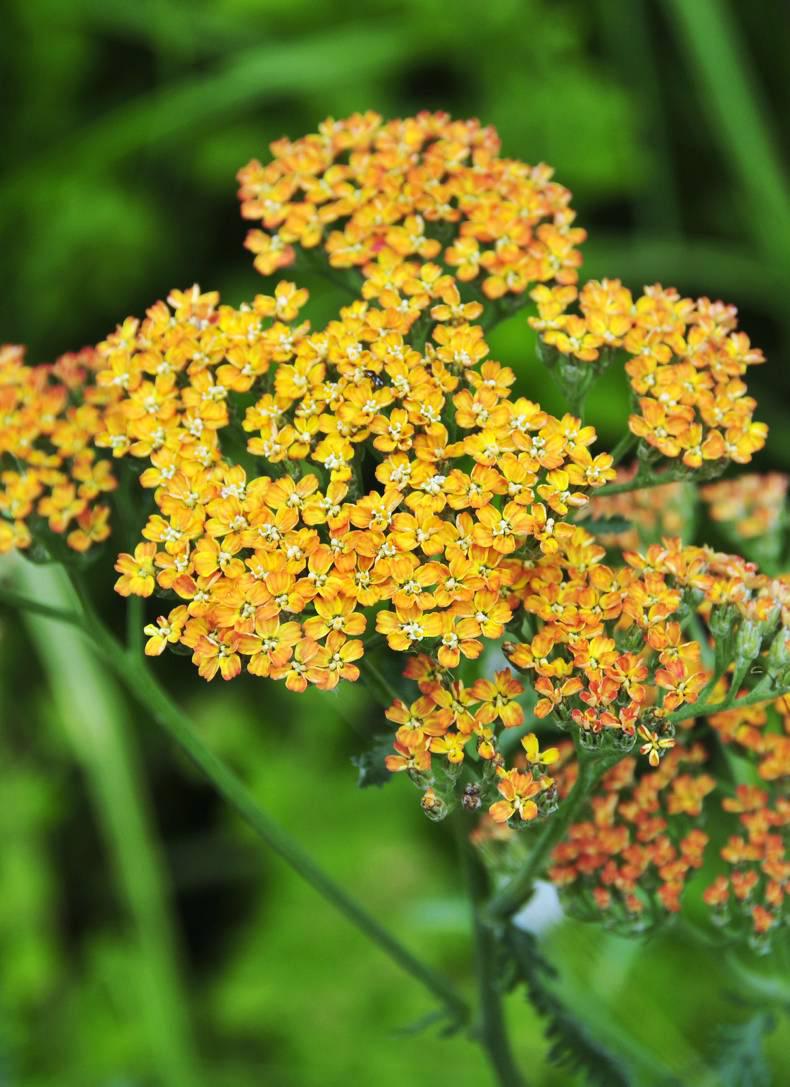
Paprika has orange-red flowers that fade beautifully. Fanal is red, bright red at first, but softening to pale raspberry after a time. Cerise Queen has masses of bright, cerise-pink flowers. Apple Blossom has pink flowers too, but these fade almost to white, hence the name.
Walther Funcke is orange and red, a lovely variety. Terracotta has burnt earthy orange tones. Summerwine has deep wine-red flowers, it is one of the finest modern hybrids. Lilac Beauty is free-flowering, with lilac flowers that fade paler. Heidi is a bright salmon colour with yellow centres.
None of these grow much above knee-height, except in rich, moist soil. They are much shorter on drier soil and well able to cope with tough conditions. It is not unusual to see yarrow growing at the edge of well-worn paths and tracks.
All are good growers, deserving of a place in the garden because they can make a fine show at this time of year. They are not star plants like cannas or dahlias, for instance, but they can be associated with such plants and the combination is very decorative.
When it comes to pests and diseases, they are trouble-free. Being derived from a native plant, they are generally vigorous, robust and weed-resistant. Indeed, some kinds can be a bit too enthusiastic and it is important to select a spot where this plant will not overpower smaller plants.
It is ideal for use in a mixed border with shrubs and other perennials, tall and short. Consider it as a foil for plants with larger flowers, choosing a variety with a shade that complements the star plant.
It is at home with grasses and can be stunning in a prairie-style planting. It can also be used to fill a rough spot in a corner or on a dry bank, where it thrives.
Named varieties can be purchased in-flower and this is a good way to make sure you like the chosen colour. Good plants can be cheaply raised from seeds sown in spring or summer.
Most seed companies offer mixed colours and it is possible to allow these to flower and choose the colours that are most suitable for your garden arrangement. They flower the same year if sown early, or if sown now they will flower next year.
Growing kale
There was a time when kale was a catch-crop used to feed sheep in winter, and curly kale was considered part of a culinary past best forgotten about. But no more.
Kale has found a new role as a super-food, full of vitamins and minerals, and cooked in myriad ways, including crisps.
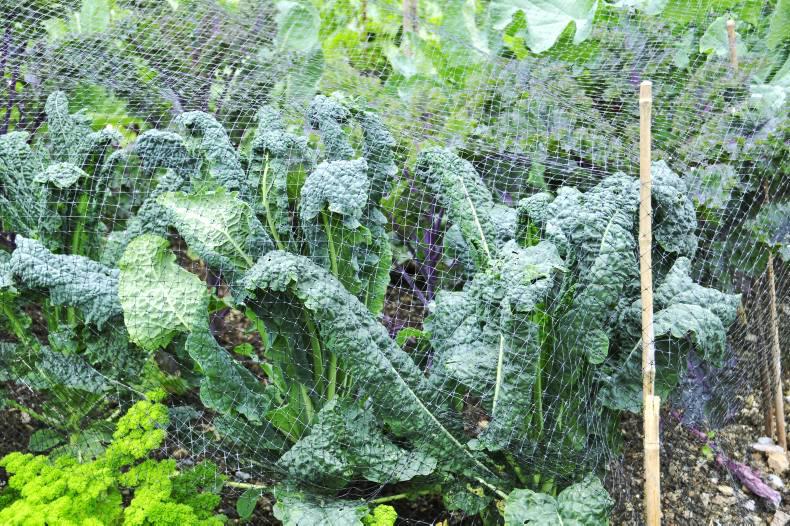
And kale is very easy to grow. It is a hardy, tough plant that grows well in ordinary soil, with very little attention required. It is grown from seeds sown in May or June. It is a bit late to sow kale now, but it should still be alright, or you can get some plants – even a few is plenty.
Cover the plants with fine mesh netting, to keep out butterflies that will lay eggs for cabbage caterpillars.
Flowers
Seeds of perennial flowers, such as lupins, mallows and foxgloves, could be sown now for flowering next year. Bedding plants in pots and baskets will be looking good now, but watering has become more critical as the roots fill the pots. Feeding every two weeks is essential to keep the plants going.
Trees, shrubs & roses
There is rose blackspot disease about and it is necessary to continue to spray rose bushes, especially in the damper parts of the country, after showery days. Early flowering shrub roses and ramblers that have now finished can be pruned by removing some of the shoots that flowered.
Fruit, veg & herbs
Repeat-sow salad vegetables that mature quickly, peas and leaf spinach. Weed control should be kept up to prevent weeds from going to seed and causing trouble in the years to come. Maintain sprays of potato blight when warnings are given. Spray apple and pear trees for scab diseases.
Lawn
After a slow start due to a cold spring, grass got going well, but ran into a dry spell in early summer. Lawns could probably benefit from a second feed now, but this is not necessary if the growth is already good. Feed should not be applied if the weather turns dry and only if rain is due.
Greenhouse & house plants
Take cuttings of all kinds of shrubs now, using two parts peat to one part sand and covering with white polythene. Use rooting powder. Continue watering and feeding greenhouse plants. Be especially careful to water plants in pots or grow-bags regularly.





SHARING OPTIONS