


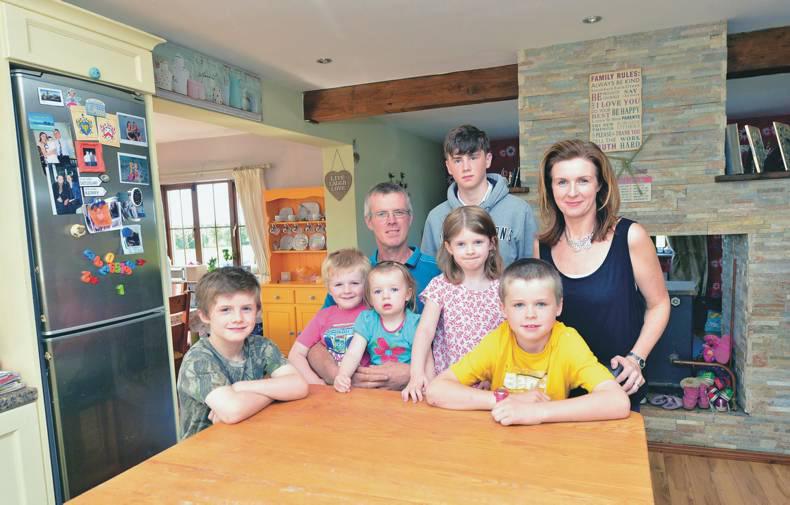
John Dunne (44) is a tillage and suckler farmer and father of six from Caragh, Co Kildare. He was diagnosed with mouth (oral) cancer in June 2014 and has recovered well, but it wasn’t easy at times
“I wasn’t feeling ill at all but I noticed a bit of a lump under my jaw bone, on the right side,” says John. “It wasn’t visible and you’d have to press it to feel it and sometimes it seemed bigger then smaller. I thought it was a swollen gland and it was three or four months before I went to the doctor about it,” he says.
John had a needle biopsy after being referred to a specialist by his GP. Initially, he hoped that it was some kind of infection that could be cured by antibiotics. A needle biopsy was followed by a surgical one.
“The diagnosis of cancer at the base of my tongue came in June last year. It was a shock hearing the consultant say that, but I was told that it would be fully treatable and curable. That helped a lot.”
Many hospital appointments followed.
“It was difficult trying to work in the middle of it,” he admits. “The treatment was going on during the harvest. I was going to the dental hospital as well because teeth had to be removed before they did the radium therapy. Some days it was a case of getting teeth out and then getting back up in the combine. I was having two or three appointments a week, between doctor appointments, treatment and the dental hospital.”
John acknowledges that he and his wife Grainne had great help from family, neighbours and friends during this worrying time.
“We wouldn’t have been able to manage without it,” he says.
HIT WITH A BANG
John had seven weeks of radium treatment last autumn.
“The first two weeks were okay, I drove to the hospital myself,” he says, “but then it hit me with a bang. I couldn’t eat. I lost four stone in a six-week period. I needed to lose one or two but not that much and not in that way. I was in hospital for most of last October because of getting sick so much. It was a relief to see the end of it.”
However, pneumonia struck before Christmas, so it was St Stephen’s day 2015 before John could begin to eat properly again, he says.
“I could then manage part of a proper dinner again, but, overall, I still felt weak and tired. Grainne remarked that in previous years I used to be in the house for two or three hours a day and now it was the other way around – I was outside for two or three hours. It was a reverse situation.”
By Easter, John was feeling a lot stronger but his energy levels are still not quite what they were.
“Although I’m feeling so much better, they’re still not back to normal. What is normal, I wonder?” he says.
John, who gave up smoking in 2009, is not on any medication now and has learned to pace himself, work wise.
“I do a bit, then take a break, then go out again. Even still, I often come in at night and feel absolutely wiped.”
John has a check-up every three months and is now getting on with life. His advice is to be aware of mouth cancer.
“Get checked out if there is anything there,” he says. “Go to the doctor. It’s hard to believe what they are able to treat now. It’s brilliant really what doctors can do. I can’t say enough about the health service. It gets a lot of slating but once I got the diagnosis everything went on very well. Be aware that you can get mouth cancer – that’s what I’d say to everyone.”
CATCHING IT EARLY IS KEY
Dr Conor Mc Allister is a member of Mouth, Head and Neck Cancer Awareness Ireland (MHNCAI), a group of medical professionals concerned about this issue.
About 300 cases of oral (mouth) cancer are diagnosed each year. Mouth Cancer Awareness Day is 16 September. This year, dentists will give any clients who are booked for dental treatment in their surgeries that day, a free mouth cancer examination.
“Many people aren’t aware that you can get cancer in your mouth,” Dr McAllister says.“Our goal is to raise awareness in the dental and health professions as well as in the general public. We are trying to catch the disease in its early stages because it is very curable if it is caught early. The problem is that, 50% of cases are caught at a relatively late stage and the prognosis is then quite poor for this type of cancer.”
The causes of mouth, neck or head cancer are not fully known, but risk factors can include age, gender (men are more likely to get it), smoking, alcohol, sun exposure, diet, HPV virus and chemical exposure.
“Catching the cancer early can be the difference between having a small piece of your tongue or your cheek removed and having radical surgery, ie part of the side of your face taken away – bone or cheek,” he says.
Dentists are asking people if they have anything unusual in their mouth to go to their dentist or doctor without delay.
“If there is any kind of lump in the neck or mouth area, you have to get it checked out,” he says. “Say you had a mouth ulcer that didn’t heal – you need to get that investigated too. Also if you have white or red patches in your mouth, difficulty chewing or swallowing, any unexplained loosening of the teeth or persistent sore throat or hoarseness, get it investigated,” he says.
Remember, too, that even if you wear dentures, you should have a check-up.
“If we can get more people to go for routine check-ups, we can reduce the delay in treatment,” he says.
Treatment depends on what stage the cancer is at, from simple excision of a small piece of tissue in the mouth to surgery, radiotherapy or chemotherapy or a combination of all three.
For more information, see www.dentist.ie and www.cancer.ie. Lia Mills book, In Your Face, details the author’s personal experience of mouth cancer. There is also a documentary featuring her story on RTÉ Radio One’s Documentary On One webpage.
Health Bytes
Water with no fluoride causes decay in teeth
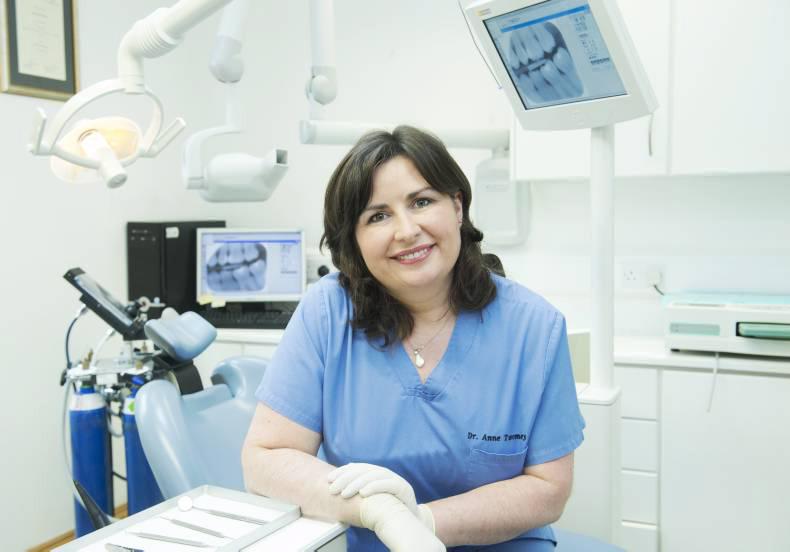
Dr Anne Twomey, president of the Irish Dental Association, believes that private well water is not good for children’s teeth.
“I see a lot of farming children and I notice that they tend to have more tooth decay than urban children,” she says. “I think farming children are disadvantaged because they don’t have the benefit of mains water.”
Private well water doesn’t have fluoride in it, she says.
A sugary diet couldn’t explain all the decay, she says.
“When I discuss diet with them in-depth, very often I’m finding that they are not drinking large amounts of things like fizzy drinks, yet they are still getting this huge decay – children of six with black teeth and abscesses, for example.”
Another problem around well water may be that children don’t like the taste.
“If it has an iron or peaty taste, depending on the area, something sweet is often added to counteract the taste. This sugar does more damage to the teeth.”
If you have your own well and the taste is putting you off, you would be better buying bottled water and not putting any cordial into it, she says.
Farming parents need to give extra attention to children’s teeth if they are using well water, she believes.
“I advise parents to see that their children brush their teeth in the morning with a fluoride toothpaste and again at night, leaving it in their mouths for at least three minutes – I’m strict on that - so that the toothpaste is given a chance to soak in.
We also advice children over six to rinse with a fluoride mouthwash when they come home from school (after eating). This means that fluoride is touching their teeth an extra time in the day. With fluoridated water, every time you drink it, it is touching the teeth and hardening them up and stopping decay.”
Frequent dental check-ups are also advised from when a child is a year old.


SHARING OPTIONS