The trailed C460 is a high specification machine designed to compete with similar machines from the likes of Kuhn, Kverneland and Lucas.
Now with some experience under its green paint, we recently got our hands on McHale’s unit to see just how it performed. John McHale brought down a demo McHale C460 and thoroughly went through all aspects of the machine before leaving it with us. Next week, we look at the performance of the Kverneland Taarup 853 machine.
Good first impressions
First impressions are that it is well built and well finished. The C460 is a trailed machine and the only configuration offered. Mounted machines, though more manoeuvrable, require a robust tractor with an equally robust lift to handle one with a silage bale in it.
John McHale says the C460 will handle all shapes and sizes or material, silage, haylage and straw in pit form and bales, square and round. It will easily handle two 4x4 bales (figures quoted below says up to 1.5 metres), one in the chamber and one on the door, or an 8x4x4 big square bale (uprights and chain come with it for tailgate).
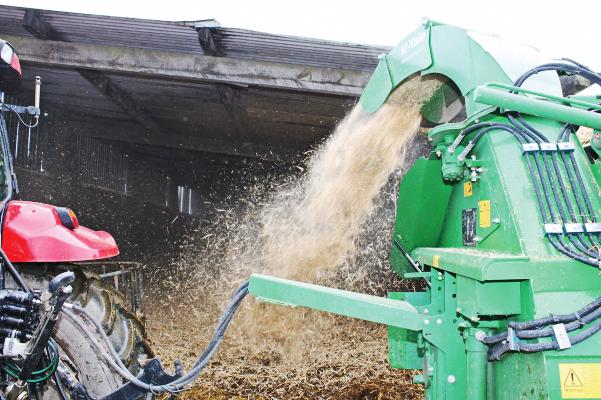
The McHale design is similar to other mainstream brands out there in that a chain and slat floor feeds a horizontal rotor with triangular, combine knife like sections which cut up the material. These are discs on the rotor with serrated fingers helping to pull and feed material into the flywheel. The flywheel then blows the material out through a chute which is directed with a small electric joystick in the cab.
Basic tractor requirements are a minimum of 70hp, 540 pto, an electrical supply and oil supply with one single acting valve with a free-flow return. John says that if the chopper is in regular use a free-flow return is desirable.
Hydraulic functions include: chute rotation and curvature, tailgate, floor drive, rotor top guard and engagement or rotor drive.
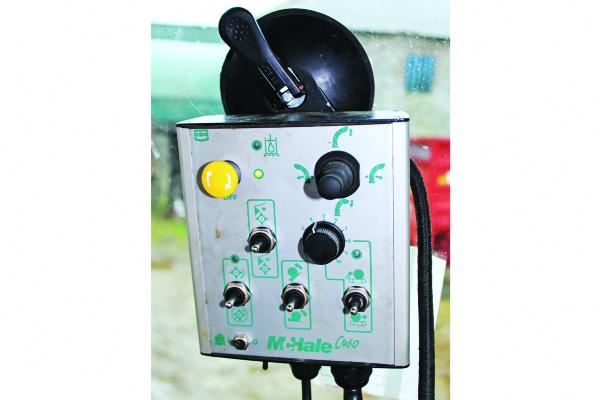
All of the machine’s hydraulic functions are controlled on McHale’s in-cab control unit. RDS Electronics manufacture the control units for McHale (pictured below), as well as many other agricultural equipment manufacturers.
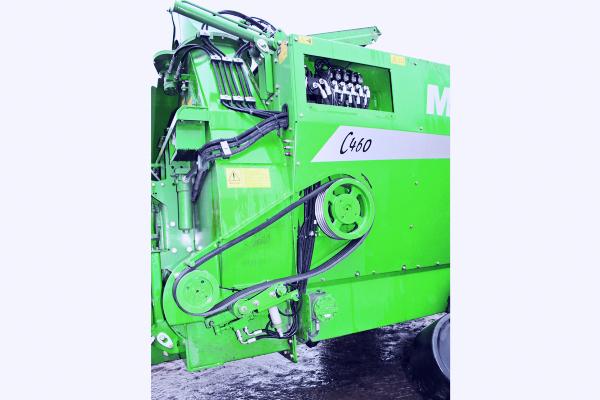
Taking the drive from the tractor to the machine is a wide-angle pto with slip clutch and over-run clutch. A two-speed Comer gearbox drives the chopping rotor and flywheel, slow speed for feeding out silage and the faster speed for blowing straw. The chain and slat floor feeds the bale or pit silage into the rotor for blowing or feeding out.
Operation action plans
Before you begin to operate the machine, you need to decide on the appropriate gearbox speed — slow for feeding out silage or fast for blowing out straw.
With the tractor hydraulics in constant pumping, the tailgate is lowered and the bale either placed on it with a loader or scooped up by reversing into it.
The tailgate and the slatted floor can be operated from the ground with another set of controls at the rear. To close the tailgate, a safety button has to be pressed by your right hand while the left operates the controls.
With the bale on board, start the tractors pto at a little above engine tick-over John advises. This will help clear the flywheel.
Bring the pto up to speed and then engage the chopping rotor. The floor can then be engaged. John recommends setting the floor speed to setting four or five until you can determine the best feed rate for the bale.
Continuous or ‘pulse’ floor feed can be selected, according to John. The pulse option is designed to cater for the ‘leaves’ in a large square bale.
Hitched to the farm CaseIH Maxxum 100, we did a trial run with both straw and silage. Despite what I felt was a conservative minimum power requirement of just 70hp, to my surprise the tractor handled with absolute ease.
John assured me that the McHale C460 doesn’t require massive power; he recently set one up on a Ford 5000. The machine can be started by a low horsepower tractor as the rotor is engaged after the flywheel is up and running.
The rotor is fitted with 48 knives arranged in pairs, which John explains provides the best results.
There is an adjustable knife-like shearbar above the flywheel to keep it clear of debris and help prevent blockages.
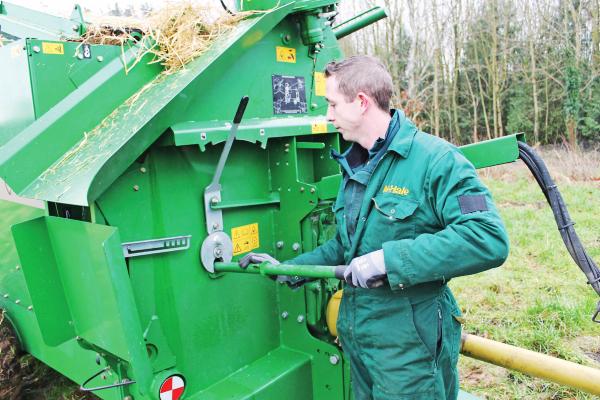
Even if it does become blocked, there is an access hole plus corresponding holes in the flywheel where it can be physically un-jammed with a lever provided.
User reaction
We brought the McHale C460 to neighbouring farmer, Aidan Murphy to give it a run. Aidan’s farm is set up for feeding silage and blowing straw with a three point linkage mounted Kuhn Primor 2060. The Kuhn is of a similar concept to the McHale in that it is a uses chains and slats to feed a rotor with a flywheel blowing the material out.
For Aidan’s shed set-up, the three-point linkage chopper is ideal; the McHale trailed machine worked out well. Aidan found that the C460 did appear to blow the straw a bit further but, remember, his Kuhn already has completed several seasons.
Aidan found that the reaction time of the chute was very fast from bedding beside the tractor to blowing it the full length of the shed. The straw itself was ‘bruised’ but still relatively intact which John McHale explains makes it more absorbent.
With the shed’s successfully bedded, it was silage feeding time. On the C460, there is an adjustable tray to help feed out the crop. The chute is very manoeuvrable so you could blow the silage directly on the ground beside the tractor.
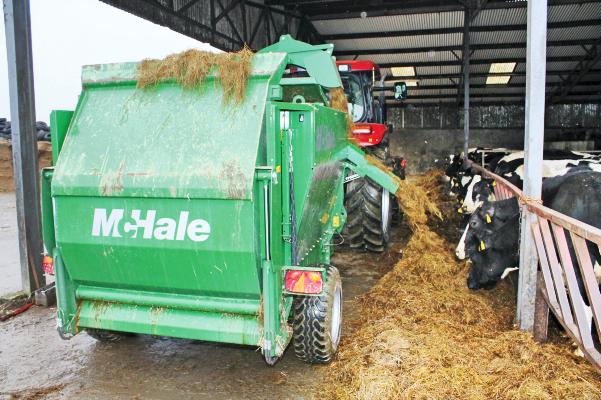
Aidan does not like this approach as the cattle are waiting for the feed. On the McHale machine, there is an adjustable tray onto which Aidan directed the silage and it dropped off harmlessly to the waiting cattle. Feed out was very smooth and easy, so there was very little adjustment of the forward speed.
McHale
C460 bale chopper and blower specifications
Minimum hp: 51kW (70hp)
Unladen weight: 2,015kg
Length (door open): 5.5m
Length (door closed): 4.2m
Width: 2.02m
Body height: 2.45m
Bale chamber (W X H X L): 1,350 x 1,220 x 1,400mm
Bale capacity: 2 x 1.5m diameter bales
Control : Electrical with joystick chute control
Max discharge distance: 18m
Number of conveyor slats: 10
Number of discs on rotor: 6
Number of knives: 48
Gearbox: Comer twin speed independent
Rotor drive type: High torque belt drive
PTO: 540 with slip and over-run protection.
Conveyor drive: Hydraulic
Chute rotation: 300 degrees
Chute composition: Three-stage
Tyres: 10.0/ 75 to 15.3
Tractor mounting: Drawbar
Blower paddles: 6
Minimal oil flow: 35 litres/ minute at 160 bar
Tractor hydraulics: 1 x feed, 1 x return
Full retail price: €19,800, including VAT.
The trailed C460 is a high specification machine designed to compete with similar machines from the likes of Kuhn, Kverneland and Lucas.
Now with some experience under its green paint, we recently got our hands on McHale’s unit to see just how it performed. John McHale brought down a demo McHale C460 and thoroughly went through all aspects of the machine before leaving it with us. Next week, we look at the performance of the Kverneland Taarup 853 machine.
Good first impressions
First impressions are that it is well built and well finished. The C460 is a trailed machine and the only configuration offered. Mounted machines, though more manoeuvrable, require a robust tractor with an equally robust lift to handle one with a silage bale in it.
John McHale says the C460 will handle all shapes and sizes or material, silage, haylage and straw in pit form and bales, square and round. It will easily handle two 4x4 bales (figures quoted below says up to 1.5 metres), one in the chamber and one on the door, or an 8x4x4 big square bale (uprights and chain come with it for tailgate).
The McHale design is similar to other mainstream brands out there in that a chain and slat floor feeds a horizontal rotor with triangular, combine knife like sections which cut up the material. These are discs on the rotor with serrated fingers helping to pull and feed material into the flywheel. The flywheel then blows the material out through a chute which is directed with a small electric joystick in the cab.
Basic tractor requirements are a minimum of 70hp, 540 pto, an electrical supply and oil supply with one single acting valve with a free-flow return. John says that if the chopper is in regular use a free-flow return is desirable.
Hydraulic functions include: chute rotation and curvature, tailgate, floor drive, rotor top guard and engagement or rotor drive.
All of the machine’s hydraulic functions are controlled on McHale’s in-cab control unit. RDS Electronics manufacture the control units for McHale (pictured below), as well as many other agricultural equipment manufacturers.
Taking the drive from the tractor to the machine is a wide-angle pto with slip clutch and over-run clutch. A two-speed Comer gearbox drives the chopping rotor and flywheel, slow speed for feeding out silage and the faster speed for blowing straw. The chain and slat floor feeds the bale or pit silage into the rotor for blowing or feeding out.
Operation action plans
Before you begin to operate the machine, you need to decide on the appropriate gearbox speed — slow for feeding out silage or fast for blowing out straw.
With the tractor hydraulics in constant pumping, the tailgate is lowered and the bale either placed on it with a loader or scooped up by reversing into it.
The tailgate and the slatted floor can be operated from the ground with another set of controls at the rear. To close the tailgate, a safety button has to be pressed by your right hand while the left operates the controls.
With the bale on board, start the tractors pto at a little above engine tick-over John advises. This will help clear the flywheel.
Bring the pto up to speed and then engage the chopping rotor. The floor can then be engaged. John recommends setting the floor speed to setting four or five until you can determine the best feed rate for the bale.
Continuous or ‘pulse’ floor feed can be selected, according to John. The pulse option is designed to cater for the ‘leaves’ in a large square bale.
Hitched to the farm CaseIH Maxxum 100, we did a trial run with both straw and silage. Despite what I felt was a conservative minimum power requirement of just 70hp, to my surprise the tractor handled with absolute ease.
John assured me that the McHale C460 doesn’t require massive power; he recently set one up on a Ford 5000. The machine can be started by a low horsepower tractor as the rotor is engaged after the flywheel is up and running.
The rotor is fitted with 48 knives arranged in pairs, which John explains provides the best results.
There is an adjustable knife-like shearbar above the flywheel to keep it clear of debris and help prevent blockages.
Even if it does become blocked, there is an access hole plus corresponding holes in the flywheel where it can be physically un-jammed with a lever provided.
User reaction
We brought the McHale C460 to neighbouring farmer, Aidan Murphy to give it a run. Aidan’s farm is set up for feeding silage and blowing straw with a three point linkage mounted Kuhn Primor 2060. The Kuhn is of a similar concept to the McHale in that it is a uses chains and slats to feed a rotor with a flywheel blowing the material out.
For Aidan’s shed set-up, the three-point linkage chopper is ideal; the McHale trailed machine worked out well. Aidan found that the C460 did appear to blow the straw a bit further but, remember, his Kuhn already has completed several seasons.
Aidan found that the reaction time of the chute was very fast from bedding beside the tractor to blowing it the full length of the shed. The straw itself was ‘bruised’ but still relatively intact which John McHale explains makes it more absorbent.
With the shed’s successfully bedded, it was silage feeding time. On the C460, there is an adjustable tray to help feed out the crop. The chute is very manoeuvrable so you could blow the silage directly on the ground beside the tractor.
Aidan does not like this approach as the cattle are waiting for the feed. On the McHale machine, there is an adjustable tray onto which Aidan directed the silage and it dropped off harmlessly to the waiting cattle. Feed out was very smooth and easy, so there was very little adjustment of the forward speed.
McHale
C460 bale chopper and blower specifications
Minimum hp: 51kW (70hp)
Unladen weight: 2,015kg
Length (door open): 5.5m
Length (door closed): 4.2m
Width: 2.02m
Body height: 2.45m
Bale chamber (W X H X L): 1,350 x 1,220 x 1,400mm
Bale capacity: 2 x 1.5m diameter bales
Control : Electrical with joystick chute control
Max discharge distance: 18m
Number of conveyor slats: 10
Number of discs on rotor: 6
Number of knives: 48
Gearbox: Comer twin speed independent
Rotor drive type: High torque belt drive
PTO: 540 with slip and over-run protection.
Conveyor drive: Hydraulic
Chute rotation: 300 degrees
Chute composition: Three-stage
Tyres: 10.0/ 75 to 15.3
Tractor mounting: Drawbar
Blower paddles: 6
Minimal oil flow: 35 litres/ minute at 160 bar
Tractor hydraulics: 1 x feed, 1 x return
Full retail price: €19,800, including VAT.








SHARING OPTIONS