Mark Carroll from Ballaghaderreen in Co Roscommon has had a very dynamic career in the farm machinery world so far. He has worked on machinery around the globe and built up a lot of experience along the way.
Over the past number of years Mark has been following the harvest working with large contracting and farm businesses. He has been hands on not only in the operation of large machines but also in their maintenance and upkeep.
The Irish Farmers Journal sat down with Mark to discuss his experiences and listen to the advice he would share with young people interested in working in this area.
Background
“I grew up in England before moving to Roscommon when I was 10 years old. My love for machinery started from a very young age. I remember seeing my very first tractor and excavator at five years of age and was taken in ever since,” Mark said.
I was never a gifted farm machinery operator but my motto in life has always been to die trying
He went to secondary school in St Nathy’s College and studied agricultural science and went on to do the Green Cert in Mountbellew Agricultural College in Galway. Mark was awarded student of the year in Mounbellew but ironically he failed the practical test to attach a trailer to a tractor.
“One of my classmates gave me a hard time over this and said I would never be able to handle big machinery or work for a contractor,” said Mark. This experience was probably the catalyst that drove him on to improve his skills. “I was never a gifted farm machinery operator but my motto in life has always been to die trying,” he said.
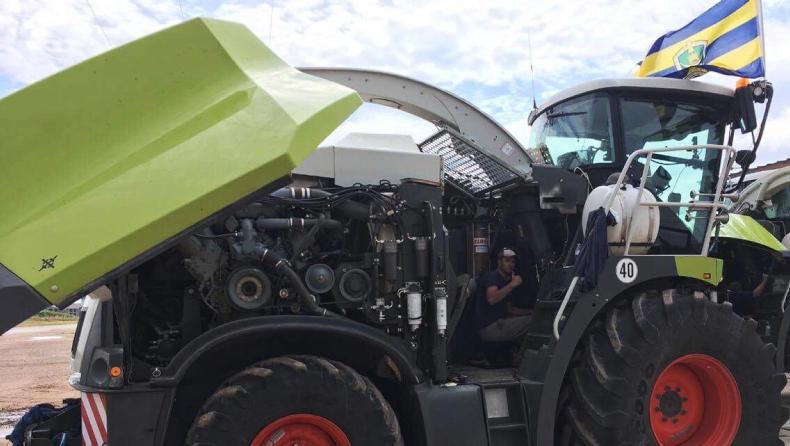
It's not all about driving, you have to be willing to service the machinery too, according to Mark.
When Mark was old enough to drive farm machinery there were not many opportunities. He applied for silage contracting jobs but was rejected because he hadn’t enough tractor driving experience. “At the time there was a real fight for summer jobs, especially for silage contracting. It’s gone full circle now though” he said.
After Mountbellew he went to study for an agricultural engineering diploma in land-based technology in Reaseheath College, Cheshire, England. “I learned a lot about agricultural engineering in Reaseheath and thought it was a very worthwhile course,” he said.
After finishing the course, he returned to Ireland and worked with earth-moving equipment, landscaping and tree felling. He also worked for civil engineering companies with earth-moving machinery and large solar farm installations in the UK.
“This was all very good experience too but it wasn’t the direction I wanted to go long term,” Mark said.
Travel
Back in 2012 he met up with a college friend Peter Clinton who had moved to New Zealand to manage a large-scale dairy farm.
“Peter and his dad Tom convinced me to visit New Zealand because of the opportunities there and I think it was the best thing I ever did,” said Mark. “I was amazed by the scale of the farms, the general good climate and most of all the similarities between machinery over there and what we have here in Ireland and the UK.” In New Zealand he started working on excavation equipment but it wasn’t long before he ended up working with silage machinery.
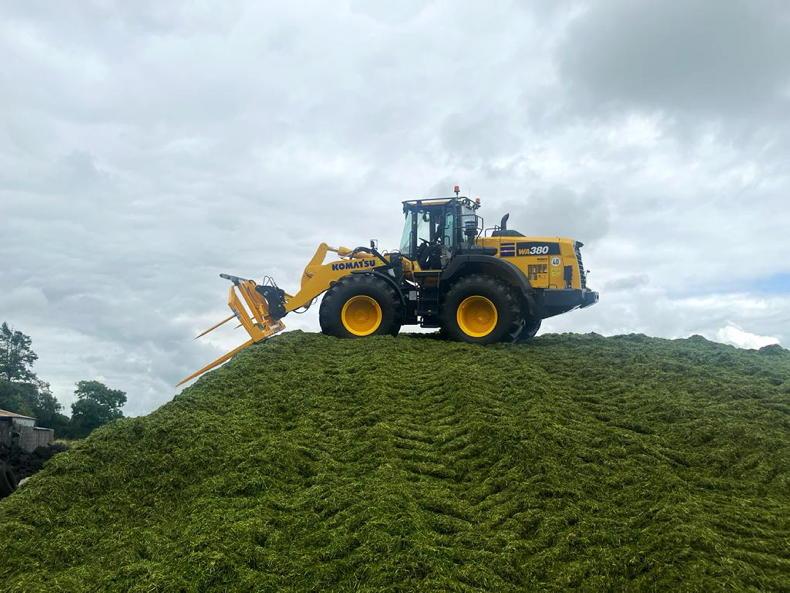
“By accident one day I got the chance to drive a loading shovel for silage contractors. This was a dream for me ever since I saw buckrakes on silage pits back home,” he said.
Mark completed three seasons in New Zealand, mainly in Southland and Otago. He was taken aback by the working distance covered by companies such as D Thompson and R Jack. “I mainly worked with a JCB 435S loading shovel in New Zealand and I found it to be a very tidy machine for clamp work,” he said.
“After my second season in New Zealand I felt I needed another challenge so I went to Suffolk in the UK to work in Westrope farming,” said Mark. Westrope Farming Ltd is an 8,500ac second-generation family-run arable and vegetable farm. Mark really enjoyed working on the farm because he got experience with harvesting and root crop machinery.
You have to be prepared to work long hours and you can be located in very rural areas, but the right attitude will take you a long way
“Most of all, the people were lovely. Andy Rankin and Duncan Fleming provided me with a lot of challenges,” he said. On the farm he operated large cereal and cultivation equipment and also learned about maintaining these machines. “I got great experience with vegetable crops such as carrots, onions and potatoes, which was a first for me,” he explained.
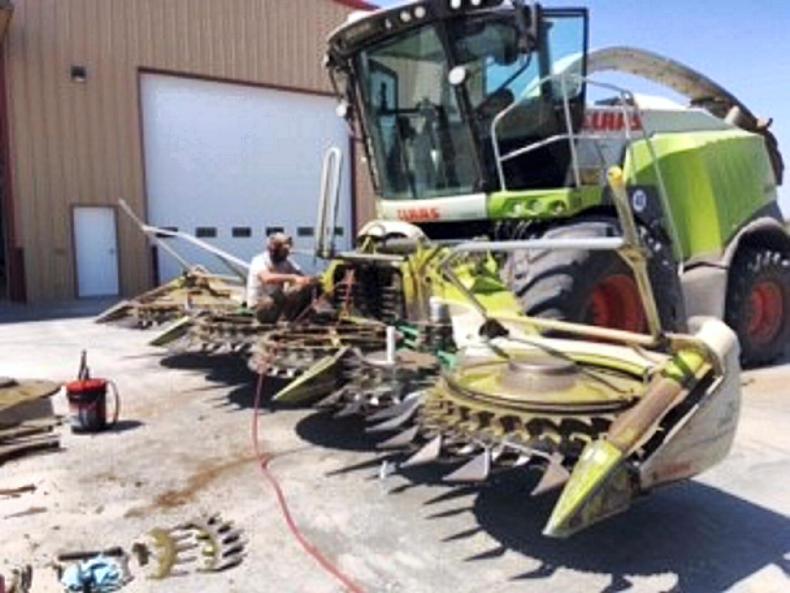
Mark drove and serviced this CLAAS Jaguar 980 in Texas, chopping alfalfa and maize crops.
The lure of travel called again and in 2017 Mark headed for Dalhart, Texas, this time to work for PMS & Harvesting. This is a family-run business chopping wheat, alfalfa, sorghum, triticale, earlage, and corn across the Texas Panhandle, New Mexico, and Oklahoma. Here he really enjoyed chopping alfalfa and maize with a Claas Jaguar 980.
Under the mechanic Justin Ferguson, Mark was given great guidance carrying out major refurbishments on machinery too.
“This is where I got the opportunity to put what I learned in Reaseheath College into action,” Mark recalled. The scale of the operation in Texas was the biggest he came across out of all his time travelling. “We were chopping crops for 50,000-cow dairy farms, but here every load was weighed and every second load was quality-tested,” he explained.
There were a lot of other Irish people, northern Irish and Kiwis working in Texas and, according to Mark, they were highly skilled operators so there was no messing about when work started.
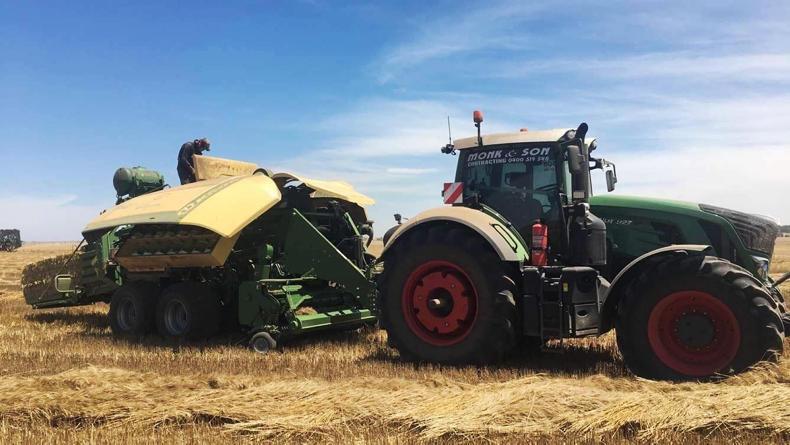
In Australia he operated this Krone Big Pack 1290 large square baler where all types of hay was baled for export.
After his stint in Texas, Mark went to southwest Victoria in Australia. Here he worked with Monk and Son Ag Services and was in charge of the Krone Big Pack 1290 large square baler. “All types of hay goes for export from there including ordinary pasture hay, vetch, alfalfa and wheaten hay and I thought the Big Pack was an excellent machine to make high-density bales,” he said.
Mark is currently back in Australia contracting.
Mark plans to become more involved in the sales and export side of the machinery sector. With the experience he has picked up over the years, he feels he is in a good position to work in this area.
He is confident the machinery sector is a good career path for young people: “The opportunities are huge to earn good money, but you have to be prepared to work.” Mark said it is important that young people try to get their qualifications before setting out travelling. He says qualifications such as a completed apprenticeship or an engineering diploma will all help in the long run. This is because there is a huge shortage of qualified engineers out there.
“Hopefully in the future there will be some sort of recognised operators card or qualification because machinery is getting very hi-tech now,” he said.
In terms of travel and working for large-scale operators, Mark warned that it is not for the faint-hearted. “You have to be prepared to work long hours and you can be located in very rural areas, but the right attitude will take you a long way,” he explained.
He went on to say that young people should not be fooled by the air-brushed social media videos. “There are challenges like the weather, breakdowns, working for different types of managers and you have to be willing not only to drive the machines but also maintain them regularly,” Mark said.
Once these factors are taken into consideration, he said there are huge opportunities for young people, especially in Australia, Canada, America and New Zealand. “It always amazes me how young Irish lads and girls adapt to different environments and thrive” Mark concluded.
Mark Carroll from Ballaghaderreen in Co Roscommon has had a very dynamic career in the farm machinery world so far. He has worked on machinery around the globe and built up a lot of experience along the way.
Over the past number of years Mark has been following the harvest working with large contracting and farm businesses. He has been hands on not only in the operation of large machines but also in their maintenance and upkeep.
The Irish Farmers Journal sat down with Mark to discuss his experiences and listen to the advice he would share with young people interested in working in this area.
Background
“I grew up in England before moving to Roscommon when I was 10 years old. My love for machinery started from a very young age. I remember seeing my very first tractor and excavator at five years of age and was taken in ever since,” Mark said.
I was never a gifted farm machinery operator but my motto in life has always been to die trying
He went to secondary school in St Nathy’s College and studied agricultural science and went on to do the Green Cert in Mountbellew Agricultural College in Galway. Mark was awarded student of the year in Mounbellew but ironically he failed the practical test to attach a trailer to a tractor.
“One of my classmates gave me a hard time over this and said I would never be able to handle big machinery or work for a contractor,” said Mark. This experience was probably the catalyst that drove him on to improve his skills. “I was never a gifted farm machinery operator but my motto in life has always been to die trying,” he said.
It's not all about driving, you have to be willing to service the machinery too, according to Mark.
When Mark was old enough to drive farm machinery there were not many opportunities. He applied for silage contracting jobs but was rejected because he hadn’t enough tractor driving experience. “At the time there was a real fight for summer jobs, especially for silage contracting. It’s gone full circle now though” he said.
After Mountbellew he went to study for an agricultural engineering diploma in land-based technology in Reaseheath College, Cheshire, England. “I learned a lot about agricultural engineering in Reaseheath and thought it was a very worthwhile course,” he said.
After finishing the course, he returned to Ireland and worked with earth-moving equipment, landscaping and tree felling. He also worked for civil engineering companies with earth-moving machinery and large solar farm installations in the UK.
“This was all very good experience too but it wasn’t the direction I wanted to go long term,” Mark said.
Travel
Back in 2012 he met up with a college friend Peter Clinton who had moved to New Zealand to manage a large-scale dairy farm.
“Peter and his dad Tom convinced me to visit New Zealand because of the opportunities there and I think it was the best thing I ever did,” said Mark. “I was amazed by the scale of the farms, the general good climate and most of all the similarities between machinery over there and what we have here in Ireland and the UK.” In New Zealand he started working on excavation equipment but it wasn’t long before he ended up working with silage machinery.
“By accident one day I got the chance to drive a loading shovel for silage contractors. This was a dream for me ever since I saw buckrakes on silage pits back home,” he said.
Mark completed three seasons in New Zealand, mainly in Southland and Otago. He was taken aback by the working distance covered by companies such as D Thompson and R Jack. “I mainly worked with a JCB 435S loading shovel in New Zealand and I found it to be a very tidy machine for clamp work,” he said.
“After my second season in New Zealand I felt I needed another challenge so I went to Suffolk in the UK to work in Westrope farming,” said Mark. Westrope Farming Ltd is an 8,500ac second-generation family-run arable and vegetable farm. Mark really enjoyed working on the farm because he got experience with harvesting and root crop machinery.
You have to be prepared to work long hours and you can be located in very rural areas, but the right attitude will take you a long way
“Most of all, the people were lovely. Andy Rankin and Duncan Fleming provided me with a lot of challenges,” he said. On the farm he operated large cereal and cultivation equipment and also learned about maintaining these machines. “I got great experience with vegetable crops such as carrots, onions and potatoes, which was a first for me,” he explained.
Mark drove and serviced this CLAAS Jaguar 980 in Texas, chopping alfalfa and maize crops.
The lure of travel called again and in 2017 Mark headed for Dalhart, Texas, this time to work for PMS & Harvesting. This is a family-run business chopping wheat, alfalfa, sorghum, triticale, earlage, and corn across the Texas Panhandle, New Mexico, and Oklahoma. Here he really enjoyed chopping alfalfa and maize with a Claas Jaguar 980.
Under the mechanic Justin Ferguson, Mark was given great guidance carrying out major refurbishments on machinery too.
“This is where I got the opportunity to put what I learned in Reaseheath College into action,” Mark recalled. The scale of the operation in Texas was the biggest he came across out of all his time travelling. “We were chopping crops for 50,000-cow dairy farms, but here every load was weighed and every second load was quality-tested,” he explained.
There were a lot of other Irish people, northern Irish and Kiwis working in Texas and, according to Mark, they were highly skilled operators so there was no messing about when work started.
In Australia he operated this Krone Big Pack 1290 large square baler where all types of hay was baled for export.
After his stint in Texas, Mark went to southwest Victoria in Australia. Here he worked with Monk and Son Ag Services and was in charge of the Krone Big Pack 1290 large square baler. “All types of hay goes for export from there including ordinary pasture hay, vetch, alfalfa and wheaten hay and I thought the Big Pack was an excellent machine to make high-density bales,” he said.
Mark is currently back in Australia contracting.
Mark plans to become more involved in the sales and export side of the machinery sector. With the experience he has picked up over the years, he feels he is in a good position to work in this area.
He is confident the machinery sector is a good career path for young people: “The opportunities are huge to earn good money, but you have to be prepared to work.” Mark said it is important that young people try to get their qualifications before setting out travelling. He says qualifications such as a completed apprenticeship or an engineering diploma will all help in the long run. This is because there is a huge shortage of qualified engineers out there.
“Hopefully in the future there will be some sort of recognised operators card or qualification because machinery is getting very hi-tech now,” he said.
In terms of travel and working for large-scale operators, Mark warned that it is not for the faint-hearted. “You have to be prepared to work long hours and you can be located in very rural areas, but the right attitude will take you a long way,” he explained.
He went on to say that young people should not be fooled by the air-brushed social media videos. “There are challenges like the weather, breakdowns, working for different types of managers and you have to be willing not only to drive the machines but also maintain them regularly,” Mark said.
Once these factors are taken into consideration, he said there are huge opportunities for young people, especially in Australia, Canada, America and New Zealand. “It always amazes me how young Irish lads and girls adapt to different environments and thrive” Mark concluded.







SHARING OPTIONS